
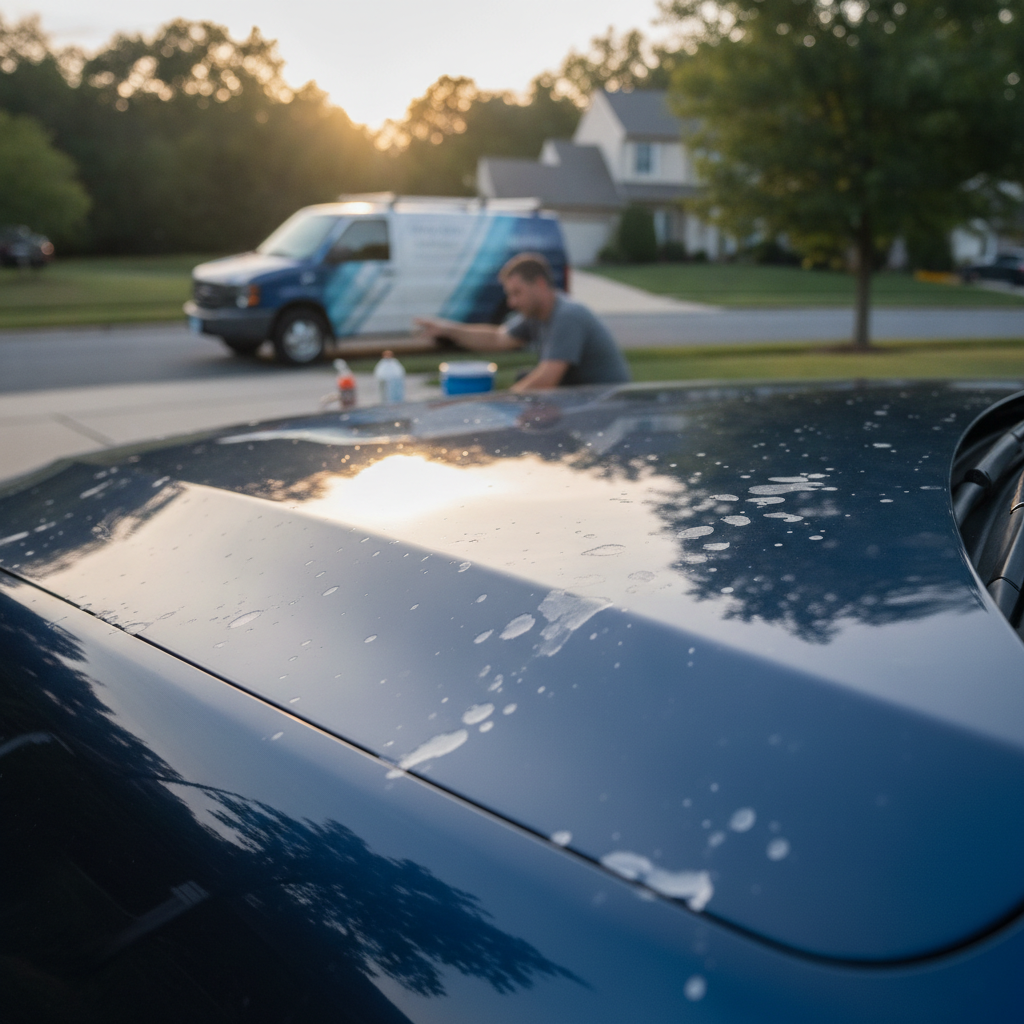
How Does Water Spot Etching Damage Your Car’s Clear Coat in Glassboro and What Can South Jersey Drivers Do to Fix It?
Water spot etching is a type of paint damage that happens when mineral-laden water dries on your car’s surface and is left there long enough to chemically react with the clear coat. For drivers in Glassboro and throughout South Jersey, this is not just a cosmetic annoyance — it’s a real threat to your vehicle’s finish that gets worse the longer it’s ignored. The good news is that professional detailing services can address it, and the right protective treatments can help prevent it from coming back.
What Exactly Is Water Spot Etching and Why Does It Happen?
Not all water spots are the same. When water evaporates off your car’s surface — whether from rain, sprinklers, or a rushed rinse at a self-serve wash — it leaves behind minerals like calcium and magnesium. These deposits sit on top of the clear coat and can typically be wiped away with a proper wash. That’s what most people think of as a water spot.
Etching is what happens next, when those mineral deposits are allowed to sit long enough — sometimes just a day or two in warm weather — and they begin to bond with and chemically break down the clear coat itself. At that stage, the damage is no longer on the surface. It’s in the surface. Regular washing won’t remove it, and polishing with a household product won’t fix it either.
South Jersey’s climate makes this problem especially common. Summers in the Glassboro and Washington Township area bring heavy humidity, frequent afternoon storms, and UV exposure that accelerates the etching process as water evaporates quickly off hot paint. A light rain followed by direct sunlight is one of the fastest ways to turn an ordinary water spot into a permanent etch mark.
How Do You Know If Your Car Has Water Spot Etching?
There are a few signs to watch for when inspecting your vehicle in natural light:
- Circular or ring-shaped marks that remain even after washing
- A hazy or dull appearance in patches, especially on horizontal surfaces like the hood and roof
- Rough texture when you run a clean fingertip across the paint in affected areas
- Visible pitting or cratering in severe cases where etching has penetrated deeply into the clear coat
If washing doesn’t clear the spots and they seem embedded in the paint, you’re likely dealing with some level of etching rather than surface contamination. At that point, professional paint correction is usually the right path forward.
Why This Topic Is Often Overlooked — Even by Major Detailing Resources
Many national detailing websites and product brands touch briefly on water spots as a general car care concern, but few go into meaningful detail about the difference between surface deposits and actual clear coat etching — or what a driver should realistically do when they discover it on their vehicle. That gap in information leaves a lot of car owners unsure whether their paint is permanently damaged or whether a simple product from the auto parts store will solve it.
The truth is that the right solution depends on the severity of the etching. Light etching may respond well to a professional polish and paint correction process. Moderate to severe etching that has cut deeper into the clear coat may require wet sanding before polishing to level the surface. In extreme cases, the clear coat itself may be too thin to save, and a respray becomes the only real option.
A trained detailer can assess the depth of the damage before recommending a course of action, which saves you from spending money on treatments that won’t work — or worse, making the problem worse with aggressive DIY products.
Paint Correction for Water Spot Etching in Glassboro and South Jersey
Paint correction is the professional process of removing surface defects from a vehicle’s clear coat using machine polishing, compounds, and finishing polish. For water spot etching, it’s often the most effective solution short of repainting.
During a paint correction service, a detailer uses a dual-action or rotary polishing machine with progressively finer compounds to carefully remove a thin layer of the clear coat, leveling out the etched areas and restoring gloss and clarity to the paint. The result — when done correctly — is a surface that reflects light evenly and looks significantly closer to how the vehicle looked when it was new.
One important thing to understand is that paint correction removes material. Every time you polish, a small amount of clear coat is removed. That’s why it’s important to have this work done by someone who understands how to measure and work within the limits of your vehicle’s clear coat thickness. Aggressive over-polishing by inexperienced technicians can leave you with thin, fragile paint that’s more vulnerable to damage going forward.
If you’re in the Deptford or Gloucester County area and your vehicle has visible water spot etching, having a professional assessment done before attempting any at-home correction is a smart first step. Flash Mobile Detailing offers mobile services, which means the assessment and correction can happen at your home or workplace — no drop-off required.
How to Protect Against Water Spot Etching After Correction
Once your paint has been corrected, protecting it from future etching becomes the priority. This is where ceramic coating becomes a genuinely practical investment rather than a luxury upgrade.
A ceramic coating creates a hard, semi-permanent layer over your clear coat that acts as a sacrificial barrier. Water beads up and rolls off rather than sitting on the surface, dramatically reducing the chance of mineral deposits bonding to the paint. The coating also makes the surface easier to rinse clean after rain, and it resists the mild acids and alkaline minerals that cause etching in the first place.
For car owners in Sicklerville, Glassboro, and the surrounding South Jersey communities who deal with hard municipal water, frequent rain, and hot summers that accelerate evaporation, ceramic coating after paint correction is one of the most practical combinations of services you can invest in for long-term paint health. Learn more about ceramic coating options and what the application process involves.
It’s worth noting that ceramic coating is not a substitute for paint correction — it needs to be applied to clean, defect-free paint to work properly. Coating over existing etching will lock in that damage rather than protect against it. That’s why the sequence matters: correct the paint first, then protect it.
Frequently Asked Questions About Water Spot Etching in South Jersey
Can I remove water spot etching at home?
Light surface deposits — not true etching — can sometimes be removed with a dedicated water spot remover product or a diluted white vinegar solution. However, if the spots remain after washing and a gentle treatment, the damage is likely etched into the clear coat and requires professional polishing to correct safely.
How long does it take for water spots to etch into the clear coat?
It depends on temperature, UV exposure, and the mineral content of the water. In hot South Jersey summers, etching can begin within 24 to 48 hours of water drying on the surface. Cooler, shaded conditions may slow the process, but any standing water left on paint should be addressed as soon as possible.
Will a car wash remove water spot etching?
No. A standard car wash — including touchless and tunnel washes — removes surface dirt and fresh deposits, but it cannot correct etching that has already chemically bonded with the clear coat. Only mechanical polishing can address that type of damage.
Does ceramic coating prevent water spot etching entirely?
Ceramic coating significantly reduces the risk by promoting water sheeting and making the surface more resistant to mineral bonding. It does not make your paint completely immune, however. Regular maintenance washing and prompt drying after rain are still important habits even on coated vehicles.
Is paint correction before ceramic coating worth the extra cost?
Yes. Ceramic coating amplifies whatever condition the paint is in at the time of application. Coating over etching, swirl marks, or oxidation will make those defects more visible under certain lighting, not less. Correcting the paint first ensures the coating works as intended and that your vehicle looks its best for the long term.
Ready to Address Water Spot Damage on Your Vehicle?
If you’ve noticed stubborn spots, hazy patches, or dull areas on your car’s paint that won’t wash away, the team at Flash Mobile Detailing can help you assess the damage and put together a plan to correct and protect your vehicle’s finish. Serving Glassboro, Sicklerville, Washington Township, and communities throughout Camden County and Gloucester County, we bring professional-grade detailing and paint correction directly to you.
Contact us today to schedule a consultation and get your vehicle’s paint back on the right track before the damage goes any deeper.