
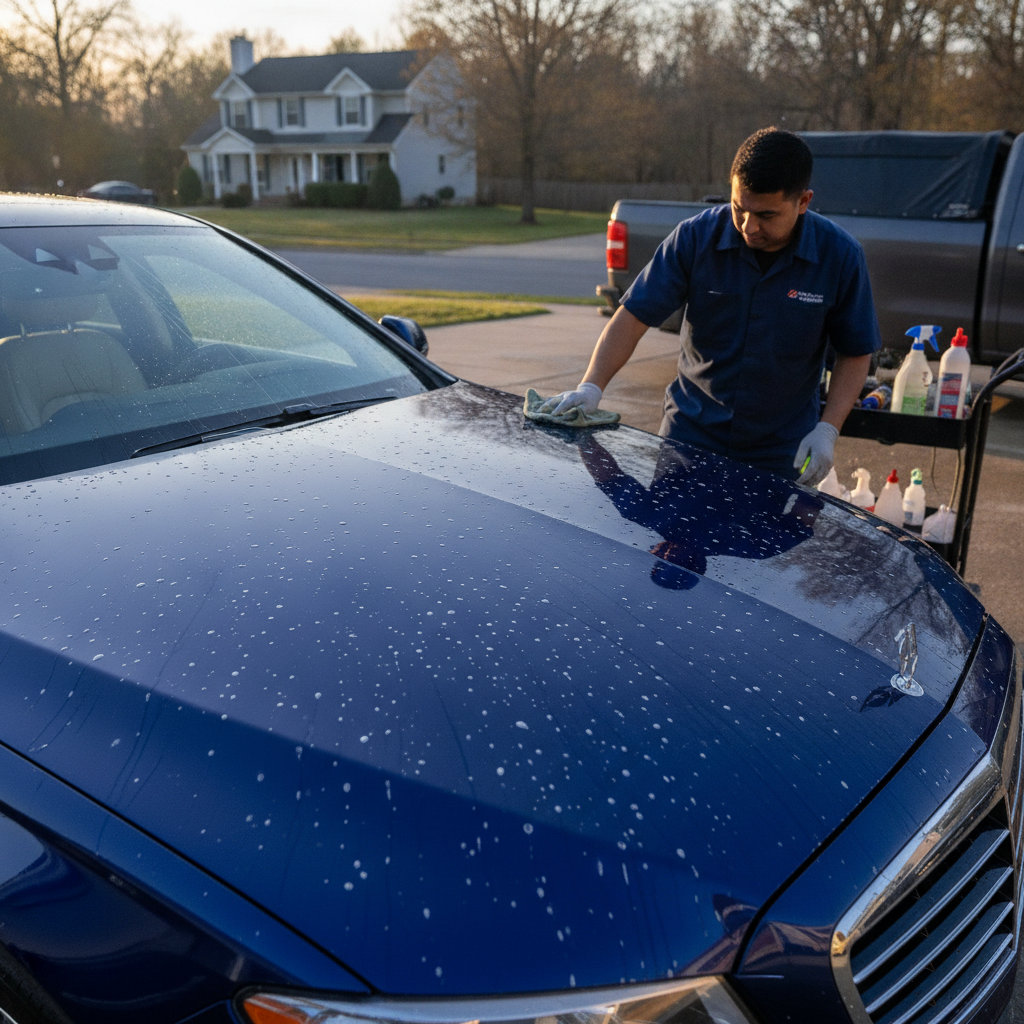
What Is Water Spot Damage and How Can Car Owners in Deptford and South Jersey Remove It Before It Ruins Their Paint?
Water spots might look like a minor nuisance — a few rings and streaks left behind after rain or a wash — but if you own a vehicle in Deptford or anywhere across South Jersey, you should know that these spots can cause real, lasting damage to your car’s clear coat. The good news is that with the right approach, most water spot damage is treatable. The key is acting before the problem gets worse.
What Actually Causes Water Spots on Your Car’s Paint?
Water spots form when water evaporates from your vehicle’s surface and leaves behind mineral deposits — primarily calcium and magnesium found in hard water. These deposits bond to your clear coat and, over time, can chemically etch into it if they are not removed. The longer they sit, the deeper they penetrate.
In South Jersey, this is a more common problem than many drivers realize. Between summer afternoon thunderstorms, lawn irrigation systems, automatic car washes that use unfiltered tap water, and morning dew that bakes off in the heat, your car is exposed to water spot-causing conditions regularly. Drivers in Deptford, Gloucester Township, and Williamstown who park outdoors — whether in driveways or commuter parking lots — are especially susceptible during warmer months when water evaporates quickly on a hot hood or roof.
The Three Types of Water Spots and Why It Matters
Not all water spots are created equal, and understanding the difference helps you know what kind of treatment your vehicle actually needs.
- Type 1 — Surface deposits: Mineral residue sitting on top of the clear coat. These are the easiest to address and can often be removed with a proper decontamination wash and a dedicated water spot remover product.
- Type 2 — Bonded deposits: Minerals that have begun to chemically bond to the clear coat surface. These typically require a light polishing compound or paint correction step to remove without causing additional damage.
- Type 3 — Etching: The most serious stage, where mineral deposits have eaten into the clear coat itself. This level of damage almost always requires professional paint correction to restore the finish. In severe cases, it can be permanent.
Many car owners in Blackwood or Cherry Hill assume that a quick rinse or standard car wash will clear up water spots. For Type 1 deposits, sometimes that is enough — but for anything more advanced, regular washing can actually make things worse by adding more mineral-heavy water on top of existing damage.
Why This Topic Is Underserved by Most Detailing Resources Online
If you have tried to research water spot removal online, you have probably noticed that most major detailing websites gloss over the topic. They might mention water spots briefly in the context of selling a product, but they rarely explain the three stages of damage, what actually causes etching at the chemical level, or what a realistic treatment path looks like for a vehicle that already has moderate damage. That gap in information leaves a lot of drivers guessing — and often making the problem worse by using the wrong products or techniques.
This is exactly why working with a knowledgeable local detailer matters. A professional can assess the actual stage of water spot damage on your vehicle and recommend the appropriate service rather than applying a one-size-fits-all solution.
Can You Remove Water Spots at Home?
For fresh, surface-level deposits, there are some steps you can take at home. Rinsing your car promptly after rain or irrigation exposure, using a clean microfiber towel to dry the surface fully, and applying a water spot remover formulated for automotive paint can help manage early-stage spots. What you should avoid is using household cleaners, vinegar in strong concentrations directly on paint, or abrasive scrubbing pads — all of which can damage your clear coat further.
The honest reality is that once water spots have progressed past the surface stage, DIY approaches become risky. Applying too much pressure with the wrong compound, or using a product that is too aggressive for your paint type, can leave swirl marks, haze, or uneven texture. For vehicles in Voorhees, Sicklerville, or anywhere across Camden County that have visible etching or widespread spotting, professional paint correction is the safer and more effective route.
How Professional Paint Correction Addresses Water Spot Etching
When water spot damage has progressed to Type 2 or Type 3, professional mobile detailing that includes paint correction is the appropriate solution. A trained detailer will use a machine polisher with the correct pad and compound combination to carefully level the clear coat around the etched areas, restoring a smooth and uniform surface. This process takes skill and attention — it is not something you want to rush or hand off to someone without experience working on your specific paint type.
After correction, the paint is left clean, smooth, and more vulnerable than before — which makes it the ideal time to apply a protective layer to prevent the problem from recurring.
How Ceramic Coating Helps Prevent Water Spot Damage Long-Term
One of the most effective ways to protect your vehicle from recurring water spot damage is applying a ceramic coating after paint correction. A professionally applied ceramic coating creates a hydrophobic surface — meaning water beads up and rolls off rather than sitting on the paint and evaporating. This dramatically reduces the mineral deposits that accumulate on an unprotected surface.
Ceramic coatings also provide a chemically resistant barrier that makes it harder for contaminants to bond to your clear coat in the first place. For drivers in South Jersey who regularly deal with hard tap water, seasonal rain, and UV exposure, this kind of long-term protection offers real peace of mind. It does not make your paint invincible, but it significantly reduces the frequency and severity of water spot formation going forward.
Seasonal Timing: When Are South Jersey Vehicles Most at Risk?
Water spot damage can happen year-round, but South Jersey vehicles face heightened risk during two seasons in particular. Summer is the most intense period because high temperatures cause water to evaporate rapidly, leaving mineral deposits behind before you even have a chance to dry the surface. Vehicles parked near sprinkler systems or outdoor dining areas in Gloucester Township or Williamstown are exposed constantly during this time.
Late fall and early winter also present a risk, especially when road salt treatments begin. While road salt itself is a separate concern for your paint, the combination of dirty melt water, hard water spray from other vehicles, and temperature fluctuations creates ideal conditions for accelerated water spot bonding. Addressing any existing water spots on your vehicle before winter sets in is a smart move for protecting your finish through the colder months.
Frequently Asked Questions About Water Spot Damage in South Jersey
How long does it take for water spots to damage clear coat?
It depends on the mineral content of the water and the temperature. In hot conditions with hard water, surface-level spots can begin bonding to clear coat within a day or two. In cooler weather, you may have more time — but it is always better to address them as soon as you notice them.
Will a regular car wash remove water spots?
A standard car wash will not reliably remove water spots, and in some cases can make them worse by depositing more mineral-heavy water on an already affected surface. A proper decontamination wash combined with a targeted water spot treatment product is more effective for early-stage spots.
Can water spot etching be permanently fixed?
In most cases, yes — professional paint correction can restore the finish by leveling the surrounding clear coat. However, very deep etching that has penetrated through the clear coat entirely may not be fully correctable without repainting that panel. This is why early treatment matters.
Is ceramic coating worth it specifically for water spot prevention?
Water spot resistance is one of ceramic coating’s most practical benefits for everyday drivers in South Jersey. While it is not the only reason to apply a coating, its hydrophobic properties and chemical resistance make it a strong long-term investment for anyone who parks outdoors or lives in an area with hard water.
Does a detailer need to do paint correction before applying ceramic coating if I have water spots?
If your vehicle has visible water spot etching or any paint imperfections, paint correction should be done before applying ceramic coating. Coating over damaged paint seals in those imperfections. A professional detailer will assess your paint’s condition and let you know what prep work is needed before any protective coating is applied.
Ready to Restore and Protect Your Vehicle’s Paint?
If your car has water spots, dull paint, or surface etching from mineral deposits, the team at Flash Mobile Detailing can help. Serving Deptford, Sicklerville, and communities throughout South Jersey, we bring professional-grade detailing and paint correction services directly to your driveway or parking lot — no shop drop-off required. Whether you need a targeted water spot treatment, a full paint correction, or a ceramic coating to protect your finish long-term, we will assess your vehicle and walk you through the right options for your situation.
Reach out today to schedule your appointment or ask a question. Visit our contact page to get started — we are happy to help you figure out exactly what your vehicle needs.