
How Does UV Exposure Fade and Crack Your Car’s Interior in Blackwood and What Can South Jersey Drivers Do to Stop It?
UV exposure is one of the most underestimated threats to your vehicle’s interior, and if you park outside regularly in Blackwood or anywhere across South Jersey, the sun is working against your car every single day. UV rays don’t just affect your paint — they break down the materials inside your cabin, fading upholstery, drying out leather, cracking your dashboard, and bleaching plastics over time. The damage is gradual, which makes it easy to ignore until it’s too late to reverse without significant cost. Understanding what’s actually happening — and what you can do about it — is the first step toward protecting your investment.
What UV Rays Actually Do to Your Car’s Interior
Ultraviolet radiation from the sun is broken into two categories that affect your vehicle’s cabin in different ways. UVA rays penetrate glass and cause long-term fading and material breakdown, while UVB rays are partially blocked by standard auto glass but still contribute to surface damage over time. When you leave your vehicle parked in the sun — whether it’s at a strip mall in Gloucester Township or sitting in your driveway in Sicklerville — that exposure accumulates day after day.
Here’s what you’ll typically notice first:
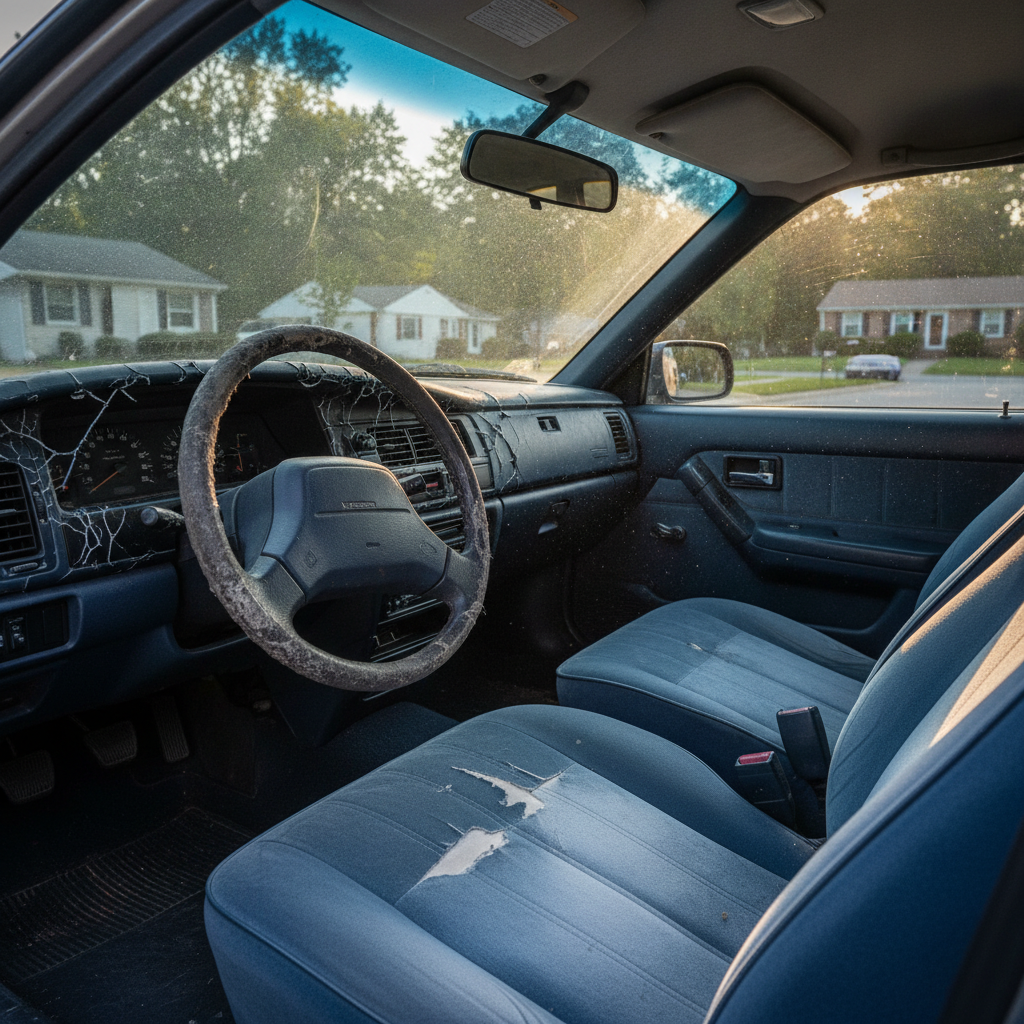
- Dashboard cracking and discoloration: The dashboard takes the most direct sun exposure of any interior surface. Vinyl and plastic compounds dry out as UV rays break down the polymers that keep them flexible. Once cracking starts, it’s very difficult to reverse.
- Faded or bleached upholstery: Fabric seats lose color vibrancy over time, while leather begins to dry out, crack, and peel if it isn’t regularly conditioned. Light-colored interiors are especially vulnerable.
- Warped or discolored trim panels: Door panels and center console trim can warp slightly when exposed to intense, concentrated heat from UV rays passing through the glass. This distortion is largely permanent.
- Deteriorating rubber seals and weather stripping: The rubber around your doors and windows dries out faster when UV exposure is constant, leading to reduced sealing and potential water intrusion.
- Faded carpet and floor mats: While less obvious, flooring and carpet nearest to windows can show significant color loss over several years of unprotected sun exposure.
Why South Jersey’s Climate Makes This Worse Than You Might Expect
South Jersey doesn’t have the same reputation as Arizona or Florida for extreme heat, but the reality is that UV intensity here is stronger than many drivers realize — particularly from late spring through early fall. Long summer days combined with high humidity create conditions where your interior heats up rapidly. On a 90-degree day in Camden County, the temperature inside a parked vehicle can reach well over 150 degrees. At those temperatures, UV-driven material degradation accelerates significantly.
South Jersey drivers also tend to be commuters. If you’re making daily runs on routes through Blackwood, Williamstown, or toward Cherry Hill, your car is facing direct sun exposure during peak UV hours multiple times a week. Compounding that with weekend parking outside means your interior rarely gets a real break from solar stress.
The Gap Most Detailing Content Misses: Interior UV Protection Is a Multi-Layer Problem
A lot of detailing content — including what you’ll find on major national sites — focuses heavily on exterior protection like ceramic coatings and paint correction. What gets far less attention is the fact that protecting your car’s interior from UV damage requires a layered approach, not a single fix. Simply applying a dashboard protectant spray once a year isn’t enough. Here’s what a comprehensive approach actually looks like:
Professional Interior Detailing as Your Foundation
Before applying any protective products, your interior needs to be properly cleaned. UV-damaged surfaces that are also dirty or contaminated won’t hold protectants effectively. A thorough mobile detailing service addresses this by deep cleaning all interior surfaces — removing embedded grime from upholstery, conditioning leather, and cleaning trim panels before any protective treatment is applied. Trying to skip this step and just apply a protectant on top of a dirty or degraded surface won’t give you the results you’re looking for.
UV-Blocking Window Tint: The Most Impactful Single Step
If there’s one upgrade that does more to slow interior UV damage than anything else, it’s quality window tint. Professional-grade window film blocks a substantial portion of incoming UV radiation before it ever reaches your cabin. This directly reduces the heat buildup that accelerates material breakdown and keeps your upholstery, dashboard, and trim from aging prematurely.
In New Jersey, window tint laws regulate how dark your tint can be on different windows. The front side windows must allow at least 70% of light to pass through, while rear windows and the rear windshield have more flexibility. A professional installer will always keep your vehicle in compliance while still providing meaningful UV protection — even light tint films can block a high percentage of UV rays without appearing dark to the eye. If you’re considering this step, it’s worth reading more about car window tint and what to expect from the process.
Leather and Vinyl Conditioning on a Regular Schedule
UV exposure pulls moisture out of leather and vinyl. Regular conditioning replenishes that moisture and keeps surfaces supple rather than brittle. For most South Jersey drivers, conditioning leather surfaces every three to four months is a practical schedule — more frequently if your vehicle is parked outside for extended periods during summer. A professional interior detailing service will typically include conditioning as part of the process, ensuring it’s applied correctly and evenly without leaving behind greasy residue.
UV Protectant Dressings for Plastics and Trim
Quality interior dressings designed specifically for UV protection create a thin barrier on plastic and vinyl surfaces that slows the breakdown process. These aren’t the same as the generic off-the-shelf sprays that simply add shine — purpose-formulated UV protectants are designed to penetrate and protect rather than just coat the surface. Ask your detailing professional about what products they’re using and whether they’re designed for long-term UV protection specifically.
What About Parking Habits? Small Changes Make a Real Difference
Beyond professional services, a few practical habits can meaningfully reduce UV damage between detailing appointments:
- Park in shaded areas or garages whenever available, especially during peak sun hours between 10 a.m. and 3 p.m.
- Use a windshield sunshade when parking outside for extended periods. It’s a low-cost measure that reduces interior temperature and slows UV impact on your dashboard.
- If you park in Voorhees or Cherry Hill near large parking lots with no shade, a sunshade makes a noticeable difference over time.
- Consider a rear window shade for vehicles where children or rear-seat passengers are frequently present.
How Interior UV Damage Affects Your Resale Value
A cracked dashboard, faded seats, or yellowed trim panels send an immediate signal to prospective buyers that a vehicle hasn’t been maintained well — even if the mechanical condition is excellent. Interior condition is one of the first things buyers assess in person, and UV damage is difficult and expensive to repair after the fact. Upholstery replacement, dashboard resurfacing, and trim panel reconditioning can add up quickly. Preventing the damage with regular interior detailing and UV protection measures is almost always less expensive than trying to restore a heavily degraded cabin before a sale.
Frequently Asked Questions
Does standard car glass block UV rays?
Standard automotive glass blocks most UVB rays but allows a significant portion of UVA rays to pass through. UVA rays are the primary driver of interior fading and material degradation. This is why vehicles parked in the sun still experience interior damage even with the windows closed. Quality window tint film adds an additional UV-blocking layer that standard glass alone doesn’t provide.
How often should I have my car’s interior detailed in South Jersey?
For most drivers in the Blackwood and Gloucester Township area, a professional interior detail two to four times per year is a practical baseline. If you park outside regularly, have pets, or spend significant time commuting, leaning toward more frequent service helps prevent UV and general contamination damage from building up.
Can a professional detailer fix a cracked dashboard?
Minor surface cracks can sometimes be improved through conditioning and specialized restoration products, but deep cracking or warping typically can’t be fully reversed through detailing alone. The goal is to prevent this level of damage through regular maintenance rather than trying to repair it after the fact.
Will window tint make my interior noticeably darker?
Not necessarily. Many high-performance window tint films provide strong UV protection while being nearly clear or very lightly tinted. Even films that meet New Jersey’s legal requirements for front side windows can still block a meaningful percentage of UV radiation without creating a significantly darker interior appearance.
Is mobile detailing a practical option for interior UV protection services in South Jersey?
Absolutely. Mobile detailing services come directly to your location — whether you’re at home in Sicklerville or at work somewhere in Camden County — which makes it easy to stay on a consistent maintenance schedule without rearranging your day. Consistency is key when it comes to UV protection, so the more convenient it is, the more likely you are to stay on top of it.
Protect Your Interior Before the Damage Becomes Irreversible
UV damage to your car’s interior is slow and quiet, but it compounds over time. By the time you notice significant cracking, fading, or material breakdown, the damage is already well advanced. The good news is that a combination of regular professional interior detailing and quality UV-blocking window tint can meaningfully slow — and in many cases stop — the deterioration before it affects your comfort or your vehicle’s resale value.
If you’re in Blackwood, Williamstown, Gloucester Township, or anywhere across South Jersey and you want to protect your vehicle’s interior from the kind of UV damage that most drivers don’t address until it’s too late, reach out to Flash Mobile Detailing to schedule a consultation. We come to you, we use professional-grade products, and we’ll walk you through exactly what your vehicle needs based on its current condition.