
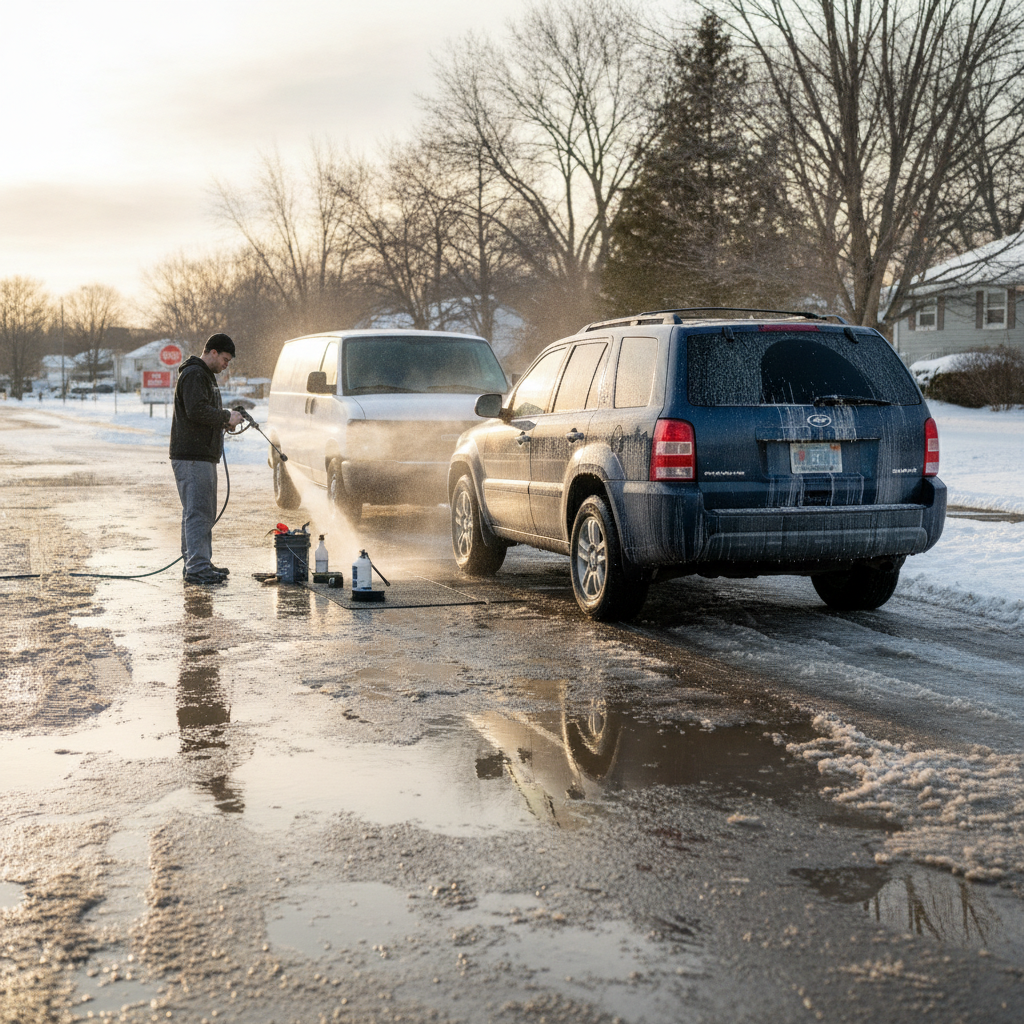
How Does Road Salt Damage Your Car’s Paint in Winslow Township and What Can You Do About It?
Road salt damages your car’s paint by embedding itself into the clear coat, accelerating oxidation, and — if left untreated — working its way down to the metal underneath. For drivers in Winslow Township and across South Jersey, this is not a once-in-a-while concern. Every winter, the roads running through Camden County and Gloucester County get treated heavily with salt and brine, and every vehicle that commutes those routes is absorbing that exposure mile after mile. The good news is that with the right protection in place before winter hits — and the right cleaning routine during and after — you can limit the long-term damage significantly.
Why Road Salt Is So Hard on Paint — And Why South Jersey Vehicles Are Especially Vulnerable
Salt is corrosive. When it bonds with moisture — which is basically every winter day in South Jersey — it creates a chemical reaction that eats through protective layers on your vehicle. Your car’s paint system has several layers: primer, base coat, and clear coat. Road salt doesn’t need to reach the metal right away to do real harm. It starts by degrading the clear coat, leaving the paint underneath exposed to UV rays, temperature swings, and further moisture intrusion.
What makes this particularly problematic in this region is the combination of factors at play at once. You have freezing temperatures, heavy precipitation, and frequent freeze-thaw cycles — all while salt brine is being applied liberally to routes like Route 73, the Atlantic City Expressway, and the surface streets running through Winslow Township, Berlin, and Blackwood. Vehicles that sit outside overnight or are parked in areas where runoff collects get the worst of it.
One detail that most car owners don’t realize: the damage salt causes often isn’t visible right away. Your paint may look perfectly fine in December, but by spring you’ll notice dull patches, early rust bloom along panel edges, or paint that’s starting to peel near wheel wells. By then, you’re looking at a more involved and costly repair than if you had taken steps earlier.
What Competitor Sites Often Miss: The Gap Between Winter Damage Awareness and Actionable Protection
If you’ve searched this topic before, you’ve probably landed on content from national detailing brands or product retailers that gives you a general warning about road salt and then points you toward a product to buy. What’s rarely covered is the sequence of protection — understanding that a proper defense against winter salt damage isn’t a single product or a single step. It’s a layered approach that starts before the first freeze and continues through spring.
This is the gap most larger competitors leave open, and it’s exactly what local vehicle owners in Winslow Township, Washington Township, and Sicklerville actually need to understand. Here’s how that layered approach works in practice.
Step One: Address Any Existing Paint Issues Before Winter
If your paint already has swirl marks, light scratches, or oxidation from the previous season, those compromised areas are exactly where road salt will do the most damage. Salt finds weaknesses in the clear coat and accelerates deterioration from those points outward. Before applying any protective coating, it’s worth having a professional assess your paint’s condition.
In many cases, a professional exterior detailing service combined with light paint correction will remove surface-level damage and restore a clean foundation. Trying to protect paint that’s already compromised is like putting a fresh coat of paint over a wall with water damage — the underlying problem will keep working its way through.
Step Two: Apply a Professional-Grade Protective Coating
Once the surface is clean and corrected, the most effective thing you can do is apply a durable protective layer before winter road salt season begins. This is where ceramic coating offers a meaningful advantage over traditional wax or spray sealants.
Traditional car wax provides a thin, temporary barrier. It breaks down quickly under temperature extremes and road wash — exactly the conditions you face in a South Jersey winter. A professionally applied ceramic coating bonds directly to the clear coat and creates a semi-permanent hydrophobic layer. Water, salt, and road grime bead up and roll off the surface rather than sitting on the paint. It doesn’t prevent all contamination, but it dramatically reduces how much salt actually contacts and bonds to your paint over an entire winter season.
Ceramic coatings also make your regular wash routine more effective. Salt and brine rinse away more completely when your paint has a proper hydrophobic layer underneath.
Step Three: Wash Your Vehicle Regularly Throughout Winter — Not Just After Storms
This is the step most vehicle owners skip or underestimate. Waiting until after a major storm to wash your car means that salt has already been sitting on the paint for hours or days. For drivers commuting daily in Winslow Township, Blackwood, or Washington Township, that exposure adds up fast.
Ideally, you should rinse your vehicle — especially the undercarriage and wheel wells — any time you’ve driven on salted roads. At minimum, you want a full wash every week during active road salt season. Focus on areas where salt tends to accumulate: lower door panels, rear bumpers, wheel arches, and anywhere road spray can collect.
\p>When conditions allow, a mobile detailing visit during late winter or early spring is also a smart move. Getting a thorough decontamination wash done after the season ends removes bonded salt residue and lets you assess whether the protective layer on your paint needs to be refreshed before summer UV exposure compounds any remaining damage.
What About the Undercarriage?
The paint on your doors and hood gets the attention, but the undercarriage of your vehicle takes the heaviest salt exposure. Brake lines, suspension components, and frame sections are all susceptible to corrosion when road salt builds up underneath. A full exterior detail that includes an undercarriage rinse goes a long way toward preventing accelerated rust in those areas.
If you drive a truck, SUV, or any vehicle with significant ground clearance, this is especially important. Vehicles that sit higher off the ground catch more road spray from passing traffic and accumulate more salt underneath than lower-profile cars.
Frequently Asked Questions About Road Salt and Vehicle Paint Protection in South Jersey
How long does road salt stay on my paint if I don’t wash it off?
Salt can remain bonded to your paint for days, especially if temperatures stay below freezing and there’s no rain to help rinse it. Dry, cold conditions are actually worse than wet ones when it comes to salt sitting on your vehicle because moisture activates the corrosive process repeatedly every time there’s any humidity.
Can I apply ceramic coating during winter?
Ceramic coating application requires controlled temperature and humidity conditions to cure properly. Most professional installers in South Jersey will perform ceramic coating indoors regardless of season, but the ideal window for prep work and curing is outside of the wettest and coldest months. If you’re heading into winter without a coating already in place, a professional detailer can advise you on the best interim protection and help you plan a coating application for early spring.
Is there a difference between what a quick car wash does and a professional exterior detail for salt removal?
Yes, significantly. An automated car wash will remove surface-level dirt and loose salt but won’t address bonded contamination, won’t clean the undercarriage thoroughly, and won’t inspect for paint damage that needs attention. A professional exterior detail includes decontamination treatments that pull out bonded particles from the clear coat — including iron deposits and salt residue — leaving the surface genuinely clean rather than just visually cleaner.
How do I know if road salt has already damaged my paint?
\p>Early signs include paint that looks dull or hazy in patches, a rough texture when you run your hand over the surface even after washing, rust bloom appearing near panel edges or in wheel wells, and clear coat that’s beginning to peel or bubble. If you notice any of these, a professional assessment can help you understand how far the damage has progressed and what correction is possible.
Does ceramic coating protect against rust, or just paint damage?
Ceramic coating protects the painted surfaces of your vehicle from contamination and corrosion at the paint level. It is not a rust treatment for bare metal or existing rust. Rust prevention for the undercarriage and any exposed metal requires separate treatment. That said, protecting your paint from deterioration helps prevent the exposure pathways through which surface rust can develop on body panels over time.
Protect Your Vehicle Before the Next Winter Season
Every winter in South Jersey takes a measurable toll on vehicles that aren’t properly protected. If you’re in Winslow Township, Sicklerville, Berlin, or anywhere in Camden or Gloucester County and you’ve been meaning to get serious about protecting your vehicle’s paint, the time to act is before road salt season — not after the damage is already done.
Flash Mobile Detailing works with vehicle owners throughout the area to assess paint condition, perform professional exterior detailing and decontamination, and apply protective coatings that hold up through real South Jersey winters. We come to you, so there’s no need to rearrange your schedule around a shop visit.
Reach out to Flash Mobile Detailing today to schedule a consultation or ask about what protection options make the most sense for your vehicle. Your paint will thank you come spring.