
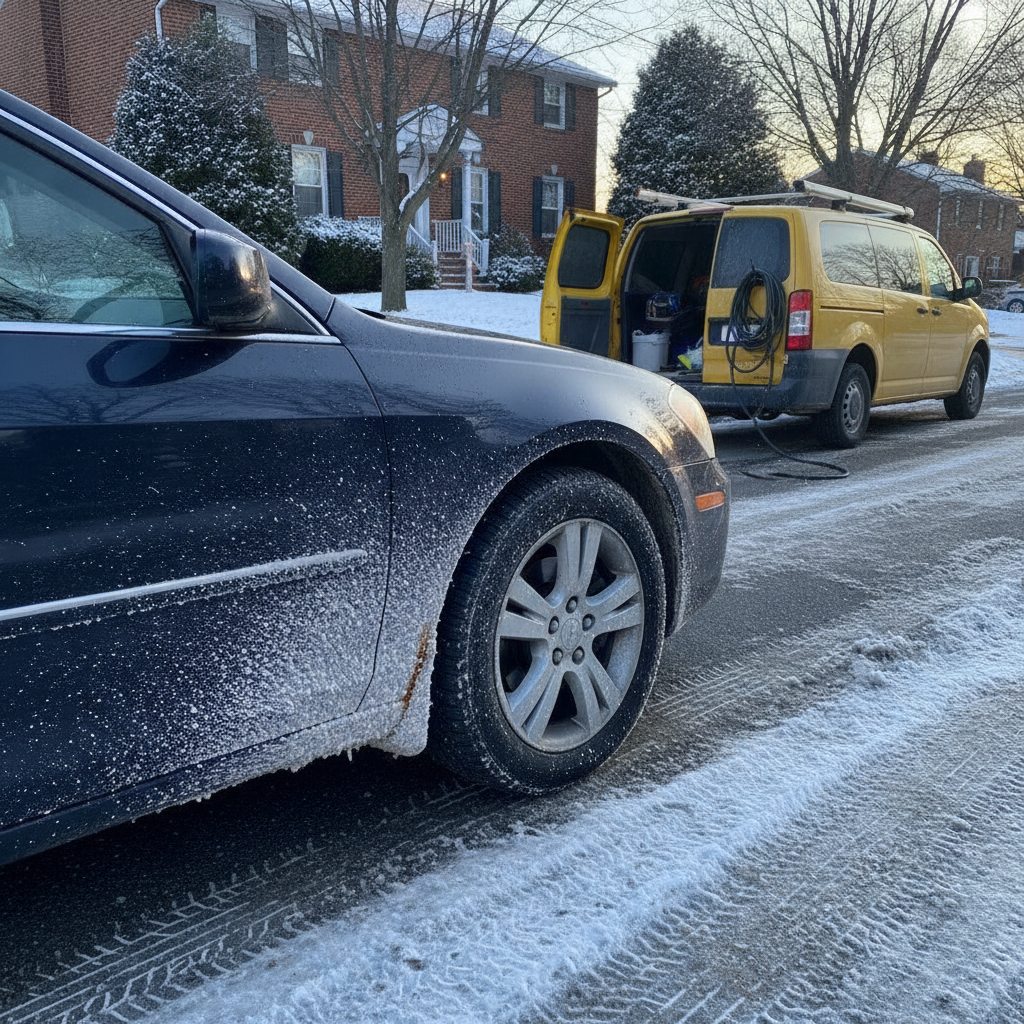
How Does Road Salt Damage Your Car’s Paint and Undercarriage in Sicklerville and What Can South Jersey Drivers Do to Prevent It?
Road salt is one of the most destructive forces your vehicle faces during a South Jersey winter — and it works quietly. If you drive in or around Sicklerville between November and March, your car is regularly exposed to sodium chloride and other de-icing chemicals spread across local roads and highways. These substances are effective at melting ice, but they are hard on your vehicle’s paint, clear coat, wheel wells, brake components, and undercarriage. The good news is that with the right preparation and professional detailing services, you can significantly reduce the long-term damage road salt causes.
Why Road Salt Is Such a Problem for South Jersey Drivers
South Jersey winters are not always brutal, but they are unpredictable. A single storm event can result in heavy salt application across Route 42, the Black Horse Pike, and local surface roads throughout Camden County and Gloucester County. If you commute daily through Sicklerville, Berlin, or Winslow Township, your vehicle is accumulating salt exposure over many trips — and that buildup adds up fast.
Road salt is corrosive because it attracts and holds moisture against metal surfaces. When salt combines with water and oxygen, it accelerates the oxidation process — commonly known as rust. The areas most at risk are the ones you rarely think about: the undercarriage, wheel arches, brake lines, exhaust components, and the lower panels of your doors. These areas are constantly hit with salt spray while you drive, and they rarely get cleaned unless you specifically target them.
Paint and clear coat are also affected. Salt residue left sitting on painted surfaces can etch into the clear coat over time, dulling the finish and making your vehicle look prematurely aged. If your paint already has minor chips or scratches from road debris, salt exposure gives corrosion an easy entry point — and rust can begin spreading beneath the surface before it is ever visible from the outside.
What Salt Does to Your Undercarriage — and Why Most Car Owners Miss It
The undercarriage of your vehicle is the most vulnerable area during winter driving, and it is also the most ignored. Most standard car washes do not adequately clean underneath the vehicle, and a surface rinse at home rarely reaches the deeper components where salt accumulates.
Over multiple winters without proper attention, salt buildup beneath your vehicle can:
- Cause rust to form on frame rails, crossmembers, and suspension components
- Accelerate deterioration of brake lines and fuel lines
- Damage rubber seals, boots, and bushings that protect mechanical joints
- Corrode exhaust hangers and heat shields
- Compromise the structural integrity of vulnerable metal components over time
For daily commuters in communities like Gloucester Township, Voorhees, and Cherry Hill who put significant miles on their vehicles each winter, this kind of wear is entirely preventable with the right service approach.
How Professional Detailing Addresses Road Salt Damage
A thorough professional detailing service goes well beyond what a standard car wash offers. When you book a mobile detailing appointment in the winter months, a trained technician will work to remove salt residue from your paint, wheels, wheel wells, and accessible undercarriage surfaces using proper techniques and professional-grade products.
This kind of targeted cleaning matters because salt is not always visible on a dark or light-colored vehicle. It can appear as a fine white film or haze, but it is often hiding in seams, door jambs, and around trim pieces. Professional detailers know where to look and how to safely remove salt without causing additional scratching or damage to the paint surface.
After cleaning, protecting the paint is the next critical step. Bare paint and unprotected clear coat have very little resistance against the chemical activity of road salt. Applying a quality protective layer significantly reduces how much salt and moisture can bond to the surface and cause damage.
Why Ceramic Coating Is a Smart Investment Before Winter Hits
One of the most effective ways to protect your vehicle from road salt is to apply a professional-grade ceramic coating before the winter season begins. Ceramic coating bonds to your vehicle’s paint at a molecular level and creates a hard, semi-permanent protective layer that repels water, salt, and road grime far more effectively than traditional wax or sealant products.
Because ceramic coating is hydrophobic — meaning water and contaminants bead up and roll off rather than sitting on the surface — salt spray is far less likely to bond to your paint during winter driving. When it does land on the surface, it is much easier to rinse away without leaving behind the residue that causes long-term etching and dullness.
Traditional wax, by comparison, breaks down quickly under winter conditions. A single exposure to road salt, repeated rinsing, and temperature swings can strip a wax coating within weeks. Ceramic coating, when properly applied and maintained, offers durability that extends through multiple seasons. You can learn more about whether this service makes sense for your vehicle on our paint protection ceramic coating page.
What Competitor Resources Miss About Salt Damage — and What You Should Know
Most national detailing brands and coating companies publish content about ceramic coating benefits in general terms — UV protection, gloss enhancement, ease of maintenance. Very few address the specific seasonal threat of road salt in detail, and even fewer speak directly to drivers in South Jersey communities where winter road treatment is a real, recurring concern.
What those resources often skip over is the importance of timing. Applying protective coatings in the fall — before salt season begins — gives the coating time to fully cure and bond before your vehicle encounters its first winter storm. Waiting until spring to address salt damage means you are already dealing with the consequences of months of exposure. Preventive protection is always more effective and more cost-efficient than restoration after the fact.
Another gap in the national content landscape is the role of professional undercarriage rinses and targeted decontamination as part of a winter detailing routine. These are not luxury add-ons — for drivers who rely on their vehicles year-round, they are practical maintenance steps that protect the vehicle’s long-term structural integrity and resale value.
Practical Tips for Protecting Your Vehicle This Winter
- Schedule a fall detailing appointment before road salt season begins so your paint is clean and protected going in.
- Rinse your vehicle regularly during winter, especially after heavy snowfall or ice events when salt application is highest.
- Pay attention to wheel wells and lower body panels — these areas collect the most salt spray and are often missed in a standard wash.
- Avoid automatic car washes with stiff brushes during winter, as they can grind salt particles into your clear coat and cause micro-scratches.
- Book a post-winter detailing service in early spring to decontaminate your vehicle after the season and assess any damage before it progresses.
Frequently Asked Questions
How quickly can road salt damage a car’s paint?
Salt damage can begin within days of repeated exposure, especially if your paint has no protective coating and already has minor chips or scratches. Over a single winter season, unprotected vehicles can show significant dulling, clear coat degradation, and early signs of corrosion on lower body panels and undercarriage components.
Is it worth getting a ceramic coating before winter in Sicklerville?
Yes — applying a ceramic coating in the fall is one of the most practical things you can do before road salt season. The coating creates a hydrophobic barrier that makes it harder for salt and moisture to bond to your paint, reducing the risk of etching and corrosion throughout the winter months.
Does washing my car at a regular car wash remove road salt effectively?
A standard car wash can remove surface salt but often misses salt that has accumulated in door jambs, wheel wells, lower body panels, and undercarriage components. Professional detailing provides a more thorough cleaning that targets these harder-to-reach areas.
Can road salt damage be repaired if it has already started?
Minor clear coat dulling and surface contamination from salt can often be addressed through professional exterior detailing and paint decontamination. More advanced damage — such as rust beginning to form — may require additional paint correction or body repair services. Catching damage early makes a significant difference in what is possible to restore.
How often should South Jersey drivers detail their vehicles in winter?
At a minimum, a thorough detailing before winter and again in early spring is a solid baseline for most drivers. If you commute frequently through high-salt-treatment areas in Camden County or Gloucester County, a mid-winter rinse or light detailing service between those appointments can help prevent buildup from reaching damaging levels.
Protect Your Vehicle Before the Salt Season Starts
Road salt is not something South Jersey drivers can avoid — but the damage it causes is largely preventable with the right care and timing. Whether you want to protect a newer vehicle heading into its first winter or restore a daily driver that has taken its share of seasonal abuse, Flash Mobile Detailing can help.
We come to you throughout Sicklerville and the surrounding area, making it easy to fit professional vehicle protection into a busy schedule without rearranging your day. Ready to talk through what your vehicle needs before winter arrives? Contact us today to request a free consultation and find the right service plan for your vehicle and your budget.