
How Does Professional Auto Window Tinting Improve Driving Comfort and What Should Car Owners in Sicklerville Know Before Their Appointment?
Professional auto window tinting improves driving comfort by significantly reducing the heat that builds up inside your vehicle, blocking harmful UV rays, and cutting down on glare — all of which make a genuine difference on your daily commute. If you’re a car owner in Sicklerville or anywhere in South Jersey, understanding what the process involves, which film types are available, and what New Jersey law requires will help you make a confident, informed decision before your appointment.
Why South Jersey Drivers Are Choosing Window Tinting for More Than Just Looks
Most people assume window tinting is purely cosmetic. In reality, quality window film serves a range of practical purposes that South Jersey drivers deal with year-round. During summer months, vehicles parked outside in Sicklerville, Gloucester Township, and Cherry Hill can reach interior temperatures well above 130 degrees Fahrenheit. Even during a short workday, that heat buildup puts stress on your dashboard, seats, and electronics — and makes getting into your car genuinely uncomfortable.
Window film works by reflecting or absorbing solar energy before it passes through the glass. Depending on the type of film installed, you can expect a meaningful reduction in cabin heat, less reliance on air conditioning, and a cooler, more comfortable driving experience from the moment you get in. For daily commuters who spend significant time behind the wheel, that difference adds up quickly.
What Window Tint Actually Blocks — Heat, UV, and Glare Explained
There are three primary things quality window film addresses, and it helps to understand each one before your appointment.
Heat Rejection
Different film types vary in how effectively they block solar heat. Basic dyed films offer modest heat reduction, while ceramic and carbon films perform at a noticeably higher level. Ceramic window film, in particular, blocks a substantial portion of infrared heat without relying on metallic components that could interfere with phone signals or GPS. For drivers in Washington Township and Blackwood who commute along busy highways, this is a meaningful practical benefit.
UV Ray Blocking
Ultraviolet radiation is responsible for fading dashboard materials, cracking leather, and breaking down interior plastics over time. Quality window tint blocks a high percentage of UV rays, which helps preserve your interior and protects you from UV exposure during long drives. This is especially relevant in South Jersey, where sun exposure is significant for much of the year. If you’ve already invested in professional interior detailing or leather restoration, adding window film is a smart way to protect that work long-term.
Glare Reduction
Glare from direct sunlight or low-angle sun during early morning and late afternoon commutes is a real safety issue. Window tint doesn’t eliminate all glare, but it does reduce the intensity enough to make a noticeable difference — particularly on eastbound drives in the morning and westbound drives in the evening, which is a daily reality for many commuters throughout Camden County.
Understanding New Jersey Window Tint Laws Before You Book
This is an area where many online resources — including some competitor websites — provide only surface-level guidance. New Jersey has specific regulations about how dark window tint can be, and getting this wrong can result in a vehicle inspection failure or a citation.
Here’s what New Jersey law currently requires for passenger vehicles:
- Windshield: Non-reflective tint is only permitted on the top five inches of the windshield.
- Front side windows: Must allow more than 70% of light in (VLT — visible light transmission). This is a stricter standard than many other states, and it’s important to understand what this means for film selection.
- Back side windows: Any darkness level is permitted.
- Rear window: Any darkness level is permitted.
- Reflectivity: Tint on front and back side windows must not be more reflective than standard window glass.
A professional installer will walk you through which film shades are legal for each window on your specific vehicle and help you choose a combination that meets both your comfort goals and state requirements. If you’re researching car window tint options in Sicklerville, it’s worth having a conversation with a knowledgeable local provider rather than relying solely on general national guidelines.
What Types of Window Film Are Available and How Do They Differ?
Not all window films are the same, and the price differences between options often reflect real differences in performance and longevity. Here’s a straightforward breakdown:
- Dyed film: The most affordable option. Provides some privacy and glare reduction but limited heat rejection. Prone to fading over time.
- Carbon film: A step up in performance. Blocks more infrared heat, doesn’t fade as quickly, and doesn’t interfere with electronics.
- Ceramic film: The top tier for heat rejection, UV blocking, and longevity. More expensive upfront but performs significantly better over several years. Does not interfere with signals or sensors.
- Metalized film: Effective heat and UV blocking, but the metallic content can sometimes interfere with cell signals and electronic systems, which is worth considering in newer vehicles with advanced technology.
For most drivers in South Jersey who want long-lasting comfort and protection, ceramic film tends to offer the best return on investment, especially when you factor in the ongoing benefit to your interior and the reduced strain on your air conditioning system.
What to Expect on Appointment Day
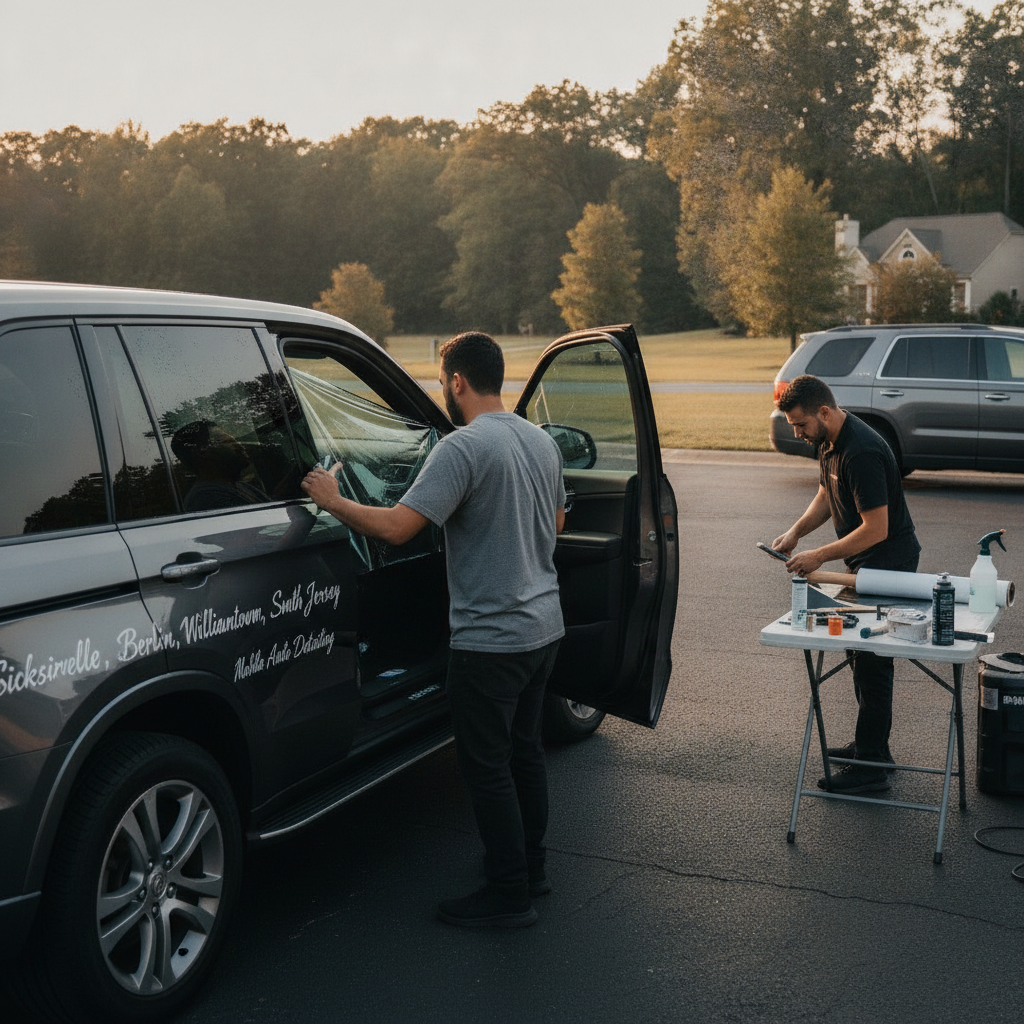
Professional window tinting typically takes between two and four hours depending on the vehicle and the number of windows being tinted. The installer will thoroughly clean each window surface before applying the film to ensure there are no contaminants trapped beneath the film that could cause bubbling or adhesion issues. The film is then carefully cut and applied, usually using a heat gun to conform the film precisely to the shape of curved glass.
After installation, you’ll need to avoid rolling your windows down for a short period — typically 48 to 72 hours — to allow the adhesive to cure fully. Expect to see minor haziness or small water bubbles immediately after installation; these are normal and will resolve as the film dries. A reputable installer will explain the curing timeline and any care instructions specific to the film type they used.
For drivers in Gloucester Township or Cherry Hill who want to explore all the ways to protect their vehicle’s interior and exterior together, professional auto window tinting pairs well with ceramic coating and regular detailing as part of a complete vehicle protection plan.
Why Cheap or DIY Film Usually Costs More in the Long Run
Pre-cut DIY window tint kits are widely available online, but the application process is more demanding than most product videos suggest. Air bubbles, uneven adhesion, and film that doesn’t conform properly to curved rear windows are common results. Beyond the cosmetic issues, poorly applied film often needs to be removed and replaced — which adds time and cost. A professional installation done correctly the first time is a much more reliable investment, especially when you consider how long quality film should last.
Frequently Asked Questions About Window Tinting in South Jersey
Will window tinting affect my vehicle inspection in New Jersey?
Yes, if the tint on your front side windows is darker than the 70% VLT limit required by New Jersey law, your vehicle can fail inspection. A professional installer who knows state law will help you stay compliant.
How long does window tint typically last?
The lifespan depends heavily on film quality. Dyed films may show fading within a few years, while carbon and ceramic films can last a decade or longer with proper care. Keeping windows clean with a non-ammonia cleaner helps extend the film’s life.
Can window tint be applied in cold weather?
Cold temperatures can affect the curing process. Most professional installers prefer to work in controlled conditions. If you’re scheduling an appointment during South Jersey winters, ask your installer about their process for colder months.
Does window tint help protect my car’s interior from UV damage?
Quality window film blocks a significant percentage of UV rays, which slows the fading and cracking of dashboard materials, seats, and other interior surfaces. It’s one of the more cost-effective ways to preserve your interior over time.
Can window tint be removed if I change my mind or sell the car?
Yes. Window film can be professionally removed without damaging the glass. If you’re preparing a vehicle for sale, this is a straightforward process that a professional detailer can handle.
Ready to Improve Your Drive? Talk to Flash Mobile Detailing
Whether you’re a daily commuter in Sicklerville looking for heat relief during summer drives or a car owner in Blackwood or Washington Township who wants to protect your interior investment, professional window tinting is one of the most practical upgrades you can make to your vehicle. Flash Mobile Detailing serves Sicklerville and the surrounding South Jersey area with professional installation and honest guidance on film options that fit your vehicle, your lifestyle, and New Jersey’s legal requirements.
Reach out today to ask questions or schedule a consultation. Contact Flash Mobile Detailing here and let us help you find the right solution for your vehicle.