
How Does Paint Protection Film Compare to Ceramic Coating for Vehicles in Sicklerville and South Jersey?
If you’ve been researching ways to protect your vehicle’s paint in Sicklerville, you’ve likely come across two popular options: paint protection film (PPF) and ceramic coating. Both are excellent products, but they are not the same thing — and choosing the wrong one for your situation could mean either overspending or under-protecting your car. This article breaks down exactly how these two solutions differ, what each one does well, and how to decide which makes the most sense for your vehicle and your budget.
What Is Paint Protection Film and How Does It Work?
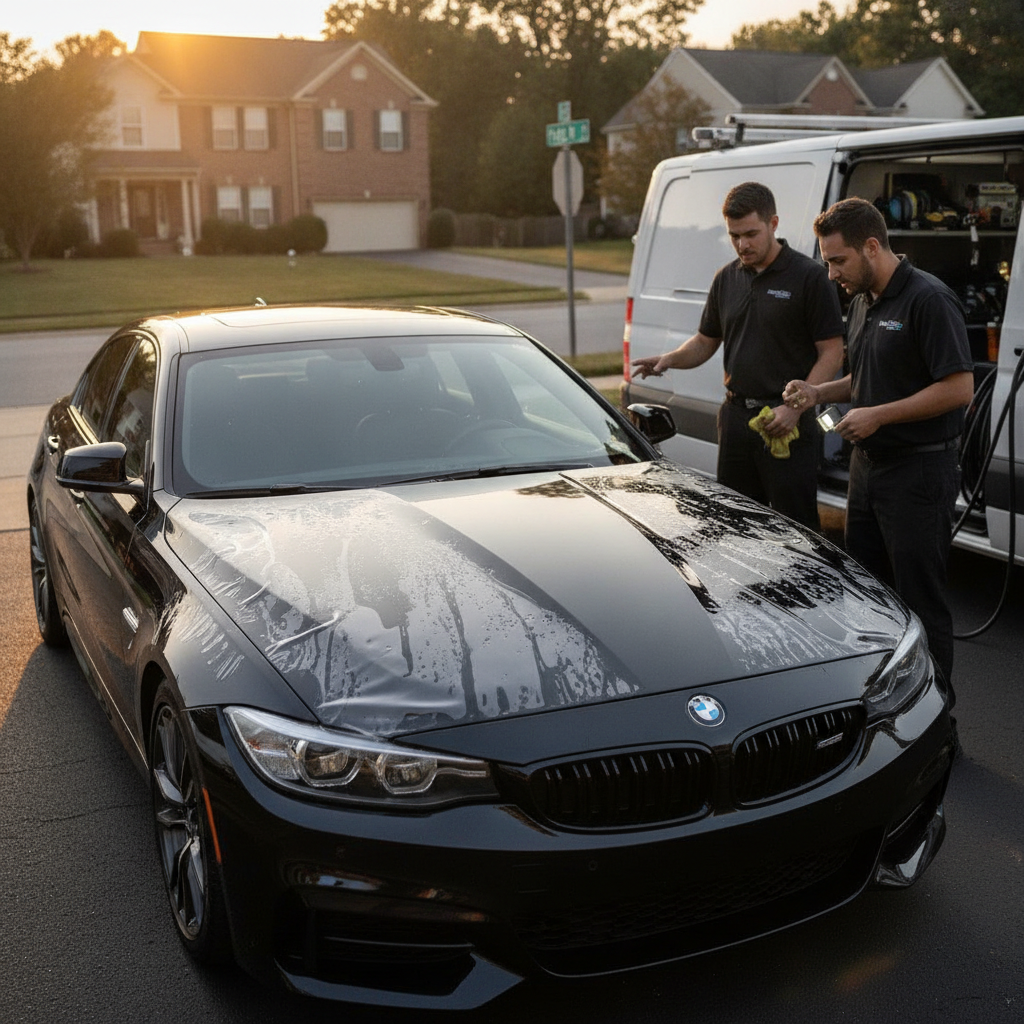
Paint protection film is a clear, flexible thermoplastic urethane film that is applied directly over your vehicle’s painted surfaces. Think of it as an invisible physical shield. It is thick enough to absorb impacts from small rocks, road debris, insects, and minor abrasions that would otherwise scratch or chip your paint. High-quality PPF products also have self-healing properties — meaning light surface scratches can disappear on their own when exposed to heat, such as sunlight or warm water.
PPF is typically applied to high-impact areas like the front bumper, hood, side mirrors, door edges, and rocker panels. Full-vehicle wraps in PPF are also available for owners who want comprehensive coverage. It works as a sacrificial layer — it takes the damage so your paint doesn’t have to.
What Is Ceramic Coating and How Is It Different?
Ceramic coating is a liquid polymer that chemically bonds to your vehicle’s clear coat. Once it cures, it creates a hard, hydrophobic layer on top of the paint that repels water, resists UV rays, and makes your car significantly easier to clean. It doesn’t have the same physical thickness as PPF, so it won’t protect against rock chips or physical impacts the way a film will. However, it excels at keeping contaminants from bonding to your paint and adds a level of gloss and depth that traditional wax simply cannot match.
For drivers across South Jersey dealing with road grime, bird droppings, pollen, and intense summer UV exposure, ceramic coating provides a strong layer of chemical and environmental protection that holds up far longer than wax or sealant products.
The Key Differences Between PPF and Ceramic Coating
Understanding the distinction between these two products helps you make a smarter investment. Here is a straightforward breakdown:
- Physical impact protection: PPF wins here. The film absorbs rock chips, scratches, and road debris. Ceramic coating offers no meaningful protection against physical impacts.
- Chemical and environmental resistance: Both offer solid protection against contaminants, bird droppings, tree sap, and UV rays — but ceramic coating is specifically engineered for this type of defense.
- Hydrophobic properties: Ceramic coating creates a stronger water-beading effect, making your vehicle easier to wash and maintain over time.
- Appearance: Both can be virtually invisible when applied correctly. High-gloss PPF can even enhance shine, and ceramic coating adds noticeable depth and richness to any paint color.
- Longevity: Quality PPF can last five to ten years depending on the product and care. A professionally applied ceramic coating typically lasts two to five years with proper maintenance.
- Coverage: PPF is most cost-effective when applied to high-risk areas. Ceramic coating is commonly applied to the entire vehicle.
- Investment level: Full PPF coverage generally costs more than a ceramic coating application, especially for larger vehicles. Partial PPF packages that cover just the front end are a popular middle-ground option.
Why South Jersey Driving Conditions Make This Decision Important
Drivers in Sicklerville, Washington Township, and throughout Camden County deal with conditions that put real stress on vehicle paint. Highways like Route 42 and the Atlantic City Expressway generate constant rock chip exposure, especially during morning and evening commutes. Winter road salt is a well-known threat to painted surfaces and undercoatings. Summer UV intensity in South Jersey is significant enough to cause visible paint fade over time, and pollen season each spring coats every vehicle parked outdoors for more than a few hours.
For a daily driver logging serious highway miles, a combination of partial PPF on the front end with a full ceramic coating over the rest of the vehicle is a popular and practical approach. You get physical impact protection where it’s most needed and chemical protection across the entire surface. This isn’t a strategy that most competitor resources explain clearly — the conversation is usually framed as an either/or choice when the real answer for many drivers is a layered approach.
Can You Use Paint Protection Film and Ceramic Coating Together?
Yes — and for many vehicle owners, combining both products is the smartest long-term strategy. PPF can be installed first on high-impact zones, and ceramic coating can then be applied over the film and on the rest of the vehicle. The ceramic coating bonds to both the film surface and the unprotected clear coat, creating a unified protective layer that is easier to maintain. This combination reduces the frequency of detailing needed and keeps the vehicle looking sharp through seasons of South Jersey weather.
If you’re considering this route, it’s important to work with a provider who understands proper surface preparation. Paint correction before either product is applied ensures the finish underneath is clean, smooth, and free of swirl marks or oxidation. Learn more about what comprehensive paint protection ceramic coating looks like when done correctly.
What to Look for in a Local Provider — and Where Generic Advice Falls Short
One of the most common frustrations vehicle owners in Voorhees and across South Jersey share is finding reliable, specific guidance from providers who understand regional driving conditions. Large national brands and online-only resources tend to give broad recommendations without accounting for how local factors — salt roads, high humidity, heavy commuting — actually affect paint over time.
When evaluating a local provider for PPF or ceramic coating, ask these practical questions:
- Do you perform paint correction before applying any protective coating?
- What specific film or coating products do you use, and what is the manufacturer’s rated lifespan?
- Can you show me examples of previous work on similar vehicles?
- What does aftercare look like, and how soon can I wash the vehicle?
- Do you offer any kind of follow-up service or touch-up if issues arise after installation?
A knowledgeable local detailer will answer these questions clearly and help you understand which option — or combination — fits your specific vehicle, budget, and how you use your car day to day.
Frequently Asked Questions
Is paint protection film worth it for a used vehicle?
It depends on the condition of the paint. If the vehicle has existing scratches, swirl marks, or oxidation, paint correction should come first. Applying PPF over damaged paint locks in those imperfections. Once the surface is corrected, PPF can be a worthwhile investment even on a used car — especially if you plan to keep it for several more years.
How long does it take to have PPF or ceramic coating installed?
A partial PPF installation covering the front bumper and hood typically takes one to two days. A full-vehicle PPF wrap can take three to five days. Ceramic coating installation, including surface preparation and cure time, generally takes one to two days. Combining both adds time, but the long-term protection is worth it for most drivers.
Will PPF or ceramic coating affect my car’s resale value?
Both can positively impact resale value. A vehicle with well-maintained paint and documented protective coatings is more appealing to buyers and often commands a better price. This is particularly relevant in South Jersey’s used car market, where buyers are aware of how local winter conditions can affect vehicle condition.
Does ceramic coating require special maintenance?
Ceramic coating is low-maintenance compared to traditional wax, but it does require some care to perform at its best. Using pH-neutral car wash soap, avoiding automatic brush car washes, and applying a ceramic booster spray every six to twelve months will help extend its lifespan and keep the hydrophobic effect strong.
Can I get PPF or ceramic coating applied at my home or workplace?
Ceramic coating can often be applied through a mobile service, though proper lighting and a controlled environment are important for quality results. Full PPF installation typically requires a dedicated workspace for precise film cutting and application. Ask your detailer what their setup looks like and what they need from you to ensure a clean result.
Ready to Protect Your Vehicle the Right Way?
Whether you’re leaning toward paint protection film, ceramic coating, or a combination of both, the right starting point is a conversation with someone who understands your vehicle and your driving situation. Flash Mobile Detailing serves Sicklerville and the surrounding communities across South Jersey with professional, knowledgeable service — no pressure, no guesswork.
Contact Flash Mobile Detailing today to talk through your options, ask questions, and find out which protection package makes the most sense for your vehicle. We’re here to help you make a confident, informed decision.