
How Does Paint Oxidation Affect Your Car’s Finish in Sicklerville and What Can South Jersey Drivers Do to Reverse It?
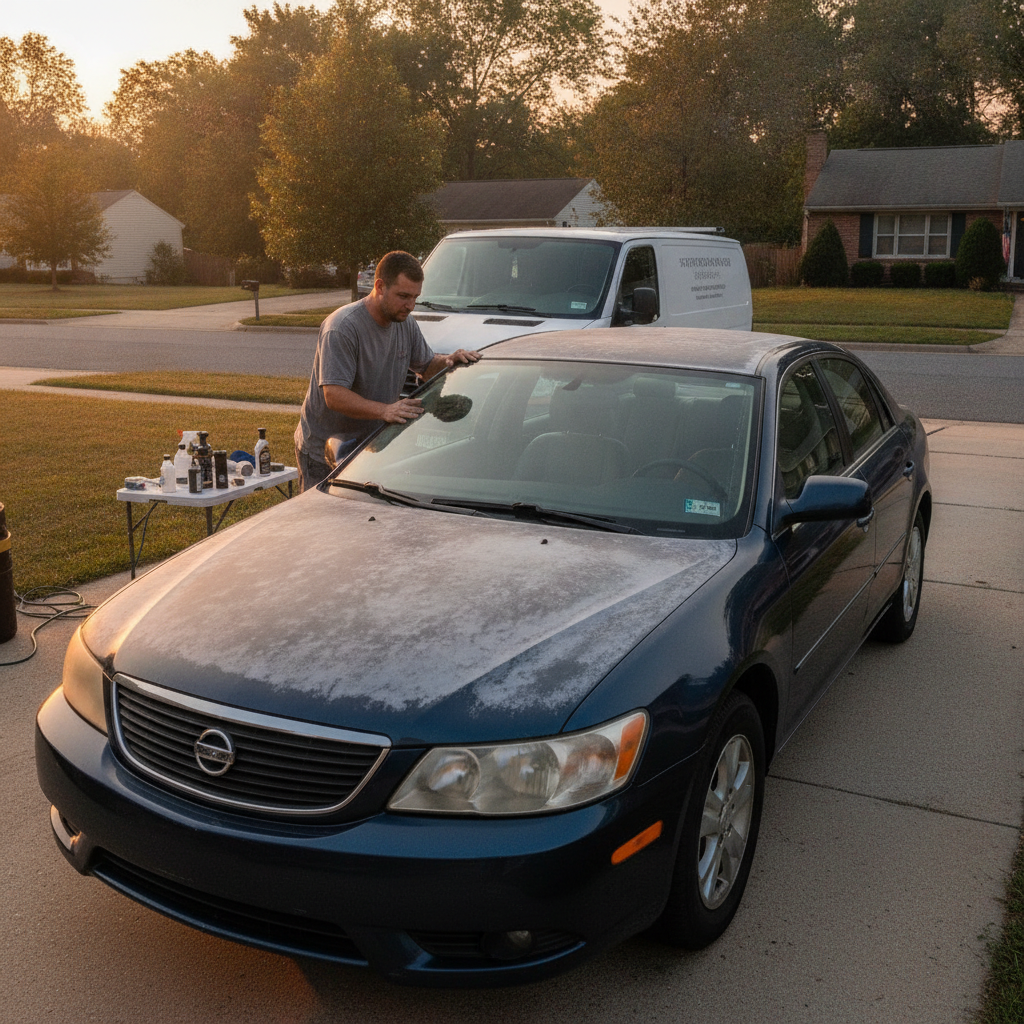
If you’ve noticed that your car’s paint looks faded, dull, or even chalky in certain spots, there’s a good chance paint oxidation is already at work. For vehicle owners in Sicklerville and across South Jersey, this is a more common problem than most people realize — and it gets worse the longer it’s left untreated. The good news is that oxidation is reversible in many cases, and protecting your paint from further damage is very much within reach.
What Is Paint Oxidation and Why Does It Happen?
Paint oxidation occurs when the molecules in your vehicle’s clear coat and base coat react to prolonged exposure to oxygen, UV rays, moisture, and environmental contaminants. Over time, this chemical reaction causes the paint to lose its shine, take on a hazy appearance, and in more severe cases, develop a rough, chalky texture that looks almost powdery to the touch.
It’s worth understanding that your car’s paint is made up of layers. The clear coat on top is the first line of defense, and when oxidation sets in, it begins breaking that protective layer down from the outside. Left unchecked, oxidation can work its way into the color coat beneath, at which point professional correction becomes more complex — and in worst-case scenarios, repainting may be the only option.
Why South Jersey’s Climate Accelerates Paint Oxidation
South Jersey drivers deal with a wide range of seasonal conditions that speed up oxidation on vehicle paint. During the summer months, intense UV exposure bakes the clear coat repeatedly, breaking down its molecular structure over time. In areas like Washington Township and Gloucester Township, vehicles that sit outdoors or are driven daily on exposed roads and highways face significant cumulative sun damage throughout the warmer half of the year.
Then come the colder months. Road salt used during winter storms in Camden County and Gloucester County is a well-known threat to paint and undercarriage, but what’s less discussed is how salt residue combined with freeze-thaw cycles creates a harsh micro-environment on the paint surface that accelerates oxidation. Add in heavy rain, pooling water, and road debris throughout the year, and it’s easy to see why oxidation is such a persistent issue for South Jersey vehicles.
Vehicles parked under trees in neighborhoods like Blackwood or Berlin face additional exposure to tree sap, pollen, and bird droppings — all of which are mildly acidic and strip protective layers from the paint surface, making oxidation worse over time.
How to Tell If Your Car Has Paint Oxidation
You don’t need a professional inspection to spot early-stage oxidation. Here are some things to look for on your own vehicle:
- Dull or flat-looking paint that no longer reflects light the way it used to
- A chalky or powdery residue that comes off on your hand when you wipe certain sections of the paint
- Uneven color tone, especially on horizontal surfaces like the hood, roof, and trunk lid where sun exposure is highest
- Rough texture when you run your hand across the paint, even after washing
- Fading that’s more pronounced on one side of the vehicle, often the driver’s side if the car is regularly parked facing the same direction
Mild oxidation may feel like a cosmetic inconvenience, but it signals that your clear coat is already compromised. If you’re planning to sell your vehicle or want to maintain its resale value, this is something worth addressing sooner rather than later.
Can Paint Oxidation Be Reversed? What the Process Actually Looks Like
In many cases, yes — paint oxidation can be significantly reduced or reversed through professional paint correction. This process involves using a machine polisher with progressively finer compounds and polishing pads to remove the damaged outer layer of clear coat, exposing the cleaner, fresher paint underneath.
Mild oxidation may only require a single-stage polish, while more significant oxidation often calls for a multi-stage correction process that involves cutting compounds followed by finishing polishes. The goal is to level the surface, remove the hazy layer, and restore gloss and depth to the paint.
It’s important to note that paint correction removes a very thin layer of clear coat each time it’s performed. This is why professional assessment matters — an experienced detailer will evaluate your paint’s current condition and recommend the right approach rather than simply applying maximum cutting power across the entire vehicle.
Once the paint has been corrected, applying a protective coating is strongly recommended to prevent oxidation from returning quickly. Ceramic coating is one of the most effective long-term options available, creating a durable, hydrophobic layer over the corrected paint that resists UV exposure, moisture, and environmental contamination far better than traditional wax.
Why Generic Products and DIY Kits Often Fall Short
A quick search online will turn up dozens of spray-on oxidation removers and over-the-counter polishing compounds. While some of these products can provide minor improvement on very light oxidation, they rarely address the root issue effectively — and they can sometimes create new problems.
Without the right machine, the correct pad selection, and an understanding of paint thickness and condition, it’s easy to either under-correct the surface (leaving oxidation behind) or over-correct it (cutting through the remaining clear coat). When clear coat is gone, the vehicle will need professional paint work to restore it properly — which is a significantly larger investment than professional correction done at the right stage.
National chain retailers and generalized auto care centers often offer oxidation removal as a quick add-on service, but the results are inconsistent. A professional mobile detailer who focuses specifically on paint correction and protection will take the time to assess your paint’s unique condition and apply the right technique for your vehicle.
Protecting Your Paint After Oxidation Is Corrected
Correcting oxidized paint is only half the job. Without a proper protective layer, oxidation will return — often faster than it developed the first time, since the correction process does reduce the overall thickness of the clear coat somewhat.
After paint correction, your detailer should walk you through your protection options. Paint protection ceramic coating provides a semi-permanent barrier that bonds to the paint surface at a molecular level, dramatically slowing future UV breakdown and making the vehicle far easier to keep clean between details. Unlike traditional wax, which wears away in a matter of weeks, a professionally applied ceramic coating can last for years with minimal upkeep.
For ongoing protection, regular exterior detailing appointments — ideally twice a year in South Jersey — help maintain the coating and catch any new surface contamination before it becomes a larger problem. Many Sicklerville-area drivers schedule one appointment before summer heat peaks and another after winter road salt season ends.
Frequently Asked Questions About Paint Oxidation in Sicklerville and South Jersey
How long does it take to correct oxidized paint?
The timeline depends on the severity of the oxidation and the size of the vehicle. Mild oxidation correction on a standard sedan might take three to four hours, while a larger vehicle with moderate-to-severe oxidation could require a full day or more. Your detailer will give you a better estimate after evaluating the paint in person.
Will paint correction completely remove all oxidation?
In most mild to moderate cases, professional correction can remove the vast majority of oxidation and restore significant gloss. In very severe cases where the clear coat is almost entirely gone, correction may improve the appearance but cannot fully restore it. A professional assessment will tell you what’s realistically achievable for your specific vehicle.
Can I prevent oxidation on a new car?
Absolutely. Applying a quality protective coating shortly after purchasing a new vehicle is one of the smartest investments you can make. Ceramic coating applied to a new car with fresh, uncompromised paint means you’re protecting it from the start — rather than trying to reverse damage later.
Does the color of my car affect how fast it oxidizes?
Lighter colors — especially white and silver — tend to make oxidation visually less obvious, while darker colors like black, navy, and deep red show it more clearly. However, all paint colors are susceptible to oxidation over time regardless of how visible it is to the eye.
Is mobile detailing a good option for paint correction and oxidation removal?
Yes — professional mobile detailing brings the same quality equipment and expertise directly to your home or workplace, which is especially convenient for busy commuters in Sicklerville, Washington Township, and surrounding areas. You don’t need to drop your car off or work around a shop’s schedule.
Ready to Restore Your Vehicle’s Finish?
If your car’s paint is looking dull, hazy, or noticeably faded, don’t wait until the damage goes deeper. Flash Mobile Detailing serves Sicklerville and the surrounding South Jersey area with professional paint correction and vehicle protection services — brought directly to your driveway or parking spot. Visit our contact page to reach out and get started with a consultation today.