
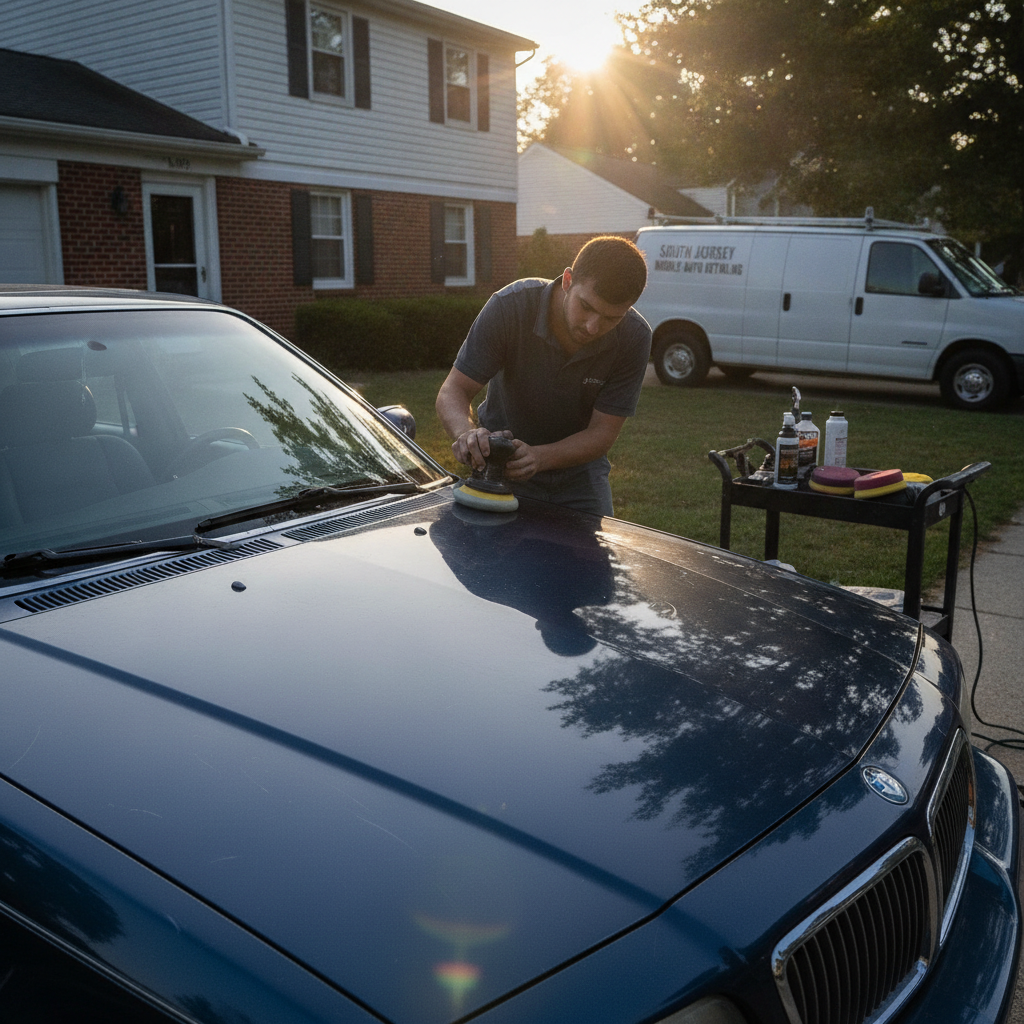
How Does Paint Correction Improve Resale Value for Car Owners in Glassboro and What Should South Jersey Sellers Know Before Listing?
If you’re thinking about selling your vehicle in Glassboro or anywhere in South Jersey, first impressions matter — and nothing shapes a buyer’s first impression faster than the condition of your paint. Paint correction is a professional process that removes surface-level defects like swirl marks, light scratches, water etching, and oxidation from your clear coat, restoring a clean, reflective finish. For sellers in Gloucester County and the surrounding area, having this done before you list could mean the difference between a fast sale at your asking price and a vehicle that sits on the market or sells below value.
Why Paint Condition Matters More Than Most Sellers Realize
Most people selling a car focus on mechanical condition — and that makes sense. But buyers in today’s used car market are savvy. Before they ever ask about mileage or service history, they’re walking around the vehicle in the driveway or parking lot, looking at the paint under natural light. Swirl marks, dull clear coat, and fine scratches are immediately visible in sunlight, and they send a signal — whether accurate or not — that the car wasn’t well cared for.
In South Jersey, vehicles face a combination of environmental stressors that accelerate paint wear over time. UV exposure during summer months fades and oxidizes clear coat. Road salt used during winter in areas like Sicklerville and Washington Township works into paint defects and makes dullness worse. Bird droppings, tree sap, and pollen — common across the wooded neighborhoods of Gloucester County — etch into the clear coat and leave marks that don’t wash off. Over a few years of normal driving, these effects compound. By the time you’re ready to sell, the paint on an otherwise well-maintained vehicle can look years older than the car actually is.
Paint correction addresses all of this at the surface level. Using a machine polisher and professional-grade compounds, a trained detailer removes a controlled, thin layer of clear coat to eliminate or significantly reduce the defects that have built up. The result is paint that looks the way it should — clear, glossy, and well-maintained.
What the Pre-Sale Detailing Process Actually Looks Like
If you’ve never had paint correction done before, it’s worth understanding what’s involved so you can set realistic expectations. The process typically begins with a thorough wash and decontamination to remove any surface contamination — iron deposits, bonded road grime, and residue — that could interfere with the correction process. From there, your detailer will assess the paint under proper lighting to determine what level of correction is needed.
For vehicles being prepared for sale, a one-stage or single-stage polish is often the right call. This removes light to moderate defects and dramatically improves gloss without the time and cost of a multi-stage correction. For vehicles with deeper scratches or heavier oxidation, a more thorough two-stage correction may be recommended. Your detailer should walk you through what they’re seeing and what results you can realistically expect before any work begins.
After correction, many sellers choose to apply a protective finish — either a paint sealant or a ceramic coating — to lock in the results and give the paint added depth and protection. This step isn’t required, but it can further enhance the appearance and give a prospective buyer added confidence that the vehicle has been professionally maintained.
The Gap Competitors Miss: Connecting Paint Correction Specifically to the Selling Process
Most resources available online from national detailing brands and suppliers explain what paint correction is in technical terms — compounds, polishing pads, machine settings. What they don’t address clearly is the practical question that real sellers in places like Blackwood, Williamstown, or Glassboro are actually asking: Is it worth spending money on paint correction before I list my car, and what return should I expect?
The answer depends on your vehicle, its current condition, and your local market — but the general principle holds. A vehicle with clean, corrected paint photographs better, presents better in person, and creates a stronger first impression that helps justify your asking price. Buyers who might have expected to negotiate aggressively based on cosmetic flaws have less leverage when the paint looks professionally cared for. In a competitive used car market, that matters.
What’s more, professional paint correction paired with a thorough exterior detail signals to buyers that the car was owned by someone who took care of it. That perception has real value, even if it’s difficult to assign an exact dollar figure to it. The goal isn’t to mislead anyone — it’s to present your vehicle at its actual best.
Why Mobile Detailing Is a Smart Choice for Sellers in South Jersey
If you’re in the process of selling a vehicle, your schedule is already full. Between cleaning out the car, taking photos, listing it online, and fielding inquiries, the last thing you want is to drive somewhere and wait for hours. That’s where mobile detailing offers a real advantage for sellers across South Jersey.
A mobile detailer comes to your home in Berlin, your driveway in Washington Township, or your office parking lot in Glassboro. You don’t have to go anywhere or rearrange your day. The correction and detail work is done on-site, and when the technician leaves, your vehicle is ready for photos and showings. For busy sellers who want quality results without the inconvenience, it’s a practical choice that fits how people actually live.
What to Ask a Detailer Before Booking Pre-Sale Paint Correction
Not every detailer offers true paint correction — some use the term loosely to describe a basic polish or an over-the-counter product. Before you book, ask a few direct questions:
- Do you use a machine polisher, or is this done by hand?
- Will you assess the paint under proper lighting before recommending a correction level?
- How do you handle areas with thin clear coat where aggressive cutting isn’t safe?
- What’s included in the process — does it start with a full wash and decontamination?
- Can you show examples of similar pre-sale correction work you’ve completed?
A professional detailer will answer these questions clearly and honestly. If you’re getting vague responses or a quote without any paint assessment, that’s a signal to look elsewhere.
Frequently Asked Questions About Paint Correction and Resale Value in South Jersey
How much does paint correction typically cost before selling a car?
Cost varies based on vehicle size, paint condition, and the level of correction needed. A single-stage correction on a standard sedan will generally cost less than a full multi-stage correction on a larger SUV with heavy defects. Contact a local detailer for an accurate quote based on your specific vehicle.
How long does paint correction take?
A single-stage correction on most vehicles typically takes anywhere from three to six hours depending on size and condition. More comprehensive two-stage corrections can take longer. Your detailer should give you a realistic time estimate after assessing the paint.
Should I get paint correction done if my car has a lot of miles?
Yes — paint condition is separate from mileage. A high-mileage vehicle with clean, corrected paint will photograph and present significantly better than the same vehicle with dull, swirl-marked paint. Buyers focus on what they can see, and corrected paint makes a strong visual argument for the car’s overall care.
Is paint correction worth it if I’m selling privately versus trading in?
It tends to be more impactful for private sales, where buyers have time to inspect the vehicle closely and are making decisions based on direct comparison. Dealership trade-in appraisers also consider cosmetic condition, so a clean paint job can support a stronger trade-in offer as well.
Can paint correction remove all scratches?
Paint correction can remove or significantly reduce defects that are within the clear coat layer. Scratches that have gone through the clear coat to the base coat or primer are not correctable through polishing alone and would require touch-up work. A professional assessment before the job will tell you what’s achievable with your vehicle.
Ready to Prepare Your Vehicle for Sale?
If you’re getting ready to sell your car in Glassboro, Sicklerville, or anywhere across South Jersey, paint correction is one of the most impactful steps you can take to present your vehicle at its best. Flash Mobile Detailing serves Gloucester County and the surrounding area, coming directly to your location so the process fits your schedule — not the other way around.
Reach out today to discuss your vehicle and what pre-sale detailing options make sense for your situation. You can connect with the team directly through the Flash Mobile Detailing contact page to ask questions or request a quote. No pressure — just straightforward, professional guidance on what your car actually needs.