
How Does Professional Paint Correction Before Ceramic Coating Work and What Should Car Owners in Blackwood Know Before Booking?
If you’re considering ceramic coating for your vehicle in Blackwood or anywhere in Camden County, there’s an important step that often gets skipped over — and skipping it can leave you with a result you didn’t expect. Paint correction is the process of removing surface defects from your vehicle’s clear coat before any protective coating is applied. Without it, you’re essentially locking in scratches, swirl marks, and oxidation under a layer designed to last for years. This guide breaks down exactly what paint correction involves, why it matters, and what you should know before scheduling your appointment.
What Is Paint Correction and Why Does It Come First?
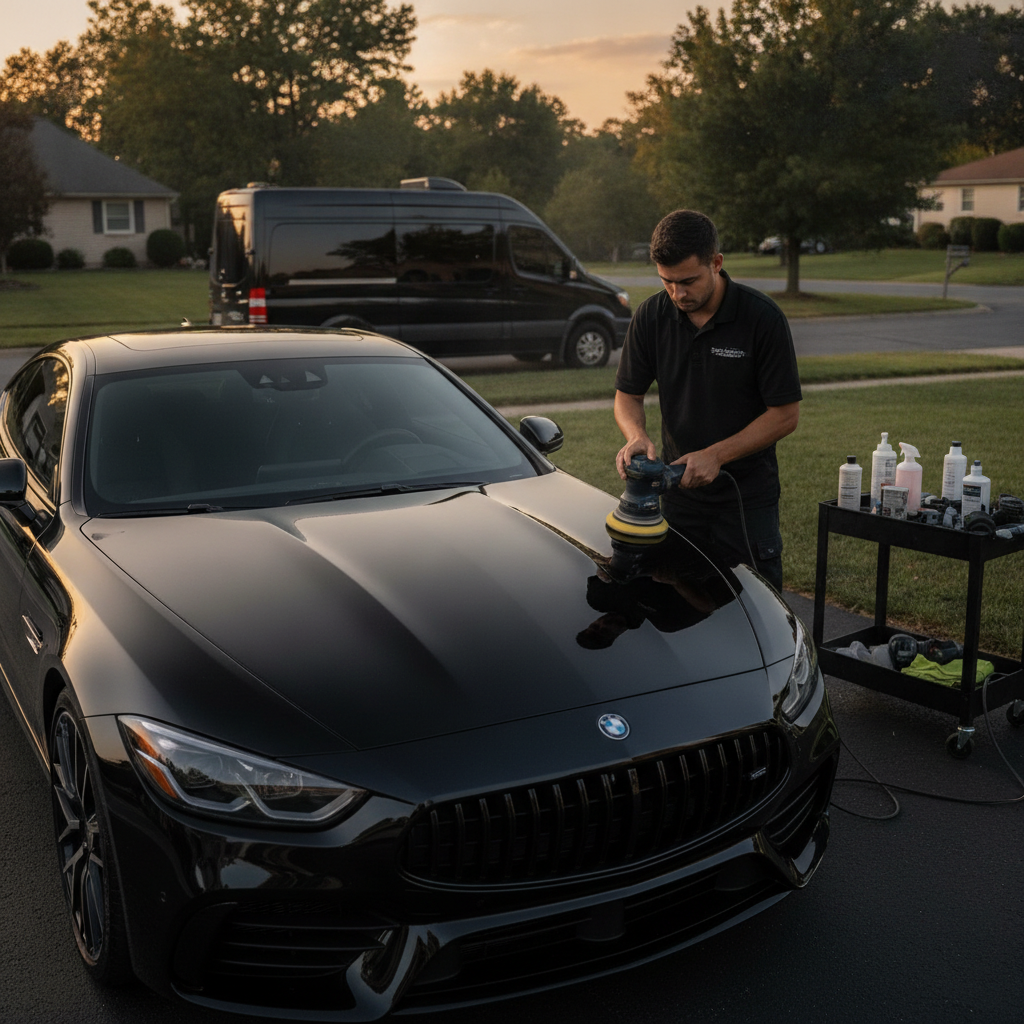
Paint correction is a multi-stage polishing process that uses machine polishers and specially formulated compounds to remove a very thin, controlled layer of your vehicle’s clear coat. That top layer of clear coat is where most surface damage lives — the fine scratches left by automated car washes, swirl marks from improper drying, light scuffs from daily use, and the dull haze that builds up from months or years of UV exposure.
The reason paint correction has to happen before ceramic coating is straightforward: ceramic coating is a semi-permanent protective layer. Once it bonds to your paint, it seals in whatever is underneath. If your paint has visible swirl marks or a dull, uneven finish, those imperfections will still be visible after the coating cures — and in many cases, the reflective nature of the coating can actually make them stand out more under direct sunlight.
For car owners in Blackwood who commute regularly on Route 42 or the AC Expressway, your paint accumulates road debris, environmental contamination, and micro-scratches faster than you might realize. Getting paint correction done first ensures your ceramic coating starts with a clean, smooth surface — and delivers the deep gloss and clarity you’re actually paying for.
What the Paint Correction Process Actually Looks Like
A professional paint correction appointment isn’t a quick wash and wax. It’s a detailed, time-intensive service that typically involves several stages depending on the current condition of your paint.
- Inspection under lighting: The detailer uses a high-intensity light or inspection lamp to assess the full extent of surface defects across every panel of your vehicle. What’s invisible in shade often becomes obvious under proper lighting.
- Paint thickness measurement: A paint depth gauge is used to measure the thickness of clear coat on each panel. This tells the technician how much correction can safely be done without cutting through the clear coat entirely.
- Multi-stage machine polishing: Depending on the severity of the defects, one, two, or even three stages of polishing may be performed — starting with a more aggressive compound to remove heavier scratches and finishing with a finer polish to refine the surface to a high gloss.
- Panel wipe-down: After polishing, each panel is wiped down with an isopropyl alcohol solution to remove any polishing oils and reveal the true corrected finish. This is the same step performed just before ceramic coating is applied.
The entire process can take anywhere from a few hours to a full day or more depending on vehicle size and paint condition. It’s precise, methodical work — not something that can be rushed.
The Gap Most Detailing Content Misses: What Partial Paint Correction Actually Means
One area that most national detailing brands and large coaching sites leave completely unaddressed is the difference between a full paint correction and a one-step enhancement polish — and why that distinction matters when you’re preparing for ceramic coating.
A one-step polish improves gloss and removes light surface haze but does not fully eliminate deeper scratches or more pronounced swirl marks. It’s a faster and less expensive option, but it’s not always sufficient as a preparation step before coating. Many vehicle owners in South Jersey book what they believe is a full paint correction, only to receive a one-step polish — and then wonder why certain scratches are still visible under their ceramic coating months later.
When you’re speaking with a detailing professional, ask specifically whether the service includes a true multi-stage correction or a single-stage enhancement. A trustworthy provider will always inspect your paint first, explain what level of correction your vehicle actually needs, and quote accordingly. At Flash Mobile Detailing, we inspect every vehicle before recommending a service level — because over-promising doesn’t serve anyone.
South Jersey Paint Conditions That Make Correction More Necessary
Vehicles driven in Gloucester Township, Washington Township, and throughout Camden County face a specific set of environmental challenges that accelerate paint degradation. Winter road salt doesn’t just damage the undercarriage — the salt spray that kicks up behind tires creates a fine mist of contaminants that clings to your paint and begins breaking down the clear coat over time. Summer heat and extended UV exposure cause additional oxidation, particularly on darker-colored vehicles.
Add tree sap from shaded parking areas, pollen that settles into paint scratches, and the occasional bird dropping left untreated too long, and you have the typical paint profile of a vehicle that’s been driven daily in South Jersey for more than a couple of years. That’s not a criticism — it’s simply what daily driving does. But it does mean that most vehicles in this region genuinely benefit from at least some level of paint correction before ceramic coating is applied.
If you want the ceramic coating to do its job — hydrophobic water beading, UV resistance, easier cleaning, and long-term paint protection — it needs a properly prepared surface to bond to. You can learn more about what paint protection ceramic coating involves and how it protects your vehicle over the long haul.
How to Know If Your Vehicle Needs Paint Correction Before Coating
You don’t need to be a detailing expert to get a rough sense of your paint’s condition. Try these simple checks:
- Park your vehicle in direct sunlight and look at the hood or roof at a low angle. Circular or web-like scratches visible in the reflection are swirl marks.
- Run a clean, dry finger gently across a panel. A rough or gritty texture means surface contamination is present, which also needs to be addressed before correction.
- Look at your paint in different lighting conditions. If the finish looks dull or hazy in bright natural light, oxidation or fine scratching is likely the cause.
If you notice any of these signs, it’s worth requesting a paint inspection before assuming you’re ready for coating. A professional assessment takes only a few minutes and can save you from investing in a service that won’t deliver the finish you’re expecting.
Frequently Asked Questions About Paint Correction in Blackwood and South Jersey
Do I always need paint correction before ceramic coating?
Not always, but in most cases some level of correction or paint enhancement is recommended. Brand-new vehicles with no defects may only need a decontamination wash and a light polish, while older or heavily used vehicles typically benefit from a more thorough correction process. A proper inspection will determine what’s actually needed.
Can paint correction remove deep scratches that go through the clear coat?
Paint correction removes defects that are within the clear coat layer only. Scratches that have cut through the clear coat and into the base coat or primer cannot be fixed by polishing alone — those require touch-up paint or panel repair before a coating is applied.
How long does paint correction take for a typical vehicle in the Blackwood area?
For an average-sized sedan or SUV, a single-stage enhancement might take two to four hours. A full two-stage correction can take six to twelve hours or more, depending on the severity of defects and the number of panels being corrected. Larger vehicles or those with significant paint damage take longer.
Will paint correction make my clear coat thinner?
Yes, but only by a controlled, minimal amount. A professional uses a paint thickness gauge to monitor how much clear coat remains throughout the process. Responsible correction removes only what’s necessary to achieve a clean surface, leaving plenty of clear coat thickness for long-term durability.
Does mobile detailing work for paint correction and ceramic coating?
Yes. Mobile detailing services can perform paint correction and ceramic coating application at your home or workplace, which is especially convenient for busy car owners in Cherry Hill, Gloucester Township, and the surrounding area. The key is ensuring your vehicle is parked in a shaded, sheltered location during the service so conditions are appropriate for the work.
Ready to Start With a Proper Paint Inspection?
Getting the most out of ceramic coating starts with understanding what your paint actually needs before the coating goes on. If you’re in Blackwood, Sicklerville, or anywhere in the South Jersey area and you’re not sure whether your vehicle needs correction before coating, the right first step is a professional assessment — not a guess.
Flash Mobile Detailing serves car owners throughout Camden County and the surrounding region with honest, detail-oriented service. We’ll inspect your vehicle, explain what we find, and recommend only what your paint genuinely needs. Contact us today to schedule your consultation and find out what it takes to get your vehicle ready for a coating that actually looks and performs the way it should.