
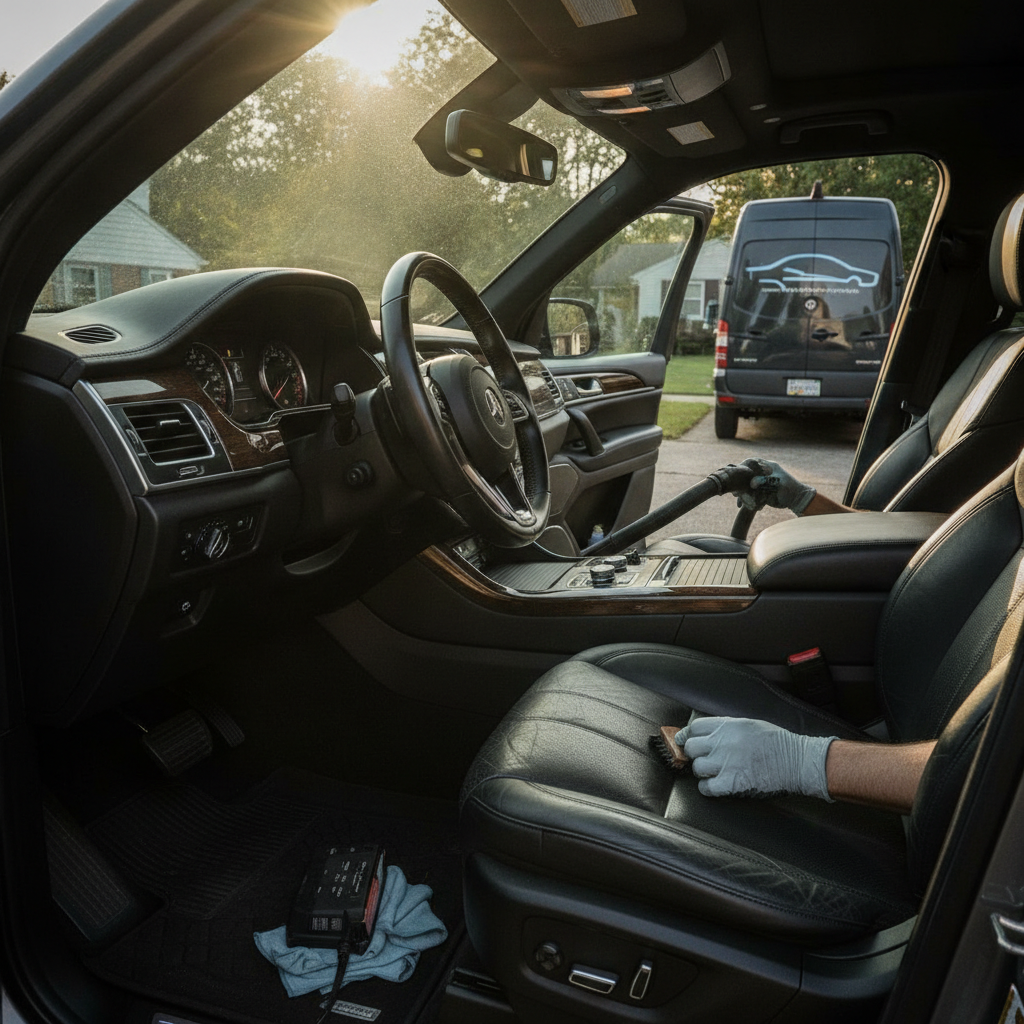
How to Maintain Your Car’s Interior Year-Round in Voorhees and South Jersey
If you drive regularly around Voorhees, Gloucester Township, or anywhere in South Jersey, your car’s interior takes a beating that most people underestimate. Salt-covered boots in January, kids’ juice boxes in summer, pollen tracked in from spring, and the dry heat that cracks your dashboard come fall — it adds up fast. Maintaining your car’s interior isn’t a once-a-year task; it’s a consistent, season-aware process that directly impacts how long your vehicle looks and feels like new. This guide walks you through what professional interior maintenance really involves, what changes by season, and when it makes sense to bring in a professional mobile detailing service rather than doing it yourself.
Why Interior Care Matters More Than Most Drivers Realize
Most vehicle owners focus their care budget on the outside of the car — washes, waxes, maybe a ceramic coating. That makes sense because the exterior is the first thing people see. But when it comes time to trade in or sell your vehicle, buyers spend the most time evaluating the interior. Stained upholstery, worn carpet, cracked leather, and lingering odors can knock hundreds — sometimes thousands — off your resale value.
Beyond resale, you spend more time inside your car than outside it. A clean, well-maintained interior is genuinely more comfortable to drive in every day. And in South Jersey, where many residents commute into Cherry Hill, Camden County, or even into Philadelphia regularly, that daily environment matters.
What Changes Season by Season in South Jersey
Winter: Salt, Moisture, and Floor Mat Damage
South Jersey winters bring road salt, slush, and moisture that get tracked directly into your vehicle every time you climb in. Salt residue left on carpet and floor mats doesn’t just look dirty — it breaks down fibers over time and can cause permanent staining if it’s not addressed. During winter months, the priority should be protecting your floors with all-weather mats, vacuuming frequently, and having your carpets and floor mats professionally cleaned at least once before spring. Vehicles in areas like Winslow Township and Washington Township, where commuters deal with salted roads across multiple counties, tend to see the most interior floor damage by March.
Spring: Pollen, Allergies, and Odor Buildup
Spring in South Jersey is beautiful — but it’s also prime pollen season. Fine yellow dust settles into your vents, under your seats, and into your fabric upholstery. If you drive with your windows cracked or your HVAC pulling in outside air, that pollen accumulates in your cabin filter and interior surfaces. Spring is a good time to schedule a thorough interior detail that includes vent cleaning, a full vacuum, surface wipe-down, and if needed, an odor treatment to clear out anything that built up over winter.
Summer: UV Exposure, Heat Damage, and Spills
Summer in South Jersey brings intense UV exposure that can fade and crack your dashboard, dry out leather seats, and cause interior plastics to become brittle. If your vehicle sits in a parking lot during a long workday, interior temperatures can easily exceed 130°F — enough to permanently damage certain materials. UV-blocking window tint significantly reduces this interior heat load. You can learn more about how car window tint protects your interior from heat and UV damage. Summer is also the season of spills, sand, and kids. Fabric protection applied after a professional interior detail creates a barrier that makes future spills much easier to clean before they set.
Fall: Leaves, Mud, and Prep for Winter
Fall is arguably the most important season to schedule a professional detail. Getting your interior deep cleaned before winter begins means you’re starting the harshest season with a clean baseline. It also gives a detailer the chance to condition leather before cold, dry air causes cracking, and to apply any protective treatments to carpets and upholstery before salt season begins.
What a Professional Interior Detail Actually Covers — The Part Most Guides Leave Out
This is an area where a lot of online guides — including content from national detailing brands — fall short. They’ll list steps like “vacuum” and “wipe surfaces” without explaining the difference between a surface clean and a true deep detail. Here’s what a thorough professional interior detail should include:
- Full vacuuming of seats, carpet, trunk, and all crevices — not just the obvious flat surfaces
- Compressed air blow-out of vents, seams, and tight gaps where a vacuum can’t reach
- Stain extraction using professional-grade hot water extraction equipment on fabric seats and carpet — not just spot treatment
- Leather cleaning and conditioning with pH-balanced products that restore moisture without leaving a greasy residue
- Hard surface cleaning of dash, door panels, center console, and cup holders using appropriate interior-safe products
- Glass cleaning of all interior windows, including the windshield, which collects an oily film from off-gassing plastics
- Odor treatment when needed — which may involve ozone treatment or enzyme-based cleaners depending on the source
A true professional detail is not a 20-minute job. Depending on the condition and size of the vehicle, a thorough interior service typically takes two to four hours when done properly. If a service is priced or scheduled to take less time than that for a vehicle in average condition, it’s worth asking what’s being skipped.
DIY vs. Professional: Where the Line Is
There’s nothing wrong with maintaining your interior between professional services. Regular vacuuming, wiping down surfaces, and addressing spills quickly all extend the time between full details. But there are situations where DIY tools and store-bought products genuinely fall short:
- Deep stains in fabric seats or carpet that have had time to set
- Leather that’s cracked, faded, or heavily soiled
- Persistent odors from pets, smoke, mildew, or food
- Mold or moisture damage from a leak or left-open window
- Prep cleaning before applying any protective product to upholstery
Consumer-grade steam cleaners and carpet shampooers can help with surface grime, but they rarely have the extraction power needed to fully remove what’s embedded in the fibers. Using too much moisture without proper extraction can actually create mildew problems. A professional using the right equipment and technique gets better results with fewer risks.
How Often Should South Jersey Drivers Schedule Interior Details?
For most daily drivers in areas like Blackwood, Gloucester Township, or Sicklerville, scheduling a thorough interior detail twice a year — once in the spring and once before winter — is a reasonable baseline. Vehicles with kids, pets, or high daily mileage may benefit from quarterly interior services. In between, a quick interior refresh (vacuum, wipe-down, glass clean) every six to eight weeks keeps the cabin from reaching a point where a full restoration is needed.
If you’ve recently had an interior detail done and want to protect the results longer, ask your detailer about fabric protection coatings and leather sealants that reduce how quickly surfaces re-soil.
Frequently Asked Questions
How long does a professional interior detail take?
For most passenger vehicles in average condition, a thorough interior detail takes two to four hours. Larger vehicles like SUVs, trucks, and vans, or vehicles with heavy soiling, may take longer. A reputable detailer will give you an honest time estimate upfront.
Can professional detailing remove pet hair from car seats and carpet?
Yes — though pet hair can be one of the more time-intensive parts of an interior detail. Professional detailers use specialized tools to pull embedded hair from fabric fibers before vacuuming. The results are significantly better than what most pet owners achieve with standard vacuum attachments at home.
What’s the best way to protect leather seats in South Jersey’s climate?
Leather conditioning twice a year — spring and fall — helps prevent the drying and cracking that comes from summer heat and winter cold. Using UV-blocking window tint also reduces the amount of direct sunlight hitting your leather seats, which is one of the primary causes of premature fading and cracking.
Can interior detailing actually remove smoke odors?
Smoke odor is one of the most stubborn problems in interior detailing because the smell penetrates fabric, carpet, headliner, and even the HVAC system. Professional ozone treatment — combined with a thorough deep clean of all surfaces — can significantly reduce or eliminate smoke odor in most vehicles. Results vary depending on how long the vehicle was exposed and whether all contaminated surfaces are treated.
Is mobile interior detailing as thorough as taking my car to a shop?
A skilled mobile detailer brings professional-grade equipment directly to your location and performs the same quality of work you’d expect in a fixed shop. The main advantage is convenience — your vehicle gets detailed at your home or workplace without you needing to arrange a ride or wait at a shop. Flash Mobile Detailing serves customers throughout Voorhees, Cherry Hill, Washington Township, and the surrounding South Jersey area with full professional interior services.
Ready to Give Your Car’s Interior the Attention It Deserves?
Whether your vehicle needs a seasonal refresh after a rough South Jersey winter or a full deep clean after years of daily use, Flash Mobile Detailing can help. We come to you — your driveway, your workplace, wherever is most convenient — and deliver thorough, professional results that make a real difference in how your car looks, smells, and feels. Reach out today to request a free consultation and find out what interior detailing done right actually looks like.