
How Does Tree Sap Damage Your Car’s Paint in Washington Township and What Should South Jersey Drivers Do to Remove It Safely?
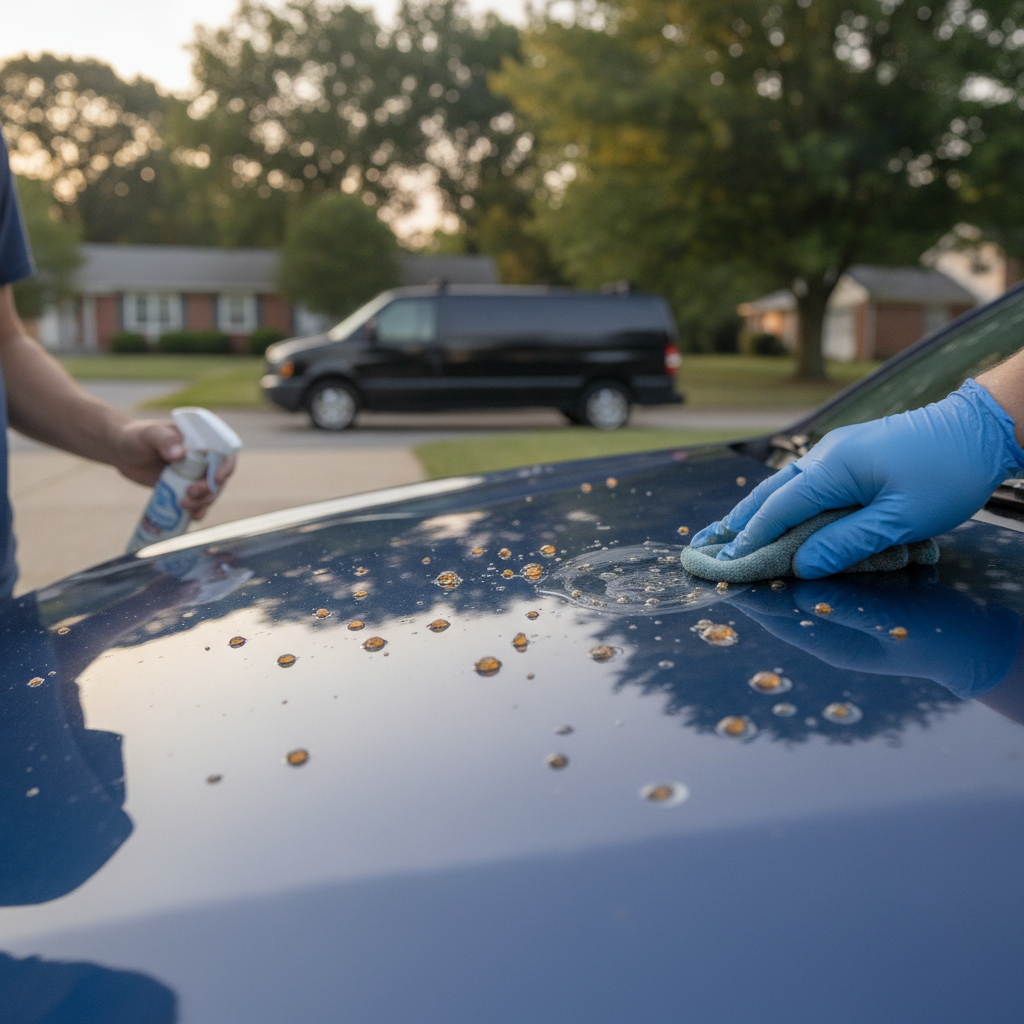
Tree sap is a serious — and seriously underestimated — threat to your car’s paint, especially for drivers in Washington Township and nearby communities across Gloucester County. If you regularly park under oak, pine, sweet gum, or maple trees, there is a good chance you have already noticed sticky amber droplets or hardened spots on your hood, roof, or trunk. What most car owners do not realize is that once sap fully hardens and bonds to the clear coat, it begins chemically etching into the surface. The longer it sits, the more damage it causes — and at that stage, simple washing will not fix it.
Why Tree Sap Is More Damaging Than Most Drivers Realize
Fresh tree sap feels sticky and looks easy enough to wipe away, but that impression is deceptive. Sap contains natural resins, sugars, and acids that react with your car’s clear coat — the transparent protective layer that sits over your base coat and gives your paint its gloss and depth. As the sap dries and hardens under South Jersey’s sun, it shrinks, pulling the surface of the clear coat with it. Over time, this creates microscopic cracks and indentations known as etching.
On darker-colored vehicles, this shows up as dull, hazy patches or raised spots that catch the light at odd angles. On lighter vehicles, you may notice a slight discoloration or texture change. Either way, once etching penetrates deeply enough into the clear coat, a professional paint correction becomes necessary to restore the surface — and in severe cases, repainting may be the only option.
Washington Township has a generous amount of mature tree canopy in its residential neighborhoods, and many driveways sit beneath large oaks and sweet gums. Combine that with the heat and UV exposure common to South Jersey summers, and you have conditions where fresh sap can start to harden in as little as a few hours on a warm afternoon.
What Happens If You Try to Remove Tree Sap the Wrong Way
This is where a lot of well-meaning car owners accidentally make things worse. Rubbing fresh sap with a dry cloth or paper towel does not remove it — it spreads it and introduces fine scratches to the clear coat. Using household products like rubbing alcohol, nail polish remover, or harsh degreasers can strip the clear coat itself or leave behind chemical staining that is just as difficult to fix as the sap was.
Generic advice found on product manufacturer sites often stops at recommending their own branded solvent, with little attention paid to what comes after removal — specifically, whether the surface needs decontamination and whether a protective layer should be applied to prevent the same problem from recurring. That gap in practical guidance is exactly where a professional detailer adds real value.
The Right Way to Remove Tree Sap Without Damaging Your Paint
Safe tree sap removal generally follows a few key steps that a trained detailer understands well:
- Soften before you touch it. Applying a dedicated sap remover or isopropyl alcohol (at an appropriate dilution) to a microfiber cloth and letting it dwell on the sap spot for 30 to 60 seconds helps break down the resin bond without requiring heavy rubbing. Patience here protects the surface underneath.
- Use gentle, controlled pressure. Once softened, the sap should lift with minimal pressure using a clean microfiber cloth. Never scrape it with your fingernail, a credit card, or any rigid tool — that approach almost always leaves scratches.
- Clay bar treatment after removal. Even after the visible sap is gone, residue often remains bonded to the clear coat at a microscopic level. A professional-grade clay bar pulls embedded contaminants from the surface without abrasion, leaving the paint genuinely clean rather than just visually clear.
- Inspect for etching. Once the surface is clean, a trained eye can assess whether the sap caused any etching damage. If the clear coat is compromised, mobile detailing combined with light paint correction may be needed to restore a smooth, even finish before any protective coating is applied.
- Apply a protective layer. A clean surface without protection is just a surface waiting to collect the next round of contamination. This is the step that most DIY guides skip entirely.
How Ceramic Coating Helps Protect Against Tree Sap — and What It Cannot Do
One of the most practical benefits of ceramic coating that rarely gets mentioned in the context of tree sap is how it changes the relationship between contaminants and your paint. A properly applied ceramic coating creates a semi-permanent hydrophobic layer over the clear coat that makes it much harder for sap to bond directly to the paint surface. Because sap sits on top of the coating rather than adhering to the paint itself, fresh deposits are significantly easier to remove before they harden.
It is worth being honest here, though: ceramic coating is not a force field. If sap is left on a coated surface long enough under direct sun, it can still cause damage — just more slowly and less severely than it would on unprotected paint. The coating buys you time and reduces your risk, which is meaningful for busy commuters who cannot always catch a sap drip the same day it lands.
If you have been considering ceramic coating for your vehicle, sap protection is a genuinely practical reason to move forward — particularly if you park regularly under trees in neighborhoods across Gloucester County or Camden County.
Seasonal Timing Matters in South Jersey
Tree sap production peaks during spring and early summer when trees are actively growing, and again during fall as certain species begin to go dormant. For drivers in Washington Township, Blackwood, Voorhees, and the broader Sicklerville area, this means the spring pollen season and the early-fall period both bring heightened risk. It is worth scheduling a thorough exterior decontamination around these windows — not just a basic wash, but a full clay bar treatment and inspection of the paint surface.
A mobile detailing appointment is a practical choice for busy households that cannot easily get to a shop. A professional comes to your driveway, assesses your paint condition on the spot, and handles the decontamination and protection steps with the right tools and products — not whatever happens to be under the kitchen sink.
Frequently Asked Questions About Tree Sap and Car Paint in South Jersey
How long does it take for tree sap to permanently damage car paint?
In warm weather, fresh sap can begin etching into clear coat within 24 to 48 hours if left in direct sunlight. Cooler conditions slow the process, but it is always best to remove sap as soon as you notice it rather than waiting for your next scheduled wash.
Can I use WD-40 to remove tree sap from my car?
WD-40 is sometimes recommended online as a sap remover, and while it can soften sap, it also leaves an oily film that attracts dust and other contaminants. It is not a detailing-grade product and should not be your first choice. A proper automotive sap remover or diluted isopropyl alcohol on a microfiber cloth is a safer option.
Will a regular car wash remove tree sap?
Standard automatic or touchless car washes do not have the chemistry or process to break down hardened tree sap. They may remove a very fresh, lightly deposited droplet, but any sap that has been sitting for more than a few hours is unlikely to come off in a standard wash without targeted treatment.
Does ceramic coating completely prevent tree sap damage?
Ceramic coating significantly reduces the risk and slows the bonding process, making sap much easier to remove before it etches. However, no coating eliminates the need to remove sap promptly. Think of it as a buffer that gives you more time to act rather than a permanent solution that lets you ignore the problem.
How do I know if tree sap has already etched my clear coat?
After removing the sap, run a clean fingertip lightly over the area. If you feel a slight indentation, rough texture, or if the spot looks dull compared to surrounding paint, etching has likely occurred. A professional detailer can assess the depth and recommend whether light polishing or a more involved paint correction is appropriate.
Ready to Protect Your Paint From South Jersey’s Trees?
If your vehicle has been sitting under trees this season and you are not sure what condition the paint is in, a professional exterior detail and inspection is a smart next step. Flash Mobile Detailing serves Washington Township, Sicklerville, and surrounding communities across South Jersey with professional-grade exterior decontamination, paint correction, and ceramic coating services — all performed at your location for maximum convenience.
Do not wait for a small sap deposit to become a permanent paint problem. Contact Flash Mobile Detailing today to schedule a consultation and find out what your paint actually needs to stay protected through every season.