
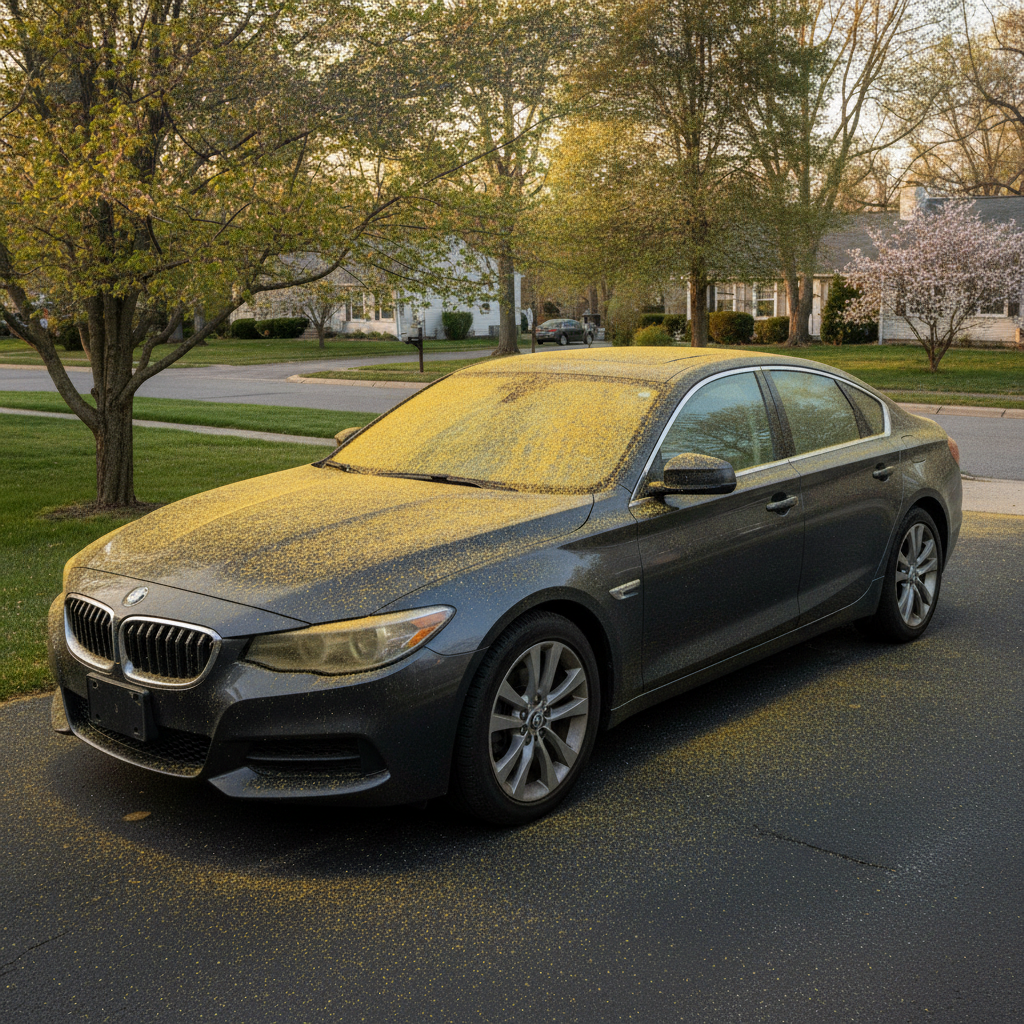
How Does Pollen Season Affect Your Car’s Paint and Exterior in Sicklerville and What Should South Jersey Drivers Do About It?
If you’ve walked out to your car on a spring morning in Sicklerville and found it coated in a layer of fine yellow or green dust, you already know how aggressive pollen season can be in South Jersey. What most drivers don’t realize, though, is that pollen isn’t just a nuisance — it’s actually mildly acidic, and when left sitting on your car’s paint through heat, humidity, and rain, it can quietly etch into your clear coat over time. The good news is that with the right approach to regular exterior detailing and protective coatings, you can keep your paint in strong condition all season long.
Why Pollen Is More Damaging Than It Looks
Pollen grains are microscopic but they’re not inert. They contain biological compounds that, when exposed to moisture — say, morning dew or a light rain shower — release weak organic acids. On a warm spring day in South Jersey, that chemical reaction speeds up. The acids make contact with your vehicle’s clear coat, and if pollen sits long enough, it can leave behind light etching or a hazy residue that regular washing struggles to fully remove.
This is a topic that larger national detailing resources tend to gloss over. You’ll find articles about bird droppings and tree sap causing paint damage, but the cumulative effect of heavy pollen seasons — which are very real for anyone parked near wooded neighborhoods like Cross Keys or the tree-lined streets around Washington Township — rarely gets the attention it deserves. The damage from a single pollen season might be subtle. But after two or three years of untreated exposure, your paint can start to look dull and feel rough to the touch even after a wash.
What Happens When Pollen Mixes With Rain and Heat
Spring weather in Gloucester County and Camden County is notoriously unpredictable. One afternoon it’s sunny and warm, the next morning there’s a heavy overnight rain. That cycle — dry pollen settling, then getting wet and drying again — is particularly hard on exterior paint because the acids in pollen concentrate as moisture evaporates. If your car sits under a tree in a neighborhood like Williamstown or Berlin and goes unwashed for a week or two, the damage compounds quietly beneath the surface.
Combine that with the fact that South Jersey spring UV exposure is already climbing, and you have a scenario where both chemical and solar degradation are working against your paint simultaneously. UV rays weaken the clear coat’s resistance over time, making it more susceptible to the kind of etching that pollen can cause.
How Professional Exterior Detailing Addresses Pollen Damage
A standard home rinse with a garden hose isn’t enough to safely remove a heavy pollen buildup. Wiping a dry or lightly damp cloth across a pollen-coated surface can actually drag the gritty particles across your clear coat and introduce fine scratches. Professional exterior detailing uses the right wash media, proper lubrication, and a methodical process to lift contaminants off the surface safely without grinding them in.
Beyond the wash itself, a thorough mobile detailing service will include a paint decontamination step — often using a clay bar or a chemical decontamination product — to pull embedded particles out of the clear coat that a standard wash can’t reach. This step is particularly valuable in spring when pollen accumulation is at its peak and contaminants are working their way into the surface over weeks of repeated exposure.
For drivers in Blackwood, Gloucester Township, or anywhere in South Jersey who park outdoors regularly, scheduling a professional exterior detail in the spring — before pollen has had months to work against the paint — is one of the smarter seasonal maintenance decisions you can make.
How Ceramic Coating Reduces Pollen’s Impact on Your Paint
One of the most practical benefits of ceramic coating is how it changes the relationship between your paint and environmental contaminants like pollen. A properly applied ceramic coating creates a semi-permanent hydrophobic layer over your clear coat. That slick, water-repelling surface makes it significantly harder for pollen to bond firmly to the paint.
On an unprotected surface, pollen grains settle in and grip micro-pores and surface imperfections in the clear coat. On a ceramic-coated surface, the same pollen sits on top of a much smoother, more chemically resistant layer. When rain comes, a larger percentage of it simply sheets off — taking loose pollen with it. When you do wash a ceramic-coated vehicle, the pollen releases more easily, requiring less agitation and reducing the risk of introducing scratches during the cleaning process.
This doesn’t mean a ceramic coating makes your car self-cleaning or immune to pollen exposure. But it meaningfully reduces how much effort and risk is involved in keeping the surface clean through a South Jersey spring, and it offers an added buffer against the mild etching that repeated pollen exposure can cause over time.
Practical Tips for Protecting Your Car During Pollen Season in South Jersey
- Rinse early and often. During peak pollen season — typically March through May in this region — a quick rinse every few days is far better for your paint than letting pollen accumulate and bake in the sun.
- Avoid dry wiping. Never use a dry cloth or paper towel to wipe pollen off a dry surface. Always use water and a proper microfiber wash mitt with lubrication.
- Park strategically when possible. If you have a garage or covered spot available, use it during the heaviest pollen days. Vehicles parked near pine trees in neighborhoods like Cross Keys and Voorhees tend to accumulate heavy resinous pollen that is harder to remove than lighter tree varieties.
- Schedule a spring detail. A professional exterior detail in early spring sets your paint up to handle the season properly and removes any winter road salt residue that may have weakened your clear coat heading into warmer months.
- Consider protective coating before next spring. If you haven’t already, having ceramic coating applied before the next pollen season gives your paint a meaningful defensive advantage.
Why Mobile Detailing Is Particularly Convenient for Pollen Season Upkeep
For busy commuters driving through Sicklerville, Gloucester Township, and the surrounding areas of Camden County and Gloucester County, finding time to drop a car off at a shop isn’t always realistic. That’s one of the reasons mobile detailing makes so much sense during spring — a professional can come to your home or workplace, handle the exterior properly, and have your paint looking clean and protected without pulling you away from your schedule.
Pollen season doesn’t pause for inconvenient timing. Having a detailing service that works around your availability rather than requiring you to rearrange your day is a practical advantage that a lot of drivers in this area genuinely appreciate.
Frequently Asked Questions About Pollen and Car Paint in South Jersey
Can pollen permanently damage my car’s paint?
If pollen is left sitting on unprotected paint through repeated wet-dry cycles over weeks or months, it can cause light etching in the clear coat. In most cases, this kind of early-stage damage can be addressed with paint correction, but preventing it with regular washing and protective coatings is a much better approach.
How often should I wash my car during pollen season in Sicklerville?
During peak pollen weeks in spring, a light rinse every two to three days is reasonable if your car sits outdoors. A thorough wash with proper products once a week is a solid baseline for maintaining your clear coat through the season.
Does ceramic coating prevent pollen from sticking to my car?
Ceramic coating significantly reduces pollen adhesion thanks to its hydrophobic, low-surface-energy properties. Pollen is less likely to bond firmly to a coated surface, and it rinses away more easily during washing. It doesn’t make pollen invisible or eliminate cleaning, but it makes the process safer and easier on the paint.
Is there a best time of year to get ceramic coating applied in South Jersey?
Late fall or early winter is often ideal because temperatures allow for proper curing and the coating can provide protection heading into the toughest season for your paint — winter road salt exposure. However, ceramic coating can be applied year-round, and getting it done just before or just after peak pollen season is still well worth doing.
Can a mobile detailer handle pollen removal, or do I need to visit a shop?
Mobile detailing is fully capable of handling pollen removal, paint decontamination, and exterior protection services at your home or workplace. Flash Mobile Detailing serves Sicklerville and the surrounding South Jersey area and comes to you — no drop-off required.
Ready to Protect Your Paint This Pollen Season?
Spring in South Jersey is beautiful, but it’s also one of the harder seasons on your vehicle’s exterior. Whether you’re looking to have your paint professionally cleaned after a heavy pollen cycle or you want to explore ceramic coating as a longer-term protective solution, Flash Mobile Detailing is here to help. We serve Sicklerville and the surrounding communities across Camden County and Gloucester County, and we come directly to you for your convenience.
Reach out today to discuss your vehicle’s needs and request a free consultation. Protecting your paint now is always less expensive than correcting damage later.