
How Does Pollen Season Affect Your Car’s Paint in Gloucester Township and What Can South Jersey Drivers Do to Protect It?
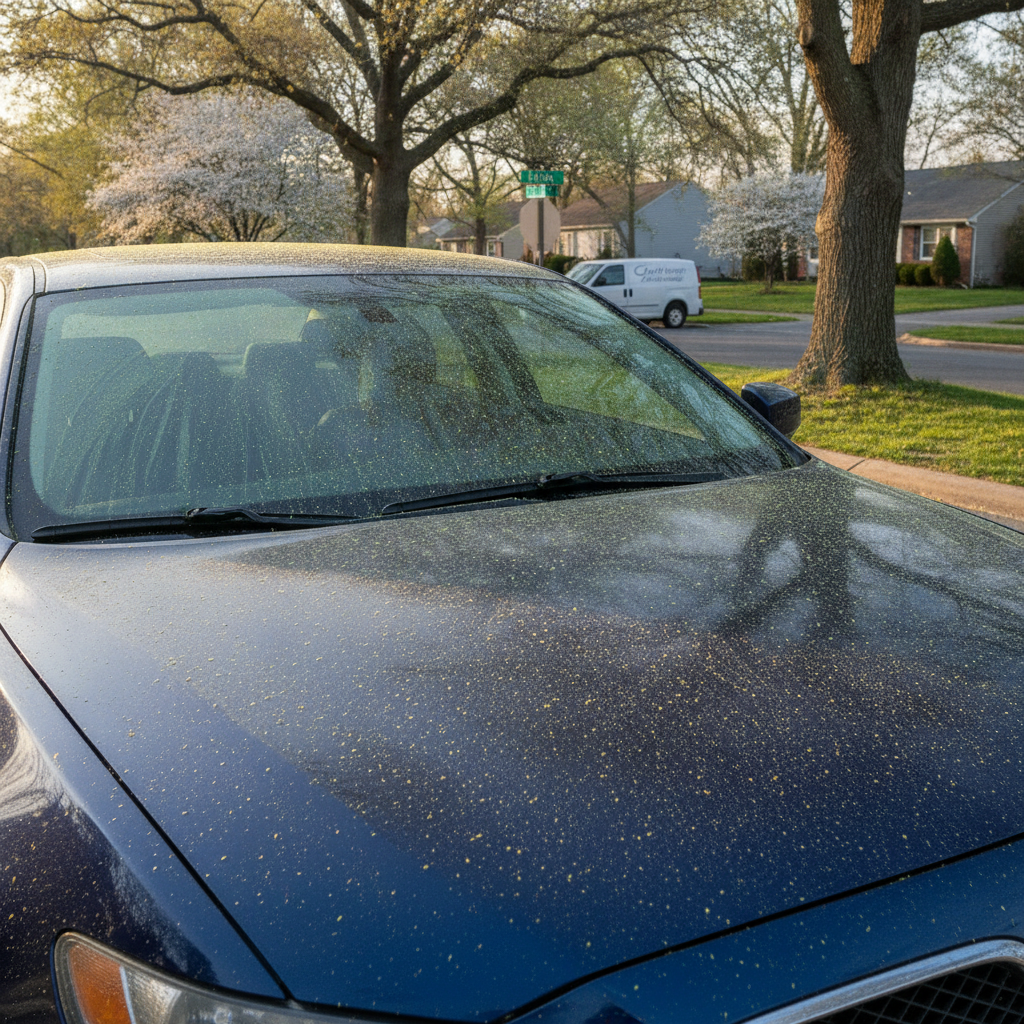
Yes — pollen really does damage your car’s paint, and it happens faster than most drivers in Gloucester Township expect. Every spring, a thick yellow-green film coats vehicles across South Jersey, and while it looks like a simple nuisance you can wipe off, the reality is more damaging. Pollen is made up of microscopic particles with sharp, jagged surfaces. When it settles on your hood, roof, and trunk and then gets wet from rain or morning dew, those particles bond to your clear coat and can etch into the surface over time. Left untreated, pollen buildup contributes to dull, hazy paint and accelerates the kind of finish degradation that lowers your vehicle’s resale value.
Why Pollen Is More Damaging Than You Think
Most drivers treat pollen the same way they treat dust — something to rinse off when it gets bad enough. But there’s an important difference. Dust particles are relatively inert. Pollen is biologically active and slightly acidic. When moisture activates the proteins and sugars inside pollen grains, they release compounds that can chemically react with your clear coat. In Camden County, where tree canopy coverage is significant and spring weather swings between warm sunny days and heavy rain, the cycle of pollen accumulation and moisture activation repeats itself constantly throughout April and May.
Drivers in areas like Blackwood and Berlin who park under or near trees are especially exposed. A single afternoon of tree pollen fallout followed by overnight rain is enough to start the etching process. By the time you notice that your car’s finish looks slightly dull or hazy in sunlight, the damage may already be in the clear coat layer — not just sitting on top of it.
The South Jersey Spring Problem Most Drivers Overlook
South Jersey’s spring season runs long. Tree pollen typically begins building in late March, peaks through April, and in many years extends into May before grass pollen takes over. That’s a two-month-plus window where your vehicle is under near-constant contamination pressure. Add in the region’s wind patterns and the way pollen collects in panel gaps, windshield cowls, side mirror housings, and door jambs, and you start to see how quickly it becomes a vehicle maintenance issue rather than just an aesthetic one.
Busy commuters in Washington Township and throughout Gloucester Township don’t always have time to rinse their cars every few days. That’s exactly the scenario where pollen damage compounds. The longer it sits — especially through repeated wet-dry cycles — the harder it becomes to remove without professional intervention.
What Pollen Actually Does to Your Clear Coat Layer by Layer
Your car’s finish is made up of several layers: the base coat, which holds the color, and the clear coat on top, which protects it. The clear coat is durable but not impervious. Pollen etching occurs when the acidic byproducts from activated pollen begin to soften or pit the surface of the clear coat. At first this looks like surface haze. Over multiple seasons without proper treatment, it can create micro-scratches and dull spots that require paint correction to address.
This is the gap that most national auto care content misses entirely — the specific relationship between organic seasonal contaminants like pollen and the progressive breakdown of clear coat protection. Understanding this helps you take action before your vehicle reaches a point where correction is needed rather than just cleaning.
How Professional Exterior Detailing Addresses Pollen Buildup
A proper exterior detail goes far beyond a standard car wash when it comes to pollen removal. At Flash Mobile Detailing, the exterior detailing process includes a thorough pre-rinse to loosen surface contamination, a foam wash that lifts pollen particles rather than dragging them across the paint, and a clay bar treatment to pull bonded contaminants out of the clear coat. That last step is critical — a regular wash won’t remove pollen that has already bonded to the paint surface.
After decontamination, a paint inspection identifies any etching or surface marring that occurred during the pollen season. If the damage is caught early, light polishing may be enough to restore the finish. If pollen has been sitting through multiple wet-dry cycles without removal, more involved paint correction may be recommended.
Why Ceramic Coating Gives You a Real Advantage During Pollen Season
One of the most practical but underappreciated benefits of ceramic coating is how it changes the way your car handles environmental contamination. A properly applied ceramic coating creates a semi-permanent hydrophobic layer on top of your clear coat. Pollen still lands on the surface, but it has a much harder time bonding because the coating is harder and smoother than unprotected paint. When rain hits a ceramic-coated vehicle, it carries more of the pollen away with it rather than activating it and letting it sit.
For drivers in Gloucester Township and Sicklerville who deal with heavy tree cover and long pollen seasons, this makes a real practical difference. You’ll still want to wash your car regularly during peak pollen weeks, but the contaminants rinse off far more easily, and the risk of surface etching is significantly reduced. You can learn more about what this protection involves by visiting our ceramic coating page.
Practical Steps South Jersey Drivers Can Take Right Now
- Rinse your vehicle more frequently during peak pollen weeks — even a quick rinse every two to three days helps prevent pollen from bonding to the surface.
- Avoid wiping dry pollen off with a cloth or your hand — dragging dry pollen particles across paint creates micro-scratches. Always wet the surface first.
- Schedule a spring exterior detail after peak pollen season ends to decontaminate the paint and assess any damage.
- Park in a garage or under cover when possible — reducing direct exposure limits how much pollen accumulates between washes.
- Consider ceramic coating before next spring — protecting your clear coat before pollen season begins is far more effective than trying to recover afterward.
Why Mobile Detailing Makes This Easier for Busy Drivers
One of the reasons pollen damage accumulates is simply that life gets busy. Between work schedules, family commitments, and daily commuting through Camden County, finding time to take your car to a shop isn’t always realistic. Mobile detailing removes that barrier entirely. A professional comes to your location — your driveway, workplace, or wherever is most convenient — and handles the full process while you focus on your day. For drivers in Gloucester Township, Blackwood, and surrounding communities, this convenience is often what makes the difference between proactive vehicle care and catching problems too late.
Frequently Asked Questions About Pollen and Car Paint in South Jersey
Can I just use a regular car wash to remove pollen?
A regular wash removes loose surface pollen, but it won’t address pollen that has already bonded to your clear coat. A clay bar treatment during a professional exterior detail is what removes bonded contamination effectively.
How long does it take for pollen to damage paint?
It depends on conditions, but repeated wet-dry cycles over one to two weeks without rinsing can begin the etching process. In South Jersey’s spring climate, where rain follows warm days frequently, this can happen quickly.
Is pollen damage reversible?
Early-stage pollen etching can often be corrected through professional polishing. More advanced damage may require paint correction. The sooner it’s addressed, the less intervention is needed.
Does ceramic coating prevent pollen damage completely?
Ceramic coating significantly reduces the risk of pollen bonding and etching, but it doesn’t make your car maintenance-free. Regular washing during pollen season is still recommended. What coating does is make cleaning easier and give your clear coat a much stronger layer of protection.
When is the best time to schedule a spring detail in Gloucester Township?
Late May or early June — after peak pollen season — is an ideal time to schedule a thorough exterior decontamination detail. This removes the season’s buildup and prepares your paint for summer UV exposure.
Ready to Protect Your Vehicle Before Pollen Season Takes a Toll?
Pollen damage is one of those vehicle care issues that’s easy to overlook until it becomes a more expensive problem. Whether you’re looking to decontaminate your paint after a tough spring, explore ceramic coating protection before the next season, or simply get your vehicle professionally cleaned and inspected, Flash Mobile Detailing is here to help. We serve drivers throughout Gloucester Township, Sicklerville, and surrounding South Jersey communities — and we come to you.
Contact Flash Mobile Detailing today to schedule your appointment or ask about the right protection option for your vehicle. We’re happy to walk you through what your car needs and put together a service plan that fits your schedule and goals.