
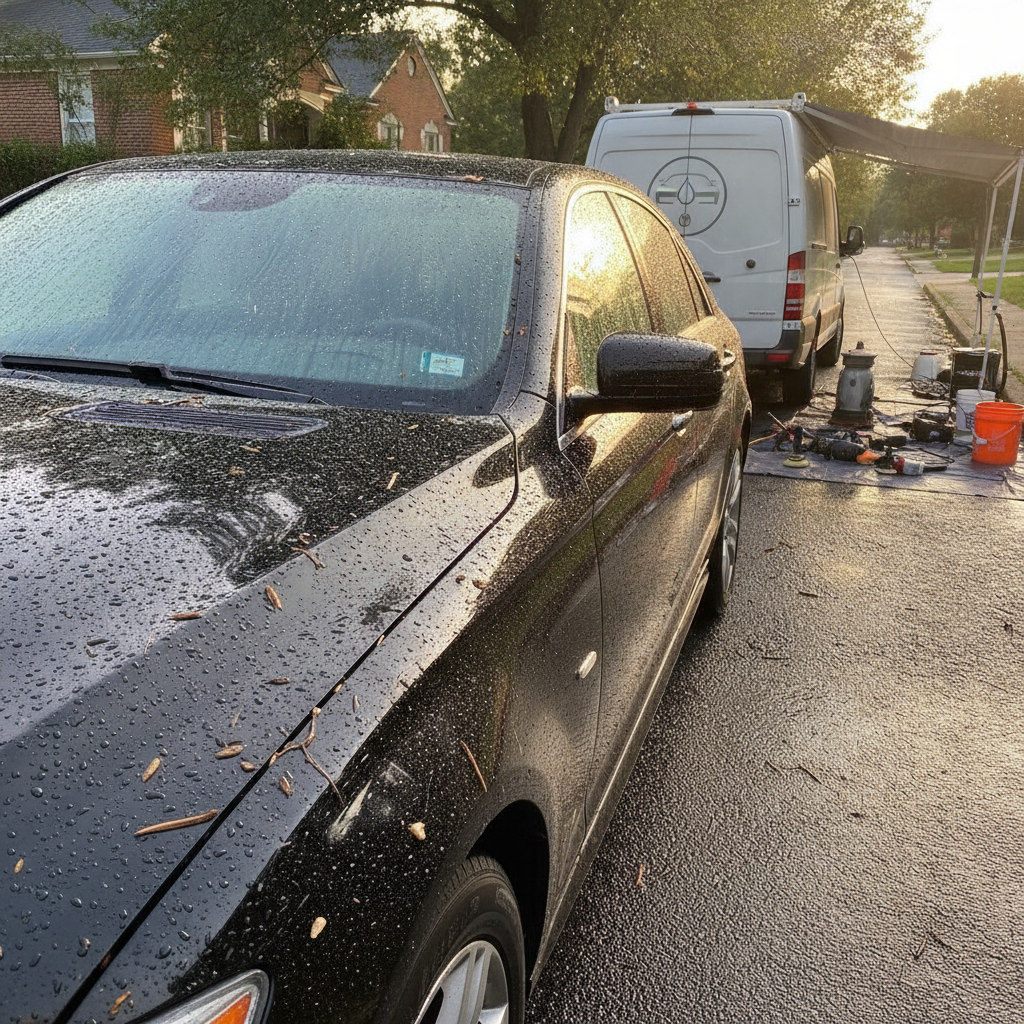
How Does Heavy Rain and Road Debris Contaminate Your Car’s Paint in Glassboro and What Should You Do About It?
If you drive regularly around Glassboro, Washington Township, or anywhere in Gloucester County, your car’s paint is under constant low-level attack — and most of it happens without you noticing. Heavy rain doesn’t just wet your car and dry off cleanly. It picks up oil, grime, industrial fallout, and road debris along the way and deposits all of that directly onto your paint surface. Over time, this kind of contamination quietly eats into your clear coat, dulls your finish, and chips away at your vehicle’s value. Understanding what’s actually happening — and what you can do about it — is the first step toward keeping your car looking sharp for the long haul.
What Happens to Your Paint During a Heavy Rainstorm
A rainstorm might seem like a free car wash, but the reality is quite different. As rain falls, it collects airborne pollutants — exhaust particles, industrial dust, and microscopic road contaminants — before it ever hits your hood. When that rain water evaporates after the storm passes, it leaves behind concentrated deposits of those contaminants bonded directly to your paint. These are commonly called water spots, but they’re more than just a cosmetic annoyance. The minerals and acidic compounds in those deposits can etch into your clear coat if they aren’t removed promptly.
This is especially relevant in South Jersey, where seasonal rain patterns are heavy and frequent. Roads around Glassboro, Deptford, and Sicklerville see consistent traffic from Route 55, local highways, and commercial routes. That traffic stirs up a constant cloud of brake dust, rubber particles, and road grime. When rain hits those roads and splashes onto your lower panels, rocker panels, and wheel wells, it’s carrying all of that with it.
The Hidden Threat: Road Debris Contamination on Your Clear Coat
Beyond rain, physical road debris poses its own serious threat. Tiny particles of tar, asphalt, rubber, and metal shavings become embedded in your clear coat during normal driving. You might not see them with the naked eye right away, but run your hand across your paint after a week of driving and you’ll likely feel a rough, gritty texture — that’s contamination. Left untreated, those particles don’t just sit on the surface; they work their way in and begin to oxidize and stain.
Drivers who commute frequently — whether heading toward Camden County, pulling onto the Atlantic City Expressway, or navigating local roads through Washington Township — accumulate this type of contamination faster than average. The more highway miles you put on, the more your paint is exposed to high-speed debris impact and road spray.
This is a topic that most large national chains and generic detailing resources skip over almost entirely. They focus on surface-level cleaning without addressing the deeper issue of contamination that’s already bonded to your paint. That’s one of the key gaps in what competitors tend to publish — there’s almost no practical guidance on what contamination actually looks like, how it compounds over time, or what the proper decontamination process involves.
Why a Regular Car Wash Isn’t Enough
A standard car wash — even a thorough hand wash — won’t remove bonded contamination. Soap and water clean the surface but don’t have the ability to break down particles that have physically embedded into your clear coat. This is where professional exterior detailing makes a real difference.
A proper decontamination process typically involves a clay bar treatment or chemical decontamination step that’s designed specifically to pull embedded particles out of the paint without scratching the surface. At Flash Mobile Detailing, this kind of thorough surface prep is part of a complete mobile detailing service — meaning you get professional results without having to drive anywhere or rearrange your schedule.
What Paint Correction Has to Do With Rain Damage
If contamination has been sitting on your paint for an extended period, you may also be dealing with water spot etching, swirl marks from improper washing, or light surface oxidation. These are issues that decontamination alone won’t fully resolve. That’s where paint correction comes in. Paint correction involves carefully removing a thin, controlled layer of clear coat to level out the surface and eliminate the damage that’s already set in.
It’s a step that many vehicle owners in Glassboro and across Gloucester County skip because they don’t realize the damage is there until it becomes obvious under sunlight. Having a professional assessment done before the damage progresses too far can save you significantly compared to addressing severe paint deterioration later.
How Ceramic Coating Protects Against Future Contamination
Once your paint is properly decontaminated and corrected, protecting it going forward becomes the priority. This is where ceramic coating stands out from traditional wax or sealants. A professionally applied ceramic coating bonds to your clear coat and creates a semi-permanent hydrophobic barrier. When rain hits a ceramic-coated surface, it sheets off rather than sitting and evaporating — which dramatically reduces water spot formation. Road grime and debris have a much harder time bonding to the surface, making maintenance easier and keeping your paint cleaner between washes.
Unlike wax, which typically breaks down within a few weeks, a quality ceramic coating can last for years with proper care. For drivers who regularly deal with South Jersey weather — spring rain, summer humidity, and fall debris season — that long-term protection makes a meaningful difference to both the appearance and resale value of the vehicle.
Practical Steps You Can Take Right Now
- Don’t let water spots sit. After a heavy rain, rinse your vehicle as soon as possible and dry it with a clean microfiber towel. The longer mineral deposits sit, the harder they are to remove safely.
- Avoid automatic car washes with brushes. These create fine scratches in your clear coat that trap contamination and accelerate damage.
- Do a clay bar test. Run a clean plastic bag over your paint after washing. If it feels rough or catches, your paint has bonded contamination that needs professional decontamination.
- Schedule a professional decontamination detail. This is especially important heading into fall and winter, when road salt and increased rain will compound any existing contamination issues.
- Consider paint protection before winter. Vehicles in South Jersey face a tough combination of heavy rain, road spray, and eventual salt exposure. Getting a ceramic coating applied in early fall gives your paint a strong barrier before the worst conditions arrive.
Frequently Asked Questions
How can I tell if my car’s paint has bonded contamination?
After washing your car, run your fingertips across a clean, dry panel. If the surface feels rough, gritty, or slightly bumpy rather than smooth, that’s a sign of bonded contamination. It’s common on lower panels, the hood, and the roof. A professional detailer can confirm this and recommend the right decontamination approach.
Will rainwater really damage my clear coat over time?
Yes, especially if the rain is carrying airborne pollutants or if the water sits and evaporates repeatedly without being rinsed off. The minerals and acidic compounds left behind from evaporating water can etch into your clear coat gradually, leading to visible water spot staining that can require paint correction to remove.
Is mobile detailing available in Glassboro and the surrounding Gloucester County area?
Yes. Flash Mobile Detailing serves Glassboro, Washington Township, Deptford, and the broader Gloucester County area. The mobile setup means a professional comes to your home or workplace — no drop-off required. That’s especially useful for busy residents and commuters who don’t want to lose time during the workday.
How long does a professional paint decontamination take?
Decontamination is typically part of a complete exterior detail service. Depending on the condition of the vehicle and whether paint correction is needed, the process generally takes anywhere from two to five hours. Your detailer can give you a more specific timeframe after a quick assessment of the paint.
Does ceramic coating really reduce water spot damage from rain?
It significantly reduces it, yes. The hydrophobic properties of a ceramic coating cause water to bead and roll off the surface rather than sitting and evaporating. This means fewer mineral deposits are left behind after rain. While no coating eliminates the need for regular washing entirely, ceramic-coated vehicles are noticeably easier to maintain and far more resistant to contamination bonding.
Ready to Protect Your Paint from South Jersey’s Roads and Weather?
If your vehicle has been dealing with months of heavy rain, road spray, and debris exposure, now is a good time to have it properly assessed and decontaminated before the damage compounds further. Flash Mobile Detailing works with vehicle owners across Glassboro, Sicklerville, Washington Township, and the surrounding South Jersey area — bringing professional-grade exterior detailing, paint correction, and paint protection ceramic coating directly to your driveway or workplace.
Reach out today to schedule a service or ask questions about what your vehicle’s paint actually needs. You can contact the team at Flash Mobile Detailing directly through the contact page — response times are fast, and there’s no pressure to commit before you have the information you need.