
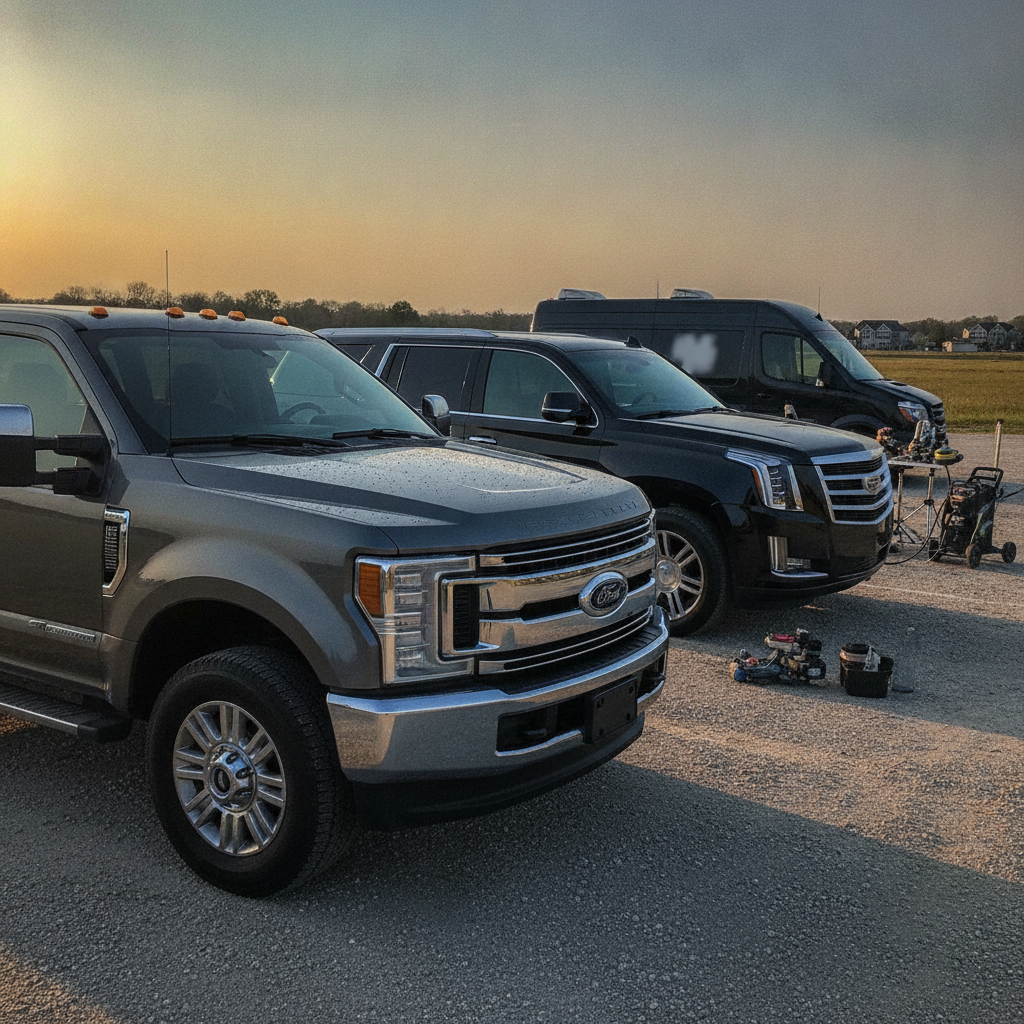
How Does Ceramic Coating Protect Work Trucks and SUVs in Gloucester County From Daily Wear and Tear?
If you drive a work truck or a large SUV around Gloucester County every day, your vehicle’s paint is absorbing far more punishment than most people realize. Between highway grime on Routes 42 and 55, job site dust, road salt in winter, and the kind of UV exposure that South Jersey summers bring, the paint on a high-use vehicle can deteriorate surprisingly fast. Ceramic coating is one of the most effective ways to slow that process — and for drivers in Washington Township, Winslow Township, Williamstown, and across the region, it can make a genuine difference in how long your vehicle holds up and how much it’s worth when you’re ready to move on from it.
Why Work Trucks and Large SUVs Face Unique Paint Challenges
Most conversations about ceramic coating focus on daily commuter cars or weekend vehicles — which makes sense, but it leaves out a huge segment of drivers. If you’re using your truck or SUV to haul equipment, travel between job sites, or log serious highway miles week after week, the wear patterns on your paint are completely different from someone who parks in a garage most of the day.
Work trucks deal with a specific combination of threats. Construction and landscaping sites kick up gravel, concrete dust, and debris that slowly chips and etches the clear coat. Bed liners and cargo areas get loaded and unloaded constantly, sometimes with equipment scraping along the sides. Larger vehicles also catch more road spray on the lower panels, which in South Jersey winters means prolonged contact with road salt — one of the most damaging substances your paint encounters all year.
Large SUVs face their own version of this. Families hauling bikes, gear, or pets in and out regularly, plus highway driving that pushes the front bumper and hood into constant impact from bugs, small stones, and wind-carried debris, all add up to paint that looks worn long before the vehicle itself is ready to retire.
What Ceramic Coating Actually Does for High-Use Vehicles
Ceramic coating bonds directly to your vehicle’s clear coat and forms a hard, semi-permanent protective layer. Unlike traditional wax — which sits on top of the paint and washes away after a few weeks — a properly applied ceramic coating becomes part of the surface itself. It typically lasts several years with basic maintenance, and it significantly reduces how much contamination actually sticks to your paint in the first place.
For a work truck or SUV that spends time on job sites and highways, this matters in a few very practical ways:
- Easier to clean: The hydrophobic surface causes water, mud, and road grime to bead up and roll off rather than bonding to the paint. That means less scrubbing, less time at the wash, and less risk of introducing new scratches during cleaning.
- Better resistance to chemical staining: Bird droppings, tree sap, and industrial fallout are significantly less likely to etch into the surface before you have a chance to remove them.
- UV protection: South Jersey summers are intense, and larger vehicles with more horizontal surface area — hoods, roofs, truck beds — take the most UV punishment. Ceramic coating helps slow oxidation and color fading over time.
- Salt and moisture resistance: A coated surface gives road salt and standing moisture less opportunity to work through the clear coat toward the metal underneath.
It’s worth being straightforward here: ceramic coating is not a force field. It won’t prevent deep scratches from sharp objects or protect areas that aren’t coated. But for the everyday environmental wear that accumulates on a vehicle you use hard, it provides a level of defense that wax and sealants simply can’t match over the long run. You can learn more about what the process involves on our ceramic coating page.
The Part Most Competitors Don’t Talk About: Paint Correction Comes First
Here’s where many ceramic coating discussions fall short — and it’s one of the more important things to understand before you invest in the service. If your truck or SUV already has swirl marks, light scratches, water spots, or oxidation on the paint, ceramic coating will lock all of that in. The coating preserves the surface exactly as it is when it’s applied, which means you want that surface to be in good shape before anything gets sealed over it.
For work vehicles that have been in service for a year or more, paint correction is often the right first step. This process uses machine polishing to remove surface-level defects from the clear coat, restoring a cleaner, more uniform appearance before the ceramic coating goes on. It adds time and cost to the overall job, but it makes a significant difference in the final result — and in how the coating performs over its lifespan.
If you’re not sure what condition your paint is in, a professional detailer can assess it before recommending next steps. Skipping this conversation and going straight to coating is something to be cautious about.
Mobile Application: A Practical Advantage for Busy Owners in South Jersey
One challenge that often comes up for work truck owners in particular is scheduling. When your vehicle is also your livelihood, taking it to a shop and leaving it for a day or more isn’t always realistic. Mobile detailing and ceramic coating services can be done at your home, business, or job site — which is a practical advantage for owners in Sicklerville, Deptford, or anywhere across Gloucester County who can’t easily be without their vehicle during business hours.
At Flash Mobile Detailing, we bring the service to you, which means you can keep your schedule moving while the work gets done. For larger vehicles like trucks and SUVs, expect the preparation and application process to take more time than a standard sedan — the surface area is simply larger, and doing it right means not rushing through it.
Does Ceramic Coating Help With Resale Value on Work Vehicles?
This question comes up often, and the honest answer is: yes, it can — but the impact depends heavily on how well the vehicle has been maintained overall. A truck that’s been coated since early in its life and kept clean will typically show far less paint wear than one that hasn’t been protected. When it’s time to sell or trade in, that difference in paint condition is visible and does influence what a buyer or dealer is willing to offer.
For businesses that cycle through vehicles on a regular basis, the math on ceramic coating becomes even more interesting. Protecting the paint on a fleet vehicle or work truck from the start costs less than trying to restore it later — and a vehicle in better cosmetic condition commands a better return at trade-in time. You can explore paint protection ceramic coating options to get a better sense of what’s available.
Frequently Asked Questions
How long does ceramic coating last on a work truck or SUV?
Duration varies depending on the product used, how the vehicle is used, and how well it’s maintained afterward. Many professional-grade coatings last anywhere from two to five years. Regular washing and avoiding harsh chemicals help maximize the coating’s lifespan.
Can ceramic coating be applied to a truck bed or cargo area?
Ceramic coating is primarily applied to exterior painted panels, glass, and sometimes wheels. Truck beds are typically lined with a spray-in or drop-in liner rather than coated, since they experience a different type of wear. Your detailer can advise on what makes sense for your specific setup.
Do I need paint correction before ceramic coating my work vehicle?
If your paint has visible swirl marks, scratches, or oxidation, paint correction beforehand is strongly recommended. The coating will seal the surface as-is, so starting with clean, corrected paint produces a noticeably better result.
Is ceramic coating worth it for a vehicle I use for work every day in Gloucester County?
For vehicles that face constant road exposure, job site conditions, and seasonal South Jersey weather, ceramic coating offers real long-term value. It reduces how often you need to wash, makes cleaning easier, and helps protect the paint investment over years of use.
How do I maintain ceramic coating on a truck or large SUV?
Regular washing is the main requirement — ideally every two weeks or so, using a pH-neutral car wash soap. Avoid automatic brush car washes, which can introduce swirl marks. An annual inspection or booster application can also help maintain performance over time.
Ready to Protect Your Work Truck or SUV?
If you’re driving a truck or SUV in Gloucester County, Washington Township, Williamstown, or anywhere across South Jersey, and you want a vehicle that holds up better and stays cleaner with less effort, ceramic coating is worth a serious look. Flash Mobile Detailing works with vehicle owners throughout the area to provide professional-grade results at a time and place that works for your schedule.
Reach out to Flash Mobile Detailing today to schedule a consultation, ask about paint correction ahead of coating, or find out what service makes the most sense for your vehicle. We’re happy to walk you through the process and give you an honest assessment before any work begins.