
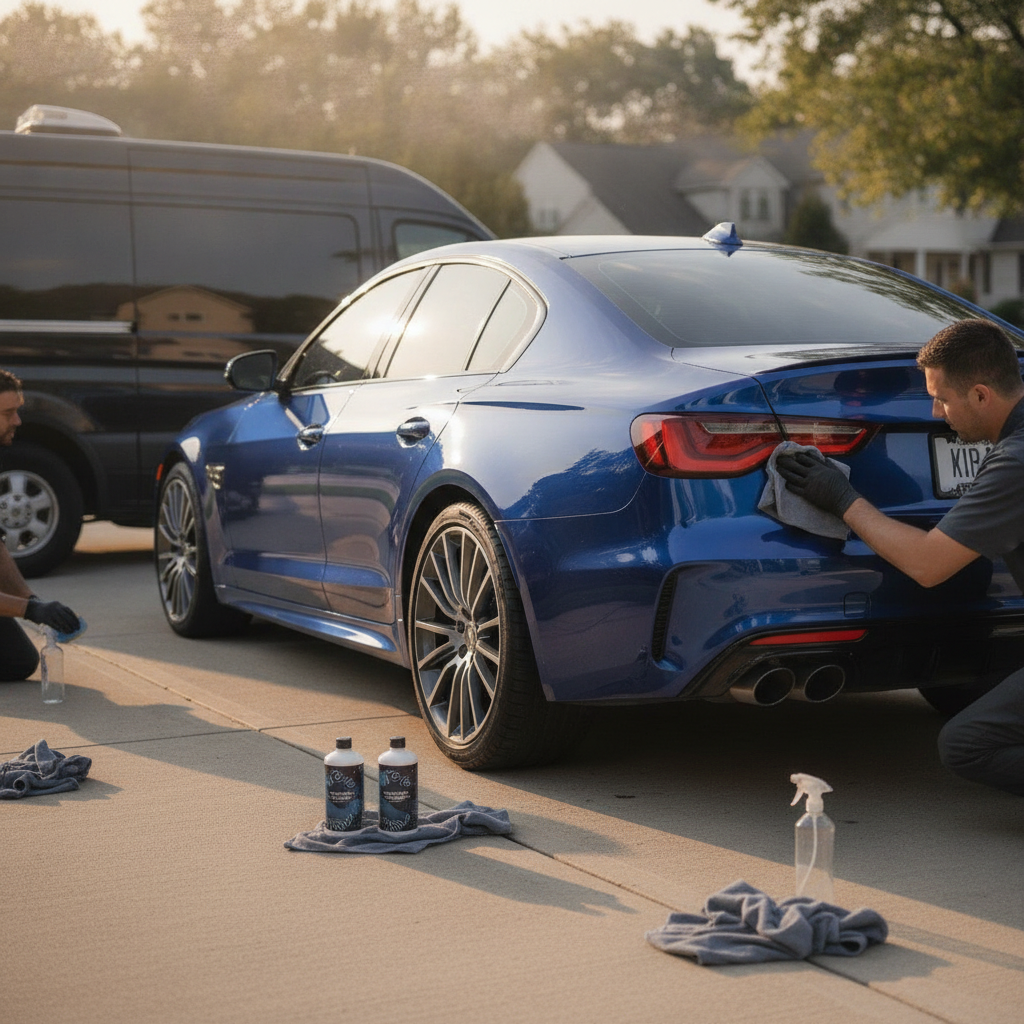
How Does Ceramic Coating Compare to Traditional Wax for Vehicle Protection in Voorhees and South Jersey?
If you drive in Voorhees, Sicklerville, or anywhere across South Jersey, your vehicle faces real environmental pressure year-round — road salt in winter, intense UV exposure in summer, pollen in spring, and rain-soaked roads that stir up grime and debris in every season. When it comes to protecting your paint, the conversation almost always comes down to two options: traditional wax or ceramic coating. One of these is a short-term fix. The other is a long-term investment. This article walks you through the honest differences so you can decide what actually makes sense for your vehicle and your budget.
What Traditional Wax Actually Does — and Where It Falls Short
Traditional car wax has been around for decades, and it’s not without its merits. A quality wax product adds a thin protective layer over your paint that can temporarily shield it from light contamination, minor UV exposure, and water spots. It also delivers a warm, glossy finish that many car owners appreciate.
The problem is longevity. Most traditional waxes — whether carnauba-based or synthetic — begin breaking down within four to eight weeks, sometimes faster depending on how often you wash the vehicle or how much sun exposure it gets. For drivers commuting daily through Camden County or logging highway miles between Voorhees and Cherry Hill, that protection window gets even shorter.
Wax also sits on top of the paint rather than bonding to it. That means it washes away gradually with every rinse, every automatic car wash pass, and every rainstorm. It provides no meaningful defense against tree sap, bird droppings, or road salt — all of which are common concerns across South Jersey throughout the year. You’re applying it repeatedly, spending time and money, and still not getting deep protection.
What Ceramic Coating Actually Delivers
Ceramic coating is a liquid polymer that chemically bonds to your vehicle’s paint surface. Unlike wax, it doesn’t sit on top — it becomes part of the surface itself, creating a semi-permanent protective layer that holds up against the elements far more effectively.
Here’s what that means in practical terms for your vehicle:
- Durability: A professionally applied ceramic coating typically lasts two to five years or longer with proper maintenance, compared to weeks for traditional wax.
- UV resistance: The coating significantly reduces paint oxidation caused by the sun — something that matters a great deal during South Jersey summers when UV levels are high for extended stretches.
- Hydrophobic properties: Water beads and rolls off the surface, carrying dirt and contamination with it. Your car stays cleaner longer between washes.
- Chemical resistance: Bird droppings, tree sap, and road salt are less likely to etch into your clear coat because the ceramic layer absorbs the impact first.
- Easier maintenance: Because contaminants don’t bond as easily to a coated surface, routine washing becomes faster and less labor-intensive.
For vehicle owners who want to maintain their car’s appearance and resale value over time, ceramic coating offers a level of protection that wax simply cannot match.
The Gap Competitors Aren’t Filling: What Happens If You Skip Paint Correction First
Here’s something that most competitor websites skim over or ignore entirely: ceramic coating does not fix existing paint imperfections. It locks them in.
If your paint already has swirl marks, light scratches, water spot etching, or oxidation — which is common on vehicles that have spent a few years on South Jersey roads — applying a ceramic coating over those defects will preserve them permanently under the coating. You’ll have a well-protected car that still looks flawed under direct light.
This is why professional detailers recommend paint correction before ceramic coating is applied. Paint correction is the process of using specialized polishing compounds and machine polishers to remove surface-level defects and restore clarity to the paint. When done correctly, the result is a smooth, uniform surface that the ceramic coating can then bond to and protect at its best.
For drivers in Blackwood, Washington Township, or across Camden County whose vehicles have accumulated light paint damage over time, skipping this step means you’re paying for long-term protection on a surface that was never properly prepared. It’s worth asking any detailer you speak with whether paint correction is included in or recommended before a coating application.
Cost and Timeline: What to Realistically Expect
Traditional wax is inexpensive upfront — you can pick up a quality product for a reasonable price and apply it yourself. But the cost adds up when you factor in repeated applications, your time, and the materials involved over a two- to three-year period.
Ceramic coating has a higher initial investment. The exact price depends on your vehicle size, the condition of the paint, whether paint correction is needed beforehand, and the specific coating product being applied. Rather than quoting figures here, the most reliable approach is to request a consultation so a professional can assess your vehicle’s condition and give you an accurate estimate. What’s worth understanding is that ceramic coating typically costs less over time when you calculate the cumulative cost of repeated waxing and the protection benefits that reduce the risk of more expensive paint repair down the road.
Timeline-wise, a ceramic coating application typically takes one to two days depending on preparation work involved. A simple wax application can be done in a couple of hours. If you’re a busy commuter who doesn’t have time to bring your vehicle to a shop, mobile detailing services can bring the work directly to your driveway or workplace — which is one of the reasons more vehicle owners across South Jersey are choosing mobile options.
Which Option Makes More Sense for Your Situation?
Traditional wax may still be a reasonable short-term option if you have a very tight budget right now, you’re planning to sell the vehicle soon, or you simply want a quick cosmetic refresh. It’s not a bad product — it’s just a limited one.
Ceramic coating makes more sense if you plan to keep your vehicle for several years, you want to reduce the time you spend on maintenance, you’re concerned about paint degradation from UV exposure and road contamination, or you want to protect the vehicle’s resale value over the long term. For most South Jersey drivers who are dealing with everything from summer heat to winter road salt, the long-term case for ceramic coating is a strong one.
If you want to see what professionally applied coatings look like on real local vehicles, the Flash Mobile Detailing gallery gives you a good sense of the finished results.
Frequently Asked Questions
Can I apply ceramic coating myself instead of hiring a professional?
DIY ceramic coating kits are available, but they’re difficult to apply correctly without proper preparation, equipment, and experience. Uneven application, missed surface defects, or improper curing can result in poor bonding and disappointing results. Professional application ensures the coating bonds correctly and performs the way it’s designed to.
Does ceramic coating replace the need to wash my car?
No. Ceramic coating makes washing easier and less frequent, but your vehicle still needs regular washing to remove accumulated dirt and contaminants. The coating just means contaminants don’t bond as aggressively to the surface, so the process is faster and the paint stays cleaner longer between washes.
How do South Jersey winters affect ceramic coating?
Road salt is one of the more damaging substances your vehicle encounters during winter, and ceramic coating provides a meaningful barrier between the salt residue and your clear coat. The hydrophobic nature of the coating also helps prevent salt from bonding tightly to the paint surface. Regular washing during winter months is still important, but a coated vehicle handles those conditions better than an uncoated or waxed one.
Is ceramic coating worth it on an older vehicle?
It can be, depending on the condition of the paint. If the paint is in decent shape or can be corrected before coating, the investment still makes sense — especially if you plan to keep the vehicle for several more years. A professional assessment can help you determine whether the paint is a good candidate.
Does Flash Mobile Detailing offer ceramic coating in Voorhees and surrounding areas?
Yes. Flash Mobile Detailing serves Voorhees, Sicklerville, and communities throughout South Jersey. Because services are mobile, there’s no need to drop your vehicle off at a shop — the work comes to you.
Ready to Protect Your Vehicle the Right Way?
Whether you’re weighing your options for the first time or you’ve been relying on wax and want a longer-lasting solution, Flash Mobile Detailing is ready to walk you through what makes sense for your vehicle. Serving Voorhees, Sicklerville, and communities across South Jersey, the team brings professional-grade paint protection and ceramic coating services directly to your location — no shop visit required. Reach out today to schedule a consultation and find out what your vehicle actually needs.