
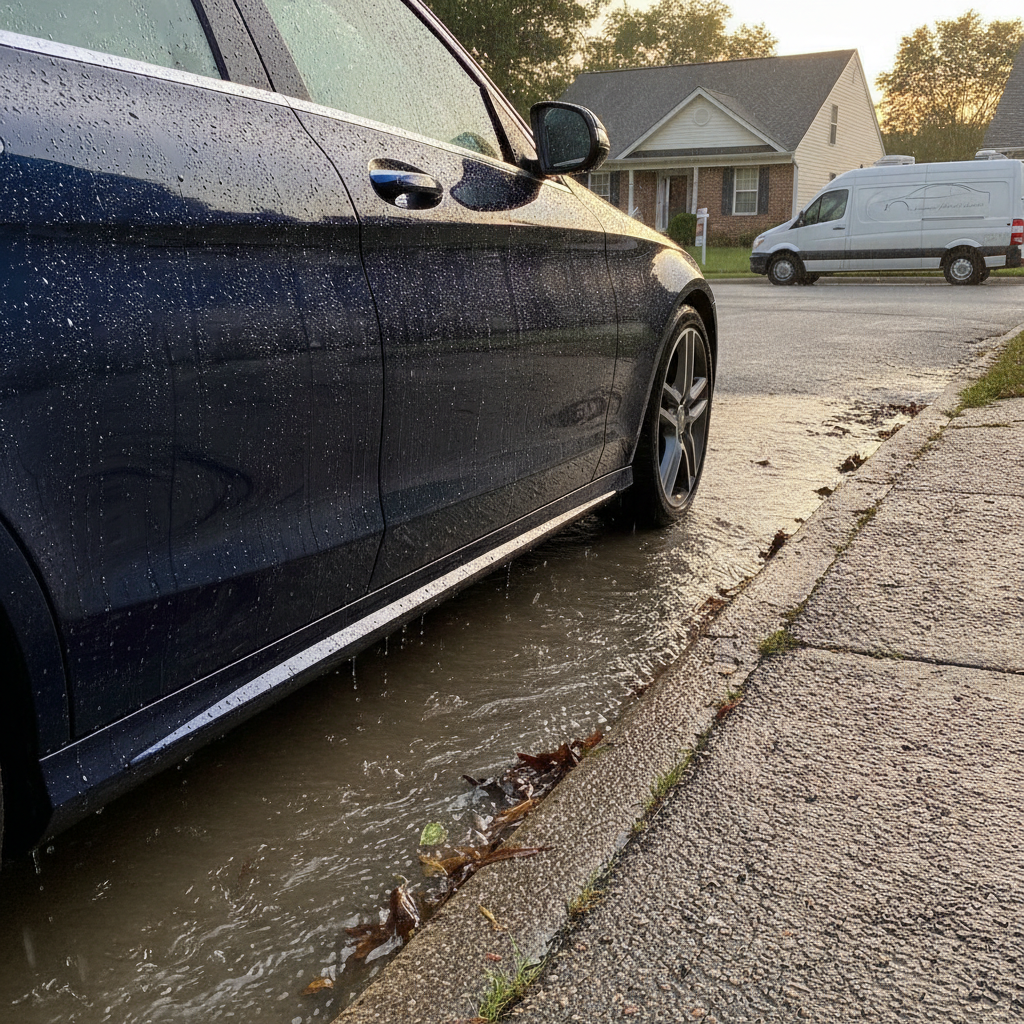
How Does Ceramic Coating Protect a Car’s Exterior During Heavy Rain and What Should Drivers in Winslow Township Know About Wet Weather Paint Care?
If you’ve ever noticed water sitting flat on your hood after a rainstorm — pooling, spreading, and leaving behind mineral deposits when it finally dries — your car’s paint is working against you. For drivers in Winslow Township and throughout the Sicklerville area, heavy rain is a seasonal reality that brings more than just inconvenience. Road runoff, contaminated puddles, and repeated wet-dry cycles slowly degrade your clear coat in ways that aren’t always visible until the damage is already done. Ceramic coating addresses this directly by creating a hydrophobic surface that causes water to bead tightly and roll off rather than sit and settle. Understanding how that protection actually works — and what it doesn’t do — helps you make a smarter decision about your vehicle’s long-term care.
What Happens to Unprotected Paint When It Rains
Rain itself isn’t pure water. By the time it reaches your car, it has picked up pollutants from the air and, once it hits the road, it carries brake dust, oil film, chemical runoff, and dissolved road salt residue. When that contaminated water lands on bare or wax-treated paint and dries slowly, it leaves behind a thin layer of residue each time. Over weeks and months, those layers bond into your clear coat, dulling the finish and accelerating oxidation.
Drivers commuting along busy corridors in Camden County are especially familiar with the spray kicked up by tractor-trailers and heavy traffic during rainy weather. That road spray doesn’t just get your car dirty — it deposits fine contaminants across your hood, roof, and side panels that a simple rinse won’t fully remove. If your paint has no protective layer beneath the water, the contamination sits directly on the clear coat.
How Ceramic Coating Creates a Hydrophobic Barrier
Ceramic coating bonds chemically to your vehicle’s clear coat and cures into a semi-permanent layer that is significantly harder and more slick than bare paint. That slickness is what produces the hydrophobic effect — water molecules are unable to spread across the surface the way they would on untreated paint, so instead they bead into tight droplets and roll off quickly when the vehicle is in motion or when wind passes over it.
This matters for rain protection in a few practical ways:
- Faster water runoff: Rain doesn’t sit long enough to leave significant mineral deposits on the surface.
- Reduced contamination bonding: Pollutants in rainwater have a harder time adhering to a coated surface than to bare clear coat.
- Easier post-rain cleaning: Any residue left after rain rinses off much more easily with a light wash, saving time and reducing the risk of scratching from scrubbing.
- Consistent protection across seasons: Unlike traditional wax, which breaks down in a matter of weeks especially under South Jersey’s mix of rain, heat, and road exposure, a properly applied ceramic coating maintains its hydrophobic properties for years with appropriate upkeep.
This is one area where ceramic coating clearly outperforms traditional wax and paint sealants, which can wash away or degrade after repeated rain cycles — a common reality for vehicles that spend time on the road between Berlin and Gloucester Township regularly.
The Gap Most People Don’t Know About: Ceramic Coating and Water Spot Risk
Here is something that most resources on ceramic coating gloss over: hydrophobic protection reduces water spot formation significantly, but it does not eliminate it entirely. If your vehicle sits for an extended period in direct sunlight after a rain — particularly during South Jersey’s warmer months — mineral deposits from water droplets can still etch into the coating surface over time, especially on horizontal panels like the hood and roof that receive the most direct exposure.
Ceramic coating makes those water spots far easier to remove compared to unprotected paint because the minerals haven’t bonded as deeply. But the answer isn’t to assume the coating is maintenance-free. Drivers in Winslow Township and nearby Blackwood should plan for periodic light maintenance washes and, when needed, a professional inspection to address any etching that develops on the coating surface before it reaches the clear coat beneath.
Understanding this distinction — protection versus elimination — helps set realistic expectations and avoids frustration down the road. Professional ceramic coating services should always include a clear explanation of ongoing care so you know exactly what to expect throughout the coating’s lifespan.
Why Paint Condition Before Coating Matters for Wet Weather Performance
Ceramic coating bonds to whatever surface it’s applied over. If that surface has existing swirl marks, light scratches, or early oxidation — which is common on vehicles that haven’t had paint correction before coating — those imperfections are sealed in and may become more visible under wet conditions when light reflects differently off the surface.
A thorough exterior decontamination and, where needed, paint correction before applying any ceramic product ensures the coating bonds to a smooth, clean foundation. This matters especially for wet weather performance: a smooth surface sheds water more efficiently than one with microscopic surface defects that can trap moisture.
For vehicles in the Sicklerville area that have accumulated seasons of commuting, road salt exposure, and rain cycles, this preparation step is often what separates a coating that performs well from one that just looks good at first glance.
What to Ask When Booking a Ceramic Coating Service in South Jersey
Before committing to a ceramic coating service, it helps to ask a few direct questions to understand what you’re getting:
- Is paint decontamination included? A professional application should always start with a clean, contaminant-free surface.
- Will paint correction be recommended if needed? If your paint has visible defects, a reputable detailer will flag them before coating.
- What is the expected cure time? Most professional-grade coatings require 24 to 48 hours of cure time before the vehicle should be exposed to rain or washing.
- What maintenance is expected to keep the coating performing well? Regular pH-neutral washes and annual inspections are typically recommended.
- What does the service cover and for how long? Ask about coverage duration and what conditions might affect it.
A mobile detailing provider that comes to you eliminates the hassle of dropping your car off and arranging alternative transportation — which is a practical advantage for busy commuters throughout Camden County. Mobile detailing brings the full service directly to your home or workplace, so the process fits into your day rather than disrupting it.
Frequently Asked Questions About Ceramic Coating and Rain in South Jersey
Does rain hurt a fresh ceramic coating?
Yes, during the curing period — typically 24 to 48 hours after application — you should keep the vehicle dry and out of rain. Once the coating has fully cured, rain is no longer a concern and the hydrophobic properties activate normally.
How long does ceramic coating last compared to wax when exposed to regular rain?
Traditional paste wax may last four to eight weeks under normal conditions and degrades faster with frequent rain and washing. A professionally applied ceramic coating maintains its protective properties for several years with proper care, making it significantly more durable for South Jersey’s rainy seasons.
Will ceramic coating prevent water spots completely?
Ceramic coating reduces water spot formation by causing water to bead and run off faster, but it doesn’t make your paint immune. Mineral-rich water that dries on horizontal surfaces in direct sunlight can still leave spots — they are just much easier to remove from a coated surface than from bare paint.
Do I need ceramic coating if my car is garaged at night?
Garaging your vehicle helps, but most paint damage from rain and road contamination happens during the day while your vehicle is parked or in traffic. Ceramic coating protects during those hours of exposure and makes your post-drive cleanup quicker and safer for the paint.
Can ceramic coating be applied to older vehicles in Gloucester Township with faded paint?
Yes, but the paint should be corrected and decontaminated first. Ceramic coating applied over oxidized or faded paint won’t restore the color — it will seal in whatever condition the paint is in. Paint correction before coating produces the best long-term result for older vehicles.
Ready to Give Your Vehicle Lasting Wet Weather Protection?
If your car’s paint is taking the full impact of South Jersey rain seasons without any protective barrier, the damage is accumulating quietly between every commute. Ceramic coating is one of the most practical investments you can make in your vehicle’s long-term appearance and resale value — and it’s a service that benefits vehicles of all ages, not just new ones.
Flash Mobile Detailing serves drivers in Winslow Township, Sicklerville, Berlin, Blackwood, Gloucester Township, and surrounding areas across Camden County. We come to you, assess your paint’s condition honestly, and apply professional-grade protection with the preparation work it requires to actually last. Contact us today to schedule a consultation and find out what your vehicle needs before the next rainy season.