
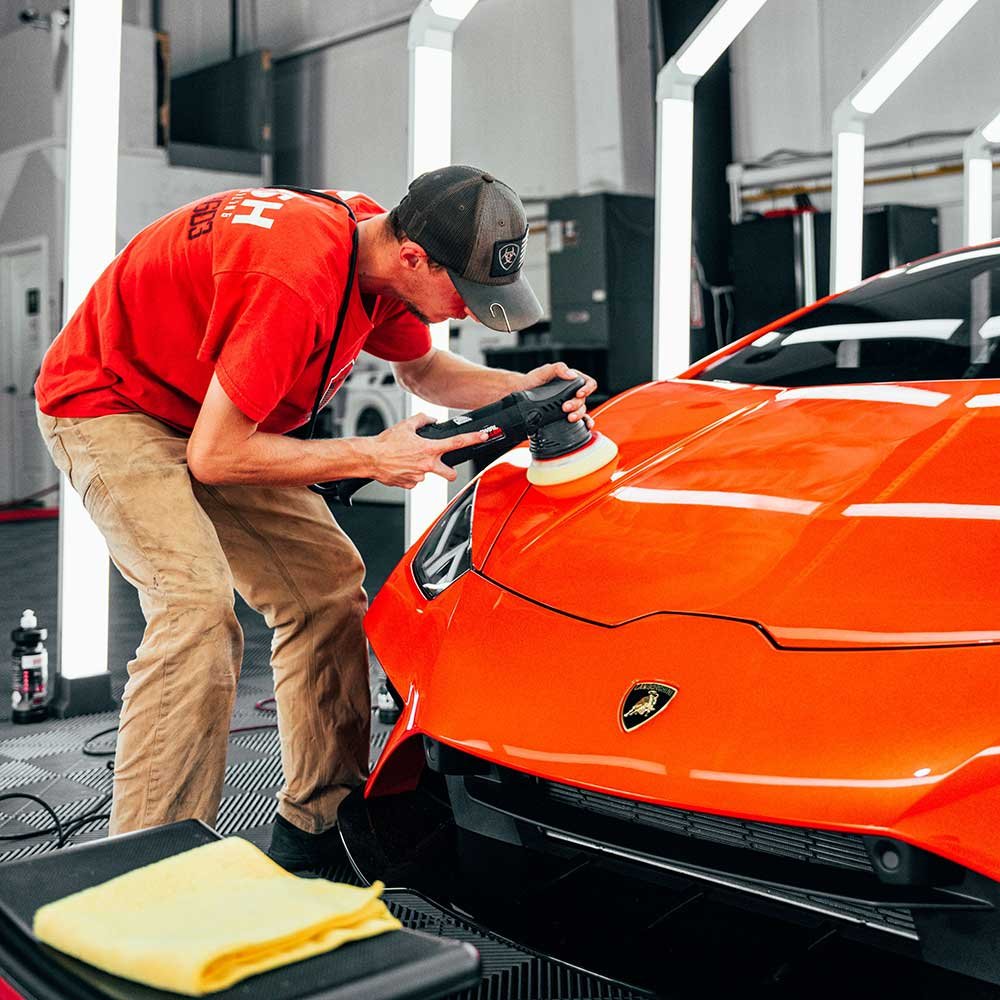

Ceramic Coating in Philadelphia can make a vehicle easier to wash, improve gloss, and add a durable sacrificial layer over properly prepared paint. It is not a force field, though. Philadelphia-area owners still contend with road salt, dense urban parking, bird droppings, tree sap, construction dust, rain spotting, and routine wash marring.
The practical question is not simply whether a coating is “worth it.” It is whether the vehicle’s condition, parking habits, wash routine, and protection goals justify the preparation and ongoing care.
Fair warning: A ceramic coating can improve surface durability and cleaning behavior, but it does not make paint scratch-proof, chip-proof, or maintenance-free.
Table of Contents
• What ceramic coating does and does not do
• Why Philadelphia conditions change the decision
• Paint correction, application, and curing
• Ceramic coating versus wax, sealant, and PPF
• Seasonal maintenance for coated vehicles
• Choosing an installer and understanding pricing
• Frequently asked questions
Key Takeaways
• Ceramic coating is a liquid-applied protective layer that bonds with properly prepared exterior surfaces and provides hydrophobic behavior, gloss, and easier cleaning.
• For Philadelphia drivers, the strongest benefit is usually simpler cleanup after winter road treatment, pollen, grime, and organic contaminants—not immunity from paint damage.
• Paint correction is often the biggest factor in the final appearance because a coating can preserve visible swirls, haze, and scratches beneath it.
• Coating longevity depends on preparation, vehicle use, storage, wash methods, and maintenance. Package labels stating a number of years should be treated as conditional rather than universal.
• Paint protection film is the better choice where rock chips and impact damage are the primary concern, especially on high-impact front-end areas.
What Ceramic Coating Actually Protects
What the coating does on automotive paint
A ceramic coating is a liquid-applied protective layer that cures on the vehicle’s exterior. Once cured, it creates a slicker surface that can help water bead and sheet away, reducing how tightly ordinary dirt and grime cling to the paint.
For a Philadelphia daily driver, that often means winter film, roadway residue, pollen, and light grime are less labor-intensive to remove during a proper wash. It can also help preserve a freshly corrected finish by reducing direct exposure to some environmental contamination.
The value is most visible on dark colors and highly polished paint. On a black SUV, for example, a coating may make rinsing and drying easier after rain or a careful wash. It will not prevent dust from settling on the vehicle overnight.
What ceramic coating cannot prevent
Ceramic coating should not be purchased as impact protection. It cannot stop a stone from chipping a bumper, prevent a shopping cart dent, or eliminate scratches from improper wash equipment.
Consumer guidance on coating claims advises buyers to interpret terms such as “permanent” and “scratch-proof” carefully because real-world durability and resistance vary with use, care, and product specifications. Consumer auto-care guidance on coating claims is a useful reminder to focus on written terms and realistic maintenance expectations instead of headline promises.
| Concern | What ceramic coating may help with | What it will not reliably prevent |
|---|---|---|
| Water and rain | Faster water beading or sheeting | Water spotting if mineral deposits dry on paint |
| Road grime | Easier washing when contamination is removed promptly | Heavy buildup from repeated winter driving |
| UV exposure | Added support for finish maintenance | All fading or degradation over a vehicle’s lifetime |
| Light wash contact | Some surface slickness and easier cleanup | Swirl marks from abrasive towels or brushes |
| Rock debris | Minimal benefit | Chips, punctures, and impact damage |
Why hydrophobicity is useful but not magic
Hydrophobic behavior is useful because water can carry loose dirt away more efficiently during a rinse. But water beading is not a durability meter. A coating can still be present even when beading becomes less dramatic due to road film, mineral deposits, or contamination.
I recommend judging maintenance by the paint’s actual condition: whether it cleans easily, feels smooth after washing, and remains free of bonded contamination. If water behavior changes suddenly, a careful wash and decontamination assessment are more sensible first steps than assuming the coating has failed.
Why Philadelphia Conditions Matter
Winter treatment creates a maintenance problem
Philadelphia-area winter driving exposes vehicles to salt and deicing residue used to support safer roads. The Federal Highway Administration’s winter maintenance guidance explains that road-treatment materials are used to improve winter travel safety. For vehicle owners, the tradeoff is predictable: those materials can leave contamination on paint, wheels, wheel wells, trim, and underbody surfaces.
A ceramic coating can simplify the wash process, but it does not mean salt residue should sit on the vehicle for weeks. That is especially true after a storm, a long highway commute, or repeated wet-road driving.
Urban parking adds contamination and runoff concerns
Street parking can bring additional exposure to bird droppings, tree sap, dust, soot, standing water, and runoff. Prompt removal matters because organic contaminants can become harder to remove as they dry and bake into a warm surface.
Philadelphia’s street and stormwater guidance also highlights the importance of keeping streets and drainage areas clear of debris. The City of Philadelphia’s street and runoff guidance is relevant when washing near curbs or storm drains: a clean-looking wash should not create a runoff problem for the surrounding street.
Water spots can hide a healthy coating
A coated car can still develop water spots. In fact, tight water beads may leave concentrated mineral deposits when they dry in direct sunlight. This is why a quick rinse followed by air drying is not always enough.
Use a clean microfiber drying towel or a controlled blower, especially after rain, sprinkler exposure, or a wash using mineral-heavy water. If spotting is frequent, ask the installer whether a mild water-spot remover is compatible with the specific coating.

The Application Process: Prep Is the Real Foundation
Inspection and paint correction before coating
The coating process should begin with a paint inspection under strong, color-correct lighting. This reveals swirl marks, holograms, oxidation, deeper scratches, water-spot etching, and previous repair inconsistencies that can be hidden in ordinary daylight.
Paint correction uses machine polishing to reduce or remove paint defects. It is not always necessary to pursue a flawless finish. On an older commuter vehicle, a one-step correction may offer the best balance of appearance, paint preservation, and cost. On a newer enthusiast vehicle, a more intensive correction may make sense before applying a long-term coating.
| Paint condition | Sensible preparation approach | When to avoid aggressive correction |
|---|---|---|
| New paint with light dealer-installed swirls | Light polish or one-step correction | When paint measurements indicate limited clearcoat |
| Daily driver with moderate defects | Targeted or one-step correction | When the owner accepts remaining deeper defects |
| Older vehicle with oxidation and heavy marring | Multi-step correction after inspection | When paint is thin, compromised, or previously repaired poorly |
| Deep scratches or chips | Touch-up, repair discussion, or acceptance | When correction would require unsafe paint removal |
Decontamination and controlled application
Before coating, the exterior is typically washed and chemically decontaminated to remove materials such as iron fallout, traffic film, tar, and bonded residue. Mechanical decontamination may also be used where appropriate. The purpose is simple: the coating needs a clean, stable surface to bond evenly.
The coating is then applied in small sections, leveled, and inspected for excess product. Missed leveling can leave high spots: darker, rainbow-like, or smeared-looking patches that may require polishing to remove after curing.
The National Center for Asphalt Technology’s maintenance and contamination research supports the broader point that contamination and maintenance practices affect how protective coatings perform over time. In practical terms, a coating cannot compensate for poor surface preparation or neglected washing.
Curing time and delivery expectations
Curing is the period in which the coating hardens and develops its bond. Exact timing depends on the coating system, temperature, humidity, surface material, and installer instructions.
A careful installer should explain the vehicle’s specific post-application restrictions in writing. Common restrictions may include avoiding rain, washing, or harsh chemicals for an initial period. For studio-installed coating work, controlled lighting, temperature, dust control, and secure curing space can reduce variables.
Ceramic Coating, Wax, Sealant, or PPF?
Choose based on the type of protection needed
Ceramic coating, wax, sealants, and paint protection film all serve different roles. Comparing them only by shine misses the main decision point: what type of damage are you trying to reduce?
| Option | Primary purpose | Best fit | Key limitation |
|---|---|---|---|
| Ceramic coating | Easier cleaning, gloss, chemical resistance, hydrophobic behavior | Owners committed to careful washing and long-term appearance | Does not stop rock chips or deep scratches |
| Wax | Short-term gloss and water behavior | Low-cost seasonal enhancement | Requires frequent reapplication |
| Paint sealant | Longer-lasting synthetic protection than typical wax | Practical maintenance for daily drivers | Usually offers less long-term durability than professional coatings |
| Paint protection film | Impact resistance on vulnerable panels | Highway commuters, performance vehicles, new vehicles | Higher upfront cost and visible edge considerations in some installs |
When PPF makes more sense in Philadelphia
If interstate miles, gravel roads, bridge construction zones, or frequent highway driving are the main concern, PPF is generally the stronger choice for bumper, hood, mirror, rocker-panel, and fender impact zones. Recognized paint-protection guidance distinguishes ceramic coating from film because coating is not a substitute when the objective is resistance to road-debris impact.
A common approach is selective: PPF on high-impact front-end areas, then ceramic coating on paint and possibly coated film for easier washing. That combination can be worthwhile for a newer vehicle, but it may be excessive for an older daily driver with existing cosmetic wear.
Mobile versus studio installation
Mobile service can be convenient when the working area is enclosed, clean, well lit, and suitable for curing. A studio installation may be the safer choice for extensive paint correction or multi-year coatings because contamination control and stable curing conditions are easier to manage.
| Installation setting | Choose it when | Ask before booking |
|---|---|---|
| Mobile installation | You have an enclosed garage, reliable access, and a suitable work area | Is the space dust-controlled, adequately lit, and protected during curing? |
| Studio installation | The vehicle needs correction, controlled curing, or detailed inspection | How long will the vehicle remain indoors after application? |
| Either option | The installer documents prep and aftercare clearly | What paint inspection, decontamination, polishing, and final inspection are included? |
Maintaining a Coated Vehicle Through Philadelphia Seasons
A practical seasonal wash schedule
Maintenance should increase when contamination increases. Winter salt, spring pollen, summer sap, and fall leaf debris all create different cleaning demands.
| Season or condition | Practical maintenance priority | Suggested response |
|---|---|---|
| Winter salted roads | Remove salt film from paint, wheels, and wheel wells | Wash after significant exposure when conditions allow |
| Early spring pollen | Prevent heavy pollen buildup from becoming sticky | Rinse and hand wash regularly rather than dry-wiping |
| Summer tree sap and bird droppings | Remove acidic or sticky contaminants promptly | Use a coating-safe cleaner and soft towel, then rinse |
| Rainy periods | Limit mineral spotting | Dry safely after washing and address dried spots early |
| Year-round | Reduce wash-induced marring | Use clean wash media, lubrication, and separate wheel tools |
The safe-wash routine that protects the finish
A ceramic coating works best with gentle washing. Harsh brushes, dirty tunnel-wash equipment, and dry wiping can still create swirls in clearcoat.
- Rinse loose dirt thoroughly before touching the paint.
- Clean wheels and tires with separate tools to avoid moving brake dust onto painted panels.
- Use a pH-appropriate car shampoo and clean microfiber wash media.
- Rinse thoroughly and dry with fresh microfiber towels or filtered air.
- Remove bird droppings, sap, and fresh bug residue as soon as practical.
Automatic washes are a convenience decision, not a coating-friendly ideal. Touchless washes reduce brush contact but may use stronger chemistry. Brush tunnels create more contact-marring risk. If an automatic wash is unavoidable, a touchless option is usually the lower-contact choice, followed by a proper hand wash when possible.
Wash-water and runoff responsibility
Runoff is not just a driveway issue. The EPA’s car-wash runoff guidance notes that wash water can carry pollutants into storm drains unless wastewater is properly managed. This matters when cleaning salt, oily road film, wheel residue, or detailing chemicals from a vehicle.
For apartment, rowhome, and street-parking situations, a professional wash location or service setup with appropriate wastewater practices may be more practical than allowing wash water to run directly toward a storm drain.
How to Choose a Ceramic Coating Installer
Questions worth asking before booking
Ceramic coating prices in Philadelphia vary because the coating itself is only part of the job. Vehicle size, paint condition, correction time, coating system, included panels, wheel work, glass treatment, and curing logistics all affect the final estimate.
Ask for specifics rather than relying on package names.
• What inspection process is used to identify swirls, scratches, thin paint, chips, or prior repairs?
• Is paint correction included, and if so, what level of correction is planned?
• Which exterior surfaces are included: paint, trim, wheels, glass, calipers, or plastic?
• What curing restrictions apply after pickup or mobile completion?
• What does the warranty cover, and what maintenance conditions apply?
• Can the installer provide a written prep checklist and aftercare guidance?
How to interpret durability claims
A “five-year” or “ten-year” label is not a promise that every vehicle will look identical for that entire period. Storage, mileage, winter exposure, wash frequency, wash chemistry, and contamination all affect real-world performance.
Consider two otherwise identical SUVs. One is garage-kept, hand-washed, and driven mostly on weekends. The other is street-parked, driven daily through winter, and washed at brush tunnels. It would be unreasonable to expect identical coating behavior over time, even if both received the same product.
Signs of a poor installation
A coating issue may not appear immediately. Look for concerns such as uneven dark patches, streaking, rainbow-like high spots, inconsistent gloss, rough surfaces after curing, or a lack of clear aftercare instructions.
Not every water-beading change indicates a failed coating. Road film can temporarily mask hydrophobicity. Still, visible unevenness soon after installation deserves prompt review because correcting hardened high spots may require polishing and partial reapplication.
Frequently Asked Questions About Ceramic Coating in Philadelphia
Is ceramic coating worth it for Philadelphia driving, and how long does it last?
Ceramic coating can be worthwhile for Philadelphia drivers who want easier cleanup, stronger gloss retention, and a more manageable wash routine through salt, pollen, grime, and organic contamination. It is most useful when the owner will wash the vehicle carefully and remove contaminants promptly.
Longevity varies. There is no Philadelphia-specific performance figure that applies to every coating or vehicle. A garage-kept vehicle that receives careful hand washing may perform differently from a daily-driven, street-parked commuter. Evaluate the installer’s preparation process and warranty conditions as closely as the advertised duration.
Why is paint correction recommended, and can ceramic coating replace wax?
Paint correction is recommended because coating locks in the visual condition of the paint beneath it. If swirls and haze remain, the coating may add gloss but will not erase those defects. The appropriate correction level depends on paint thickness, defect severity, budget, and how perfect the owner expects the finish to look.
Ceramic coating can replace routine waxing as the main paint-protection layer for many owners. Some people still apply compatible maintenance products, but frequent traditional waxing is generally not necessary when the coating is healthy and maintained correctly.
Is ceramic coating better than paint protection film, and does it stop scratches or chips?
Neither is universally “better.” Ceramic coating is usually the better fit for gloss, easier cleaning, and broad exterior chemical resistance. PPF is generally the better fit for rock chips and impact damage on high-risk areas.
Ceramic coating may offer limited resistance to very light surface abrasion, but it should not be expected to stop meaningful scratches, key marks, curbside contact, or rock chips. If impact protection is the priority, consider PPF on the front bumper, hood, mirrors, and rocker panels.
Is mobile ceramic coating as good as studio installation, and what should I ask?
Mobile ceramic coating can be appropriate when there is a clean, enclosed, well-lit work area and adequate protection while the coating cures. Studio installation is often preferable for heavy correction work or when weather, dust, lighting, or curing security could compromise the process.
Before booking, ask about the inspection process, decontamination, paint correction level, environmental conditions, coating system, cure time, warranty, maintenance requirements, and exactly which surfaces are included. Written answers are more useful than vague package descriptions.
Final Thoughts
Ceramic Coating in Philadelphia is best viewed as a long-term appearance and maintenance tool, not a substitute for careful washing or impact protection. For a daily driver, the right coating can make winter grime and routine cleanup less frustrating. For a newer or high-value vehicle, combining thoughtful paint correction with selective PPF may provide a more complete protection plan.
I recommend choosing based on the vehicle’s current condition, where it is parked, how it is driven, and how it will actually be maintained after installation. A transparent inspection, documented prep process, and realistic aftercare plan matter more than the longest durability label on a package.
Sources and References
Local and runoff guidance
• City of Philadelphia — Streets Department / winter service and stormwater-related guidance: https://www.phila.gov/
• U.S. Environmental Protection Agency — Car washing and runoff guidance: https://www.epa.gov/
Winter and maintenance guidance
• Federal Highway Administration — Winter maintenance and road-treatment guidance: https://highways.dot.gov/
• National Center for Asphalt Technology — vehicle contamination / maintenance research: https://www.eng.auburn.edu/research/centers/ncat/
Consumer claim guidance
• Consumer auto-care guidance on coating claims: https://www.consumerreports.org/