
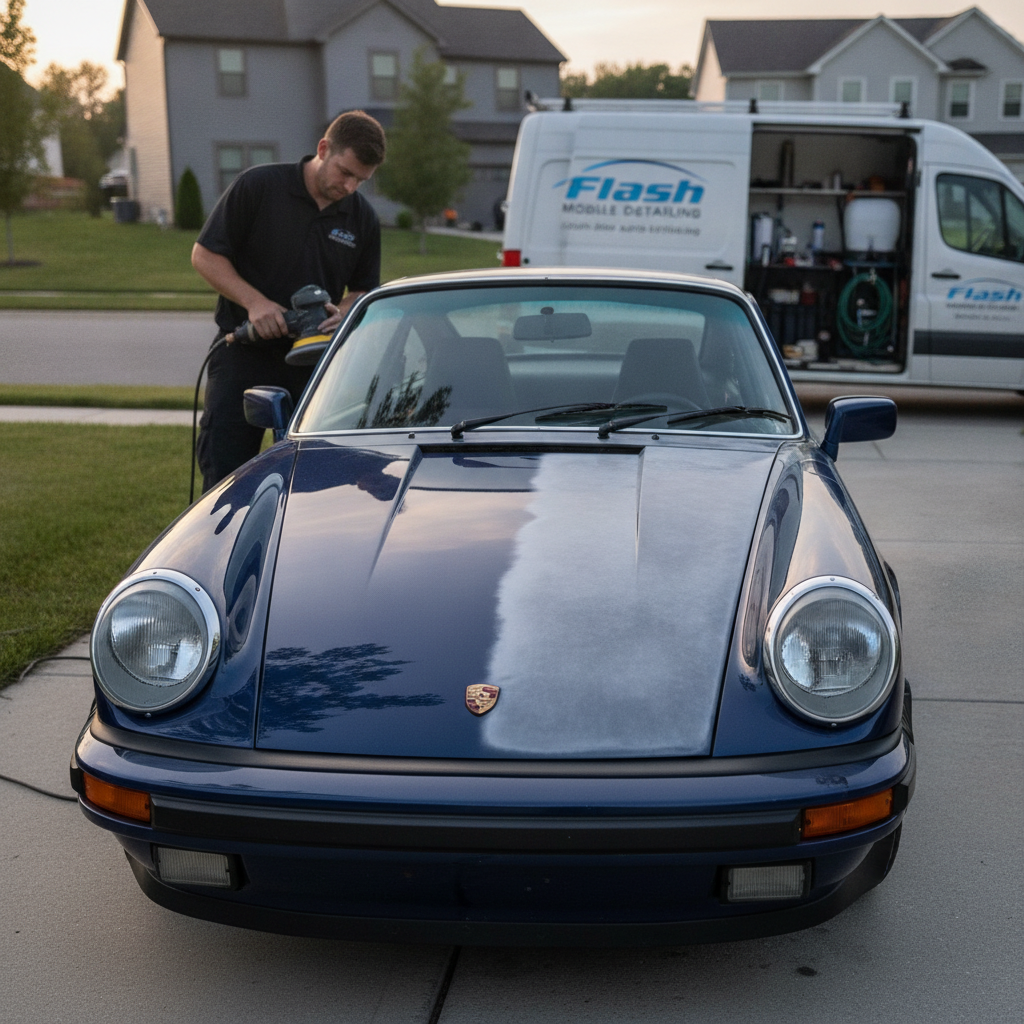
How Does Professional Exterior Detailing Remove Oxidation and Restore Faded Paint on Older Vehicles in Berlin and South Jersey?
If your vehicle’s paint has started to look chalky, dull, or washed-out, you’re likely dealing with oxidation — and you don’t necessarily need a repaint to fix it. For drivers in Berlin, Sicklerville, and the wider South Jersey area, professional exterior detailing can remove oxidation and restore a surprising amount of depth and gloss to faded paint, even on older vehicles. The key is understanding what oxidation actually is, how the detailing process addresses it, and when it’s worth investing in follow-up protection to keep it from coming back.
What Is Paint Oxidation and Why Does It Happen?
Oxidation occurs when the clear coat and base coat on your vehicle’s paint break down from prolonged exposure to UV rays, heat, moisture, and environmental contaminants. Sunlight is the primary driver, but South Jersey’s climate adds several layers of stress to the equation. Summers here bring intense UV exposure that accelerates clear coat degradation. Winters bring road salt, which strips away protective wax and works its way into microscopic paint imperfections. Then there’s pollen season, bird droppings, and tree sap — all of which are acidic and eat away at the surface if left untreated.
Over time, the result is paint that loses its reflective depth and starts to look faded, hazy, or almost powdery in severe cases. On darker vehicles, oxidation often appears as a milky haze. On white or silver finishes, it can look more like the paint has simply aged out. Either way, the damage is in the clear coat — the transparent top layer designed to protect the color beneath it.
What Does a Professional Exterior Detail Actually Do for Oxidized Paint?
A thorough exterior detailing service goes well beyond a basic wash. When oxidation is present, a professional will typically work through several stages to address the surface correctly.
- Pre-wash and decontamination: The vehicle is safely rinsed and washed to remove loose dirt, road grime, and surface contaminants before any correction work begins. This step matters — working over a dirty surface causes additional scratching.
- Clay bar treatment: A detailing clay bar is used to pull bonded contaminants — industrial fallout, rail dust, embedded grit — out of the paint pores. This leaves the surface smooth and properly prepared for the next stage.
- Polishing or paint correction: Depending on the severity of the oxidation, a detailer will use a machine polisher with appropriate compounds and pads to remove the damaged outer layer of clear coat. Mild oxidation often responds well to a finishing polish, while heavier cases may require a more aggressive cutting compound followed by a refining stage.
- Final protection: Once the surface is corrected, a sealant, wax, or ceramic coating is applied to protect what’s been restored and slow down future oxidation.
The difference a proper exterior detail makes on an oxidized vehicle is often dramatic. Paint that looked decades older than it was can regain significant gloss and color clarity after a thorough correction service.
What Competitors Often Miss: Setting Realistic Expectations for Oxidation Severity
One area where a lot of national auto detailing brands and content sites fall short is honest guidance about what exterior detailing can and cannot fix. Many competitor resources discuss oxidation removal in general terms without addressing the practical reality: not all oxidation is created equal, and the outcome depends heavily on how much clear coat remains.
Here’s what you actually need to know. Paint has multiple layers, and the clear coat is only so thick. When oxidation is mild to moderate — meaning the surface looks dull but still has some structure — polishing can remove the compromised material and reveal cleaner paint underneath. When oxidation has progressed to the point where the clear coat has begun to peel or flake, no amount of polishing will reverse it. At that stage, a repaint or panel respray is the only real solution.
A reputable detailer will assess the condition of your paint before starting and give you an honest read on what’s achievable. If you’re in the Williamstown or Winslow Township area and driving a vehicle with significant sun damage, it’s worth having that conversation upfront rather than investing in a service that can only partially address the damage.
How South Jersey’s Environment Speeds Up Oxidation
Drivers in Gloucester Township, Berlin, and across Camden County deal with a combination of seasonal stressors that are harder on paint than many people realize. The stretch from late spring through early fall brings sustained UV exposure that compounds year over year on unprotected paint. Vehicles that sit outside regularly — whether parked in a driveway or left in a lot during a long workday commute — accumulate far more UV damage than those garaged overnight.
Winter brings a different kind of threat. Road salt and brine used on South Jersey highways and local roads in Sicklerville and surrounding communities create a corrosive environment that accelerates the breakdown of unprotected surfaces. Salt doesn’t just affect the undercarriage — it splashes up onto painted panels and, when combined with freeze-thaw cycles, works into any existing micro-damage in the clear coat.
The practical takeaway is that vehicles in this region need more consistent protection than many owners budget for. Oxidation that develops gradually over several seasons can reach a point where correction becomes costly or impossible, so earlier intervention tends to produce better results at lower cost.
Should You Follow Up Oxidation Removal With Ceramic Coating?
Once your paint has been corrected and the oxidation removed, protecting that restored surface is the logical next step. Traditional wax is better than nothing, but it breaks down quickly — often within weeks — especially in South Jersey’s heat and rain cycles. A paint sealant lasts longer, typically several months, but requires reapplication on a regular schedule.
Ceramic coating is the most durable option available for protecting corrected paint. Unlike wax, a properly applied ceramic coating bonds chemically to the clear coat and creates a hard, hydrophobic layer that sheds water, resists UV rays, and makes the surface much easier to clean. It won’t prevent damage forever, but it significantly slows down the environmental wear that causes oxidation to return — and that matters a great deal for vehicles driven daily in this region.
The important thing to understand is that ceramic coating needs to go on clean, corrected paint. If oxidation is present at the time of application, the coating locks it in rather than protecting against it. Correction comes first, coating comes second — and that sequence is non-negotiable for a good result.
Why Mobile Detailing Makes Oxidation Restoration More Accessible
One reason drivers in Berlin, Sicklerville, and nearby communities put off paint restoration is the inconvenience of bringing a vehicle to a fixed shop and leaving it for hours. Mobile detailing removes that barrier entirely. A fully equipped professional comes to your home or workplace, handles the full exterior detail process on-site, and you never have to rearrange your schedule around a shop drop-off.
For busy commuters and families managing multiple vehicles, this kind of convenience isn’t just a perk — it’s often what makes the difference between addressing paint damage promptly and continuing to let it go another season.
Frequently Asked Questions
Can exterior detailing fix paint that is peeling or flaking?
No. Once the clear coat has begun to physically separate and peel, polishing cannot restore it. A professional can correct surface oxidation while the clear coat is still intact, but peeling paint typically requires professional repainting of the affected panels.
How long does oxidation removal typically take on an average vehicle?
Depending on the severity of the oxidation and the size of the vehicle, a full exterior detail with paint correction can take anywhere from three to six hours. Vehicles with more significant damage or intricate body lines may take longer. Your detailer should be able to give you a realistic time estimate after assessing the paint in person.
How often should I have my vehicle’s exterior professionally detailed in South Jersey?
For vehicles without ceramic coating protection, a thorough exterior detail once or twice a year is a reasonable baseline given South Jersey’s UV exposure and road salt season. Vehicles with ceramic coating can often go longer between correction services, though regular maintenance washes remain important.
Will detailing improve my vehicle’s trade-in or resale value?
Restored paint condition noticeably improves the visual appeal of a vehicle, which directly affects how buyers and dealers perceive its value. A vehicle with dull, chalky paint signals neglect even if the mechanical condition is excellent. Restoring the finish before selling or trading in is often a cost-effective investment.
Is it worth detailing an older, high-mileage vehicle with oxidized paint?
In many cases, yes. If the clear coat is still structurally intact, paint correction can make a dramatic visual difference regardless of the vehicle’s age or mileage. The decision depends on your goals — whether that’s protecting resale value, personal pride of ownership, or simply extending the life of a vehicle you plan to keep for several more years.
Ready to Restore Your Vehicle’s Paint?
If your car, truck, or SUV has started to show the signs of oxidation — fading, dullness, or that telltale chalky look — professional exterior detailing may be able to bring it back further than you’d expect. Flash Mobile Detailing serves Berlin, Sicklerville, Williamstown, Gloucester Township, Winslow Township, and surrounding South Jersey communities, coming directly to you with the equipment and expertise to assess and address your paint’s condition properly.
To find out what exterior detailing or paint correction can realistically do for your vehicle, reach out to Flash Mobile Detailing today and request a consultation. There’s no obligation — just an honest conversation about your paint and what it needs.