
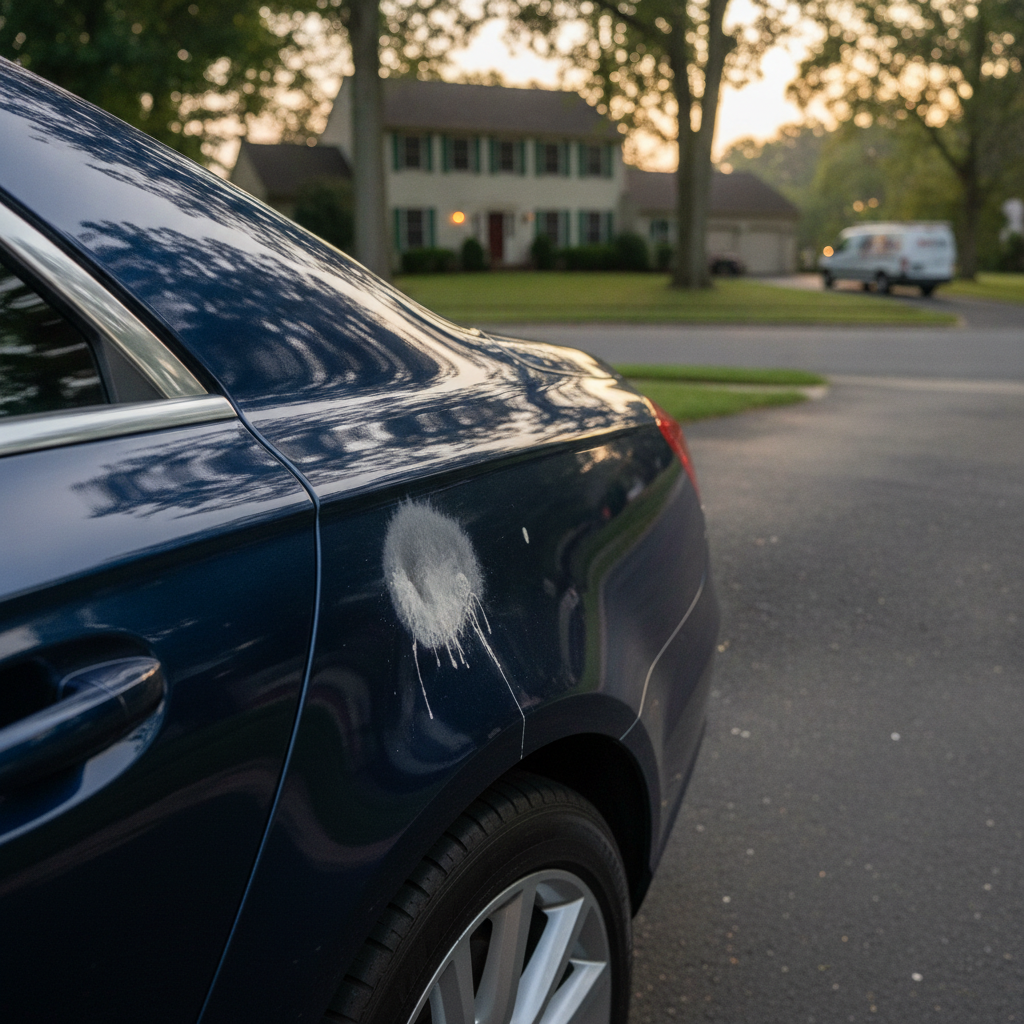
How Does Bird Dropping Damage Work on Car Paint in Winslow Township and What Should South Jersey Drivers Do to Remove It Safely?
If you park your car near trees, utility lines, or open lots in Winslow Township, there’s a good chance you’ve come back to find a bird dropping sitting on your hood or roof. It’s easy to brush it off as a minor annoyance — but the truth is, leaving bird droppings on your vehicle’s paint, even for just a few hours, can cause real damage that’s expensive to fix. Understanding why this happens and what to do about it can save you from a costly paint correction job down the road.
Why Are Bird Droppings So Damaging to Car Paint?
Bird droppings are highly acidic. They contain uric acid, which has a pH level that can range from 3.5 to as low as 2 — roughly comparable to vinegar or lemon juice. When that acid contacts your car’s clear coat and sits in direct sunlight, it softens the paint layer and begins to etch into the surface. As the dropping dries and contracts, it can literally pull the clear coat with it, leaving behind a dull, textured imprint that won’t buff out with a simple wash.
In South Jersey, this problem is intensified during the warmer months. When temperatures climb and the sun beats down on a dark-colored vehicle parked in a lot in Winslow Township or Gloucester Township, the chemical reaction between the acid in the droppings and your paint accelerates quickly. What might take a day or two to cause damage in cooler weather can happen within an hour or two on a hot July afternoon.
How Quickly Can a Bird Dropping Etch Your Clear Coat?
This is a question that many car owners don’t think to ask until they’ve already seen the results firsthand. Most professional detailers agree that leaving a bird dropping on painted surfaces for more than a few hours in warm weather creates a real risk of etching. The longer it sits, the deeper the damage goes — and once the acid has worked through the clear coat and into the base coat, simple polishing may not be enough to correct it.
The damage tends to follow a predictable pattern. In the early stages, you’ll notice a dull ring or slight texture where the dropping sat. If left longer, the surface may develop a rough, cratered appearance. In severe cases, the paint may need significant correction work or even a panel repaint, depending on the depth of the damage.
The Right Way to Remove Bird Droppings Without Making It Worse
One of the most common mistakes car owners make is wiping a bird dropping off dry — grabbing a paper towel or sleeve and rubbing it across the surface. This approach drags the gritty, abrasive material in the dropping across your paint and creates fine scratches and swirl marks on top of any etching that’s already started. Here’s how to handle it properly:
- Act quickly. The sooner you address it, the less damage is likely to occur. If you’re away from home, keeping a small spray bottle of quick detailer and a clean microfiber cloth in your car gives you a practical solution on the go.
- Soak before wiping. Mist the affected area with water or detailer spray and let it sit for 30 to 60 seconds to soften the dropping. Never wipe dry.
- Blot, don’t rub. Gently press the microfiber cloth onto the softened material and lift it away rather than dragging across the surface.
- Inspect afterward. Once clean, check the area in direct light for any etching or haziness. If you notice a dull spot, that’s a sign the clear coat has already been affected.
- Follow up with a proper wash. A full hand wash using a pH-neutral car shampoo helps remove any remaining residue and protects the surrounding paint.
If you’re already seeing etching after removing a dropping, a DIY approach is unlikely to fix it. Surface etching requires paint correction — a process that involves machine polishing to level the clear coat and remove the damaged layer. This is something best left to a professional detailer who has the right equipment and experience to do it without removing more clear coat than necessary.
What Competitors Don’t Tell You: The Role of Surface Protection in Preventing Etch Damage
Most of the larger national detailing content sites cover bird dropping removal as a basic topic, but very few explain how the right protective coating can actually reduce the risk of etching in the first place — and change how easy it is to clean these incidents up when they do happen. This is an important distinction for car owners in Camden County who are trying to make smart, long-term decisions about vehicle care.
A ceramic coating creates a hard, semi-permanent layer over your clear coat. This layer doesn’t make your car immune to bird dropping acid — nothing does — but it adds meaningful buffer time. The acid has to work through the coating before it can reach your actual paint, which gives you more of a window to clean it off safely. Bird droppings also wipe away more easily from a properly coated surface because the hydrophobic properties reduce how much the material bonds to the finish.
Traditional wax offers very limited protection here. Wax layers are thin and break down quickly, especially during South Jersey summers. A bird dropping can cut right through a wax layer within minutes. Ceramic coating, by contrast, is significantly more durable and continues performing across seasons and weather conditions — including the road salt winters and heavy UV summers that South Jersey drivers deal with year after year.
What to Do If Your Paint Already Has Bird Dropping Etching
If you’ve noticed dull spots, rings, or rough patches on your hood, roof, or trunk lid — areas most commonly affected because they face upward — you may already be dealing with clear coat etching. The good news is that light to moderate etching can often be corrected through professional paint correction before it progresses further.
Paint correction involves using a machine polisher with appropriate compounds and pads to carefully remove the damaged layer of clear coat. The goal is to level the surface and restore the clarity and gloss of the paint. After correction, applying a ceramic coating helps protect the freshly corrected surface going forward — so you’re not starting that cycle all over again the next time a bird decides your car looks like a good landing spot.
If you’re in Blackwood, Berlin, or the Sicklerville area and you’re unsure whether your paint has been etched, a quick inspection by a professional mobile detailer can give you a clear picture of what you’re working with and what options make sense. Flash Mobile Detailing comes to you, so you don’t have to rearrange your schedule or leave your vehicle at a shop.
Frequently Asked Questions
Can bird droppings damage paint through a wax coating?
Yes. Wax provides minimal resistance to the acid in bird droppings, particularly in warm weather. The protective benefit is limited, and wax breaks down quickly under South Jersey heat and UV exposure. Ceramic coatings offer significantly more durable protection.
How long does it take for bird droppings to etch car paint?
In warm, sunny conditions, damage can begin within one to two hours. During cooler months or in shaded parking, you may have longer — but it’s still best practice to address bird droppings as soon as you notice them.
Is paint correction always necessary after bird dropping damage?
Not always. If you caught and removed the dropping quickly and the paint still looks clear and glossy, correction may not be needed. However, if you notice a dull ring, rough texture, or hazy spot after cleaning, professional paint correction is likely the appropriate next step.
Does ceramic coating prevent bird dropping damage entirely?
No coating eliminates the risk entirely, but ceramic coating meaningfully reduces it by adding a protective layer that the acid must work through before reaching your clear coat. It also makes removal easier and faster, reducing the chance of damage occurring.
Can Flash Mobile Detailing help if my car has existing bird dropping etching?
Yes. Flash Mobile Detailing offers paint correction services and can assess the condition of your paint to determine the best course of action. If correction is needed, we can also apply a ceramic coating afterward to help protect the surface long-term.
Protect Your Paint Before the Damage Happens
Bird dropping etching is one of those paint problems that feels minor until it isn’t — and by the time most drivers notice it, the damage is already done. If you park outdoors regularly in Winslow Township, Gloucester Township, or anywhere in South Jersey, putting a durable layer of protection on your vehicle’s paint is one of the smartest moves you can make for long-term value and appearance.
Flash Mobile Detailing serves car owners throughout Sicklerville and the surrounding communities with professional exterior detailing, paint correction, and paint protection ceramic coating — all performed at your location, on your schedule. Whether you’re dealing with existing damage or looking to get ahead of it, we’re here to help. Reach out today to schedule a free consultation and find out what your vehicle needs.
Contact Flash Mobile Detailing: Call us at (856) 534-3603, email info@flashmobiledetailing.com, or visit our contact page to get started.