
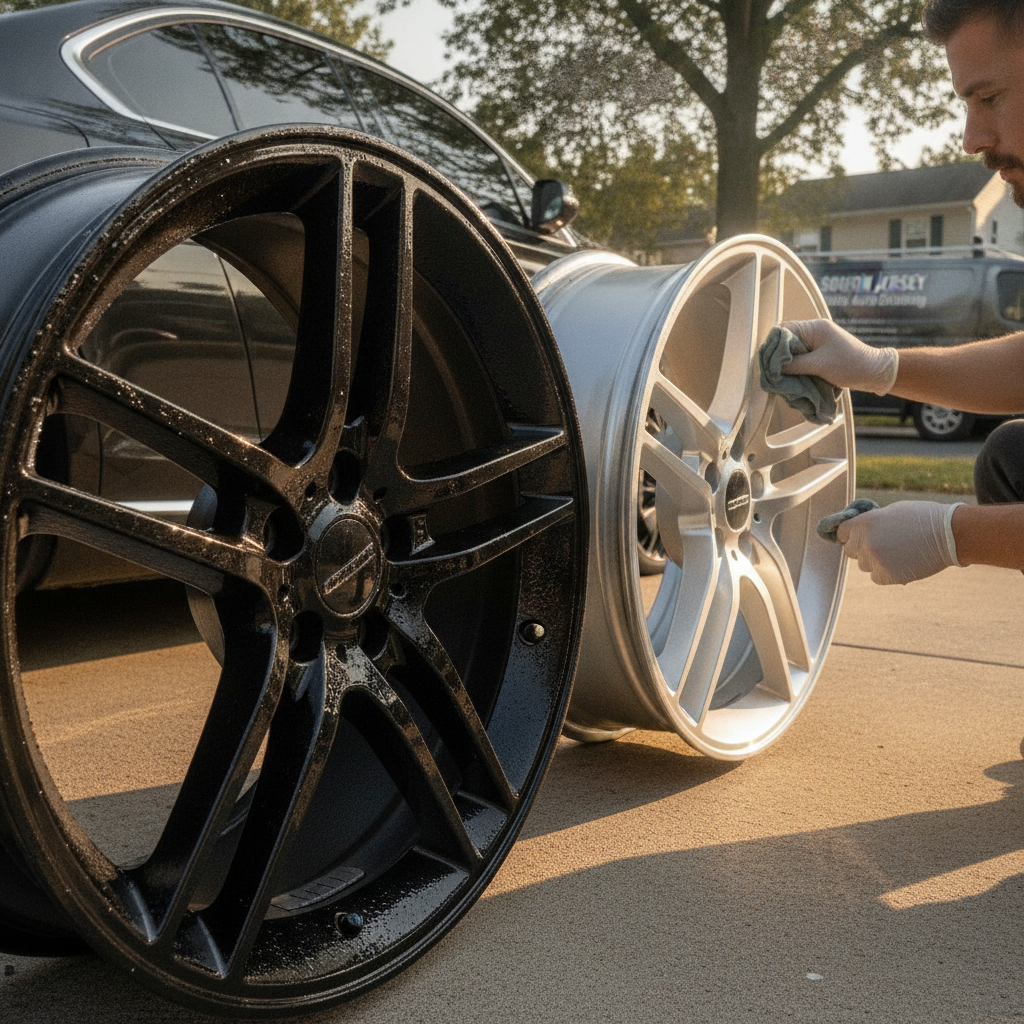
If you live in Berlin or anywhere across South Jersey and you’ve noticed dark, stubborn grime building up on your wheels no matter how often you wash them, you’re dealing with one of the most overlooked problems in vehicle care — brake dust accumulation. Most people don’t think about protecting their wheels the same way they protect their paint, but for drivers putting daily miles on local roads and highways, wheel protection is just as important. Ceramic coating applied to your wheels is one of the most practical solutions available, and it’s a topic that deserves a much closer look than most detailing resources give it.
What Is Brake Dust and Why Is It So Hard to Clean Off?
Every time you press your brake pedal, your brake pads create friction against the rotors. That friction releases tiny metallic and carbon particles — commonly called brake dust — which are extremely hot when they leave the rotor. Those particles travel directly onto your wheels and, because of the heat, they can actually bond to the wheel surface almost instantly.
Over time, brake dust doesn’t just sit on top of your wheels — it etches into the surface. This is especially true on alloy and chrome wheels, which are more porous than they appear. Once brake dust has been baked on through repeated heat cycles, regular washing and even dedicated wheel cleaners struggle to remove it completely. The longer it’s left, the more it becomes a permanent part of the wheel’s finish. For drivers in Berlin, Blackwood, and the surrounding Camden County area who commute daily on Route 73 or the Atlantic City Expressway, this happens faster than most people realize.
How Does Ceramic Coating Help Protect Your Wheels?
Ceramic coating creates a hard, semi-permanent protective layer over your wheel’s surface. This layer is chemically resistant, heat-tolerant, and hydrophobic — meaning water and contaminants bead up and roll off rather than sticking and baking in. When brake dust lands on a ceramic-coated wheel, it doesn’t bond the same way it would to an unprotected surface. Instead, most of it rinses off with a simple hose-down or light wash.
Beyond brake dust, a wheel coating also protects against:
- Road salt and de-icing chemicals used during South Jersey winters
- Tar and asphalt splatter from highways and construction zones
- Curb rash and light surface contamination
- UV discoloration on chrome or polished finishes
- General corrosion from moisture and road debris
For drivers in areas like Gloucester Township and Washington Township who deal with winter road treatments every year, that salt resistance alone makes wheel coating worth considering. Road salt doesn’t just attack your undercarriage — it works its way into every exposed metal surface, including your wheels.
What Most Competitor Resources Miss About Wheel Ceramic Coating
Here’s something you won’t find clearly explained on most detailing websites: wheels require a completely different preparation process than paint before a ceramic coating is applied. This is a significant gap in how most resources explain ceramic coating, and it’s something car owners in South Jersey should understand before booking any service.
Wheels accumulate iron contamination from brake dust at a much higher rate than your paint does. Before any coating can properly bond to the wheel surface, that iron contamination needs to be chemically removed — not just scrubbed off. This typically involves an iron decontamination spray that reacts with embedded ferrous particles and releases them from the surface. After that, the wheel may need a light polish or correction step to address any existing etching or staining before the coating is applied.
Skipping this prep work and applying ceramic coating over contaminated wheels is one of the most common mistakes made by less experienced detailers. The coating will still cure, but it will essentially lock in existing stains and imperfections rather than protecting clean metal. The result is a wheel that looks worse over time, not better. When you’re looking for a detailing service, always ask whether they include an iron decontamination step as part of the wheel coating prep. A professional who takes the time to explain this process — without rushing it — is giving you a meaningful indicator of their overall workmanship quality.
Is Wheel Ceramic Coating Applied Separately From a Full Coating Package?
Yes, and this is another point worth clarifying. When most people think about ceramic coating, they think about full-vehicle paint protection. Wheel coating can be part of that package, or it can be a standalone service depending on your needs and budget. Some car owners who drive older vehicles or have a tighter budget choose to protect their wheels first, since wheels tend to show wear and contamination faster than the rest of the car.
If you’re having your paint coated, it almost always makes sense to include the wheels in the same appointment. The prep work and curing time overlap naturally, and protecting everything at once gives your vehicle a consistent, thorough level of protection. Ask the detailer upfront whether wheels are included or quoted separately so there are no surprises.
How Long Does Wheel Ceramic Coating Last?
Wheel coatings generally have a shorter lifespan than paint coatings, primarily because wheels experience more direct heat, mechanical stress, and chemical exposure than your paint panels do. A quality wheel coating applied correctly can last anywhere from one to several years depending on how often you drive, how aggressively you brake, and how the wheels are maintained between washes.
Maintenance is straightforward. Avoid harsh wheel cleaners that contain strong acids, which can break down the coating prematurely. A pH-neutral wheel cleaner and regular rinsing after particularly messy drives — especially after winter road salt exposure — will keep the coating performing well. The same basic logic that applies to maintaining ceramic coating on paint applies here: gentle, consistent care extends the product’s lifespan significantly.
Is Mobile Wheel Coating Available in the Berlin and Sicklerville Area?
Busy drivers in Winslow Township, Sicklerville, and surrounding communities don’t always have time to drop their car off at a shop and wait. That’s where mobile detailing services make a real difference. Flash Mobile Detailing comes to your location — your driveway, your workplace, wherever is most convenient — so wheel coating and other protection services don’t require you to rearrange your day around a shop visit. The work gets done while you focus on everything else on your schedule.
Frequently Asked Questions About Wheel Ceramic Coating in South Jersey
Can ceramic coating be applied to any type of wheel finish?
Ceramic coating works on most wheel finishes including alloy, chrome, painted, and powder-coated wheels. The prep process may differ slightly depending on the finish type, but a knowledgeable detailer will assess your specific wheels before applying any product.
Will ceramic coating prevent all brake dust from sticking to my wheels?
It won’t create a completely dust-free wheel, but it significantly reduces how much dust adheres to the surface and how difficult it is to remove. Most coated wheels can be rinsed clean with water alone after light contamination, compared to uncoated wheels that require scrubbing and chemical cleaners.
Do my wheels need to be polished before ceramic coating is applied?
If your wheels already have light scratches, etching from brake dust, or surface imperfections, light polishing before coating will improve the final result. If you coat over existing damage, the coating will preserve those flaws rather than hiding them. A professional assessment beforehand helps you decide whether polishing is needed.
How does road salt in South Jersey affect uncoated wheels?
Road salt used during winter in Camden County and Gloucester County is highly corrosive. On uncoated alloy wheels, prolonged salt exposure can cause pitting and discoloration that’s difficult to reverse. A ceramic coating provides a chemical barrier that slows down this process considerably.
Is wheel coating worth it if I’m planning to sell my car?
Clean, well-maintained wheels make a strong visual impression on potential buyers and signal overall vehicle care. Protecting your wheels with a coating — especially if your car still has good paint and interior condition — can support your vehicle’s perceived value and make it easier to present well at resale.
Ready to Protect Your Wheels From Brake Dust and South Jersey Roads?
If your wheels are constantly looking dirty no matter how often you wash them, or if you’ve noticed brake dust staining that regular cleaning can’t fully remove, ceramic wheel coating is a practical, long-lasting solution worth exploring. Flash Mobile Detailing serves drivers throughout the Berlin, Sicklerville, and broader South Jersey area with professional-grade protection services that come to you. Reach out today to schedule a consultation and find out what wheel ceramic coating — or a full vehicle protection package — would look like for your specific car, truck, or SUV.