
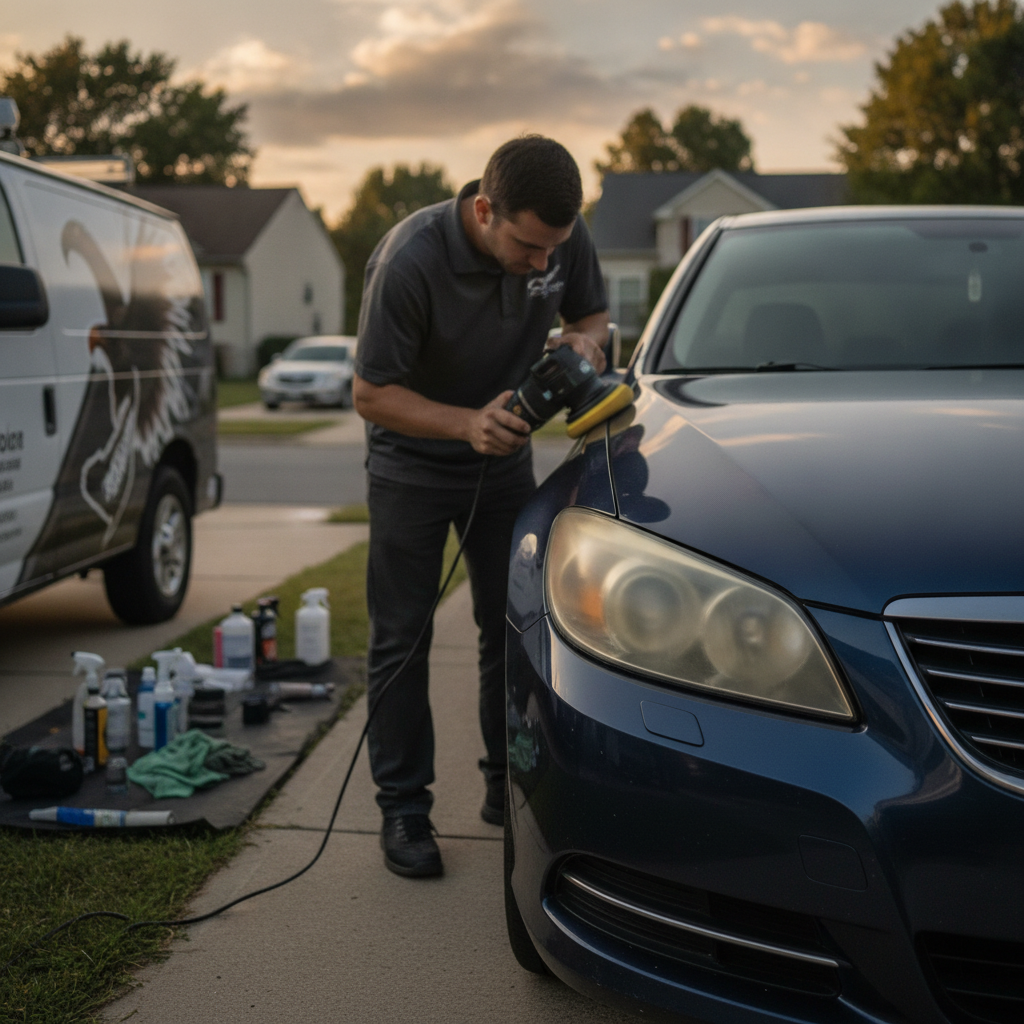
How Does Headlight Restoration Improve Visibility and Protect Your Car’s Value in Sicklerville and South Jersey?
If your headlights have turned cloudy, yellowed, or hazy, you are not just dealing with a cosmetic issue — you are driving with a safety risk. For car owners in Sicklerville and across South Jersey, faded headlights are a common problem caused by prolonged UV exposure, road grime, and seasonal weather. The good news is that professional headlight restoration can clear them up significantly, improve your nighttime visibility, and make your vehicle look well-maintained. Here is what the process involves and why it is worth taking seriously.
Why Do Headlights Turn Cloudy in the First Place?
Most modern vehicles use polycarbonate plastic headlight lenses rather than glass. While this material is lightweight and impact-resistant, it is also vulnerable to UV radiation. Over time, the protective coating on the outer surface of the lens breaks down, allowing the plastic beneath to oxidize. The result is that familiar foggy, yellowish appearance that makes your headlights look aged — and that genuinely reduces the amount of usable light projected onto the road.
In South Jersey, this process tends to accelerate because of the combination of intense summer sun, humid conditions, and the road grime and salt spray that vehicles are exposed to during the colder months. If you commute regularly on routes like Route 42 or the Atlantic City Expressway, your headlights are taking a beating from road debris, insects, and chemical contamination on a daily basis. Drivers in communities like Gloucester Township and Williamstown who put significant highway miles on their vehicles often notice this issue earlier than those who drive primarily in neighborhoods.
What the Headlight Restoration Process Actually Involves
A professional headlight restoration is not the same as running a store-bought kit over your lenses for five minutes. When done correctly, it is a multi-step process that systematically removes the damaged outer layer and restores clarity to the plastic beneath. Here is what a thorough professional service typically includes:
- Surface preparation: The area around the headlight is masked off to protect surrounding paint. The lens surface is cleaned to remove loose dirt and contamination.
- Wet sanding: Progressive grits of wet sandpaper are used to remove the oxidized layer. This is the step that actually makes the biggest difference — and also the step most DIY kits cannot replicate effectively.
- Polishing and compounding: After sanding, a polishing compound is worked into the lens to restore clarity and eliminate sanding marks.
- UV sealant application: This is a critical final step that many DIY products skip entirely. Without applying a UV-resistant sealant or coating to the restored lens, the oxidation process will restart within weeks or months. A proper sealant extends the results significantly.
The difference between a professional result and a rushed DIY attempt often comes down to the sanding technique and the quality of the UV protection applied at the end. Professional detailers have access to better compounds, proper tools, and the hands-on experience to know how much material can safely be removed from the lens without causing damage.
Why DIY Headlight Restoration Kits Often Fall Short
Walk into any auto parts store and you will find a row of headlight restoration kits promising dramatic results. Some of them do produce a short-term improvement — but many car owners in Washington Township and Cherry Hill have experienced the frustration of finishing a DIY kit only to watch their headlights haze back over within a few months.
The core problem is that most consumer kits do not include a quality UV sealant, and the sanding and polishing media provided are not always matched to the severity of oxidation on your specific lenses. Without addressing the root cause of the problem — UV breakdown of the outer coating — the clarity you restore will not last. A professional restoration that includes proper UV protection applied to clean, correctly sanded lenses holds up far longer and delivers a noticeably cleaner result.
The Safety Angle: How Much Does Hazy Actually Matter?
Visibility research consistently shows that severely degraded headlight lenses can reduce the effective light output by a significant amount — in some cases by more than half. For drivers navigating darker stretches of road in areas like Wye Oak or Avandale West after sundown, that reduction is not trivial. Cleaner headlights mean you see road hazards, pedestrians, and turn signals sooner. That alone makes restoration a worthwhile investment, independent of any cosmetic benefit.
It is also worth noting that heavily fogged headlights can attract attention during vehicle inspections. While New Jersey does not have a specific headlight clarity test, inspectors do evaluate headlight function and aim — and severely degraded lenses can reduce the beam intensity enough to warrant attention.
How Headlight Restoration Supports Your Vehicle’s Resale Value
When a potential buyer walks up to a vehicle, the headlights are one of the first things they notice. Cloudy, yellowed lenses communicate that the vehicle has not been well cared for, even if the mechanical condition is excellent. A clean set of headlights gives the impression of a maintained, cared-for vehicle — and that impression matters when it is time to sell or trade in.
Pairing a headlight restoration with a professional exterior detail is a smart way to present your vehicle in its best possible light. If you are already thinking about mobile detailing services before listing your car or simply want it looking sharp, adding headlight restoration to the service is a logical step. The two services complement each other well and can be completed together in a single appointment.
Protecting Restored Headlights for the Long Term
Once your headlights have been professionally restored and sealed, there are a few habits that will help maintain the results. Parking in a garage or shaded area when possible reduces direct UV exposure. Regular washing removes road film and chemical contamination that can degrade surface coatings over time. And if you are investing in paint protection for your vehicle, it is worth asking about applying a ceramic-based sealant to your headlights as well.
Some vehicle owners in South Jersey opt to apply a thin layer of ceramic coating to their headlights after restoration. This creates a harder, more UV-resistant surface that holds up well against the kind of daily driving conditions common in Camden County and Gloucester County — sun, road grime, insects, and seasonal salt exposure alike.
Frequently Asked Questions About Headlight Restoration in South Jersey
How long does a professional headlight restoration take?
Most headlight restorations can be completed in one to two hours depending on the severity of the oxidation and whether the service is being combined with other detailing work. Because Flash Mobile Detailing comes to you, there is no need to drop your vehicle off at a shop.
How long will the results last?
With a proper UV sealant applied, professional results can last one to two years or longer depending on your parking habits and how much direct sun exposure your vehicle gets. Vehicles parked outside regularly in South Jersey summers will experience faster UV degradation than those kept in a garage.
Can all headlights be restored, or are some too far gone?
Most headlights respond well to professional restoration. In severe cases where the plastic has cracked, deeply pitted, or where the damage is on the inside of the lens, restoration may not fully solve the problem. A professional can assess your specific lenses before committing to the service.
Is headlight restoration worth it if I am planning to sell my car?
Yes — it is one of the more cost-effective improvements you can make before selling. Buyers notice headlight condition immediately, and clear lenses make the entire front of the vehicle look cleaner and better maintained.
Do you need to remove the headlights from the car to restore them?
No. Professional headlight restoration is performed with the lenses in place. The surrounding paintwork is masked off carefully to prevent any compound or sanding residue from contacting your vehicle’s finish.
Schedule Your Headlight Restoration With Flash Mobile Detailing
Flash Mobile Detailing serves Sicklerville and the surrounding communities across South Jersey, including Gloucester Township, Cherry Hill, Washington Township, Williamstown, and beyond. We come to your home, your workplace, or wherever your vehicle is parked — no shop visit required. Whether you want headlight restoration on its own or as part of a broader detailing package, we are happy to discuss your vehicle’s needs and put together the right plan.
Ready to clear up those headlights and give your vehicle the attention it deserves? Contact Flash Mobile Detailing today to request a free consultation and find out what we can do for your car.