
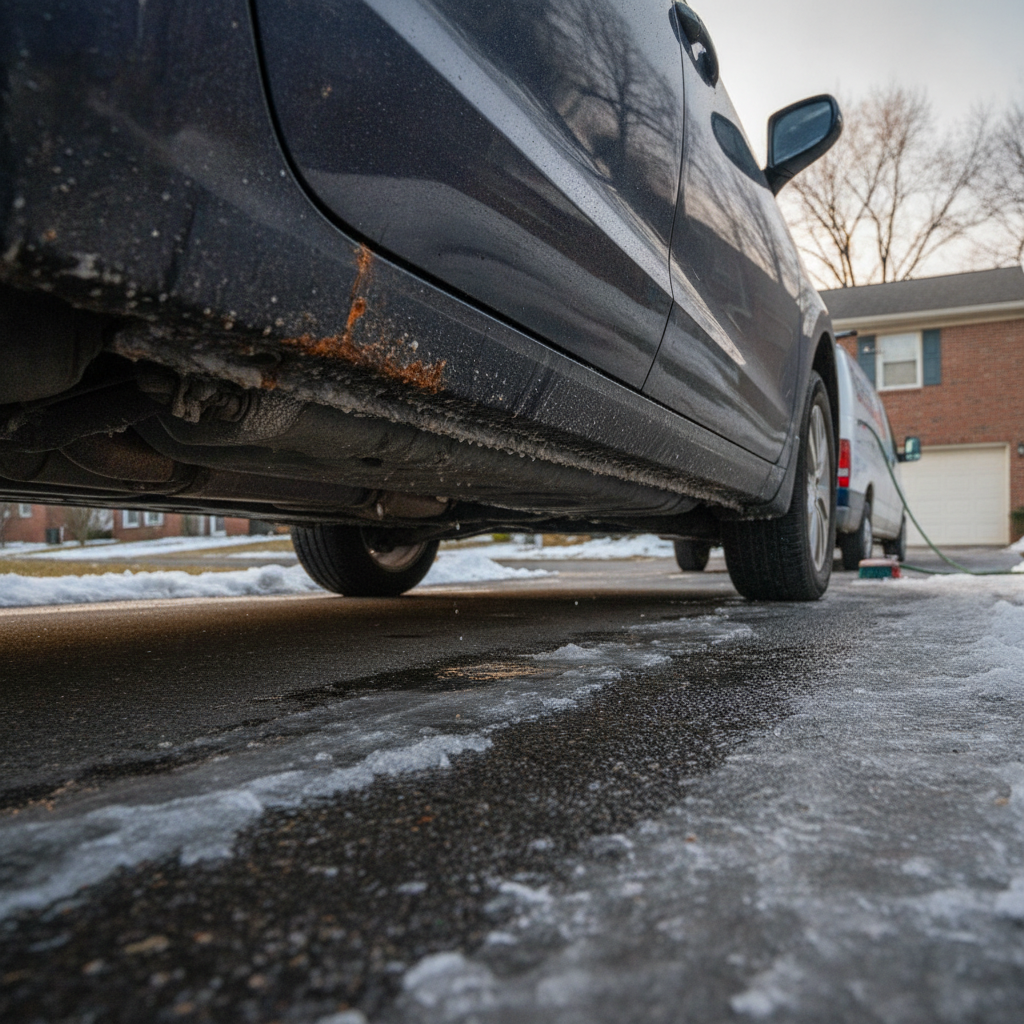
How Does Road Salt Damage Your Car’s Undercarriage in Sicklerville and What Can South Jersey Drivers Do to Protect It?
If you drive through Sicklerville or anywhere across South Jersey during winter, your vehicle is being exposed to road salt almost every time it leaves your driveway. State and local crews spread thousands of tons of salt across highways and local roads each season to keep traffic moving safely — but that same salt doesn’t just melt ice and disappear. It clings to every surface underneath your vehicle, and over time, it begins to eat away at metal components in ways that can be expensive and even dangerous to repair. The good news is that the damage is largely preventable when you know what to look for and take action before corrosion has a chance to set in.
Why the Undercarriage Is the Most Vulnerable Part of Your Vehicle in Winter
Most car owners think about protecting their paint during winter — and that matters — but the undercarriage is actually far more exposed to road salt than any panel on your car. When you drive, slush, brine, and salt spray coat the frame, exhaust system, brake lines, fuel lines, suspension components, and wheel wells. These areas don’t benefit from regular washing the way your hood or roof does. They’re out of sight, which means they’re often out of mind until a mechanic lifts your car and shows you rust that’s already spreading.
In South Jersey, winter conditions can vary significantly. Some seasons bring heavy snowfall that results in prolonged salt exposure; others involve freeze-thaw cycles that keep roads wet and salty for days at a time. Drivers commuting from communities like Washington Township, Winslow Township, and Voorhees who spend time on Routes 42, 55, or 73 are regularly driving through heavy brine application zones. That daily exposure adds up quickly.
What Road Salt Actually Does to Metal Over Time
Salt accelerates oxidation — the same chemical process that causes rust. When salt-laden moisture sits on bare or compromised metal, it creates an electrochemical reaction that breaks down the metal’s surface. What starts as surface rust can work its way deeper into structural components over one or two winters if left untreated. Brake line corrosion, for instance, is one of the more serious safety risks associated with prolonged salt exposure, and it’s far more common on vehicles in the Northeast than in drier climates.
The undercarriage also tends to trap salt in seams, joints, and crevices where moisture collects and doesn’t dry out easily. By the time you can see visible rust bubbling on frame rails or suspension arms, the damage has usually been progressing for quite a while. Prevention is always far less costly than repair.
The Step Competitors Often Skip: Thorough Undercarriage Cleaning Before Protection
One topic that gets surprisingly little attention on most national detailing and auto protection websites is the importance of a proper undercarriage rinse and cleaning before any protective service is applied. Several large competitor sites focus heavily on paint-facing products — ceramic coatings, paint protection film, and window tints — without addressing the undercarriage at all. That’s a real gap, because for South Jersey drivers, what’s happening underneath your car may be doing more long-term damage to your vehicle’s value and structural integrity than surface-level paint contamination.
A professional exterior detail that includes undercarriage attention involves flushing away accumulated salt, grime, and debris with a high-pressure rinse. This isn’t just about aesthetics — it’s about removing corrosive material from areas that hold moisture. Doing this at least once mid-winter and again as part of a thorough spring detail gives your vehicle’s undercarriage a fighting chance against the season’s salt load.
If you’re curious about what a full exterior detailing service includes, Flash Mobile Detailing’s mobile detailing page breaks down the process in plain language.
How Ceramic Coating Helps Protect Exterior Surfaces From Salt Damage
While ceramic coating is primarily applied to painted exterior surfaces rather than bare metal undercarriage components, it plays an important role in protecting your paint, lower body panels, wheel wells, and trim from the salt spray that constantly hits the sides and lower sections of your vehicle during winter driving. A properly applied ceramic coating creates a hydrophobic surface that causes water and brine to bead up and run off rather than sitting against your paint and eating into the clear coat.
For drivers in communities like Blackwood, Gloucester Township, and Berlin who commute regularly through salted roadways, having a ceramic coating on the vehicle’s exterior means that post-winter cleanup is far easier and that salt exposure causes significantly less lasting damage to the paint. It won’t protect bare metal underneath, but it gives the surfaces you can see a meaningful layer of defense that traditional wax simply cannot match over a full winter season.
Learn more about how this protective layer works by visiting the ceramic coating page on the Flash Mobile Detailing website.
Practical Steps South Jersey Drivers Can Take This Winter
You don’t need to wait for spring to start protecting your vehicle from road salt damage. Here are some practical steps worth building into your seasonal routine:
- Rinse your vehicle after heavy salt exposure. After a storm or several days of driving on salted roads, a thorough rinse — including the wheel wells and lower body panels — removes active salt before it has extended time to sit against metal and paint.
- Schedule a mid-winter detail. A professional detail during the middle of the season gives your vehicle a reset point and removes contamination that has built up in hard-to-reach areas.
- Book a post-winter deep clean in spring. A thorough spring exterior detail, including decontamination, is one of the most effective things you can do for your vehicle’s long-term condition after a South Jersey winter.
- Ask about undercarriage attention when booking. Not every detail package automatically includes undercarriage rinsing, so it’s worth asking your detailer specifically what’s covered.
- Consider protective coatings before winter arrives. Getting ceramic coating or paint protection applied in fall gives you a full season of defense rather than playing catch-up in spring.
Why Mobile Detailing Makes This Easier for Busy Commuters
One of the most common reasons vehicle owners in Sicklerville and surrounding neighborhoods like Cross Keys, Wiltons Corner, and Valley Green skip seasonal detailing is simple convenience — or the lack of it. Between work schedules, family commitments, and everything else on your plate, finding time to drop a car off at a shop for half a day isn’t always realistic. Mobile detailing solves that problem by bringing the service to your home or workplace, on a schedule that works for you. A technician can complete a thorough exterior detail while your car sits in your own driveway, meaning you lose none of your day and come back to a vehicle that’s been properly cleaned and protected.
Frequently Asked Questions
How often should I wash my car during winter in South Jersey?
During periods of active salting, a rinse every one to two weeks is a reasonable goal, with particular attention to the wheel wells and lower panels. At minimum, try to rinse within a day or two after any storm where salt was applied to the roads you drove on.
Can road salt damage happen even if I don’t see rust yet?
Yes. Corrosion often begins in areas you can’t easily inspect, such as inside frame rails, behind body panels, and around brake line brackets. By the time surface rust is visible, the process has usually been underway for some time. Preventive cleaning and protection is far more effective than reactive repair.
Does ceramic coating protect against road salt?
Ceramic coating protects painted exterior surfaces by creating a hydrophobic barrier that reduces how long salt and brine stay in contact with your paint. It won’t protect bare metal undercarriage parts directly, but it significantly reduces salt damage to your clear coat, lower body panels, and exterior trim.
Is undercarriage washing something a mobile detailer can do?
A mobile detailer with proper equipment can perform a thorough undercarriage rinse as part of an exterior detail. It’s worth discussing this specifically when booking your appointment, so the right equipment and water supply setup is arranged ahead of time.
When is the best time to get a ceramic coating to prepare for winter?
Fall is an ideal time to schedule ceramic coating — ideally before temperatures drop significantly, since coating application requires specific conditions. Getting protected before the first significant snowfall means your vehicle goes into the harshest part of the season already defended.
Ready to Protect Your Vehicle Before Winter Takes Its Toll?
South Jersey winters can be unpredictable, but what road salt does to an unprotected vehicle is entirely predictable — and preventable. Whether you’re looking to schedule a thorough seasonal exterior detail, explore ceramic coating options for your paint, or simply want to understand what your vehicle needs heading into colder months, Flash Mobile Detailing is here to help. We serve Sicklerville and the surrounding South Jersey area, coming directly to your home or workplace so protecting your vehicle never has to be inconvenient. Contact us today to discuss your vehicle’s needs and get started before winter arrives.