
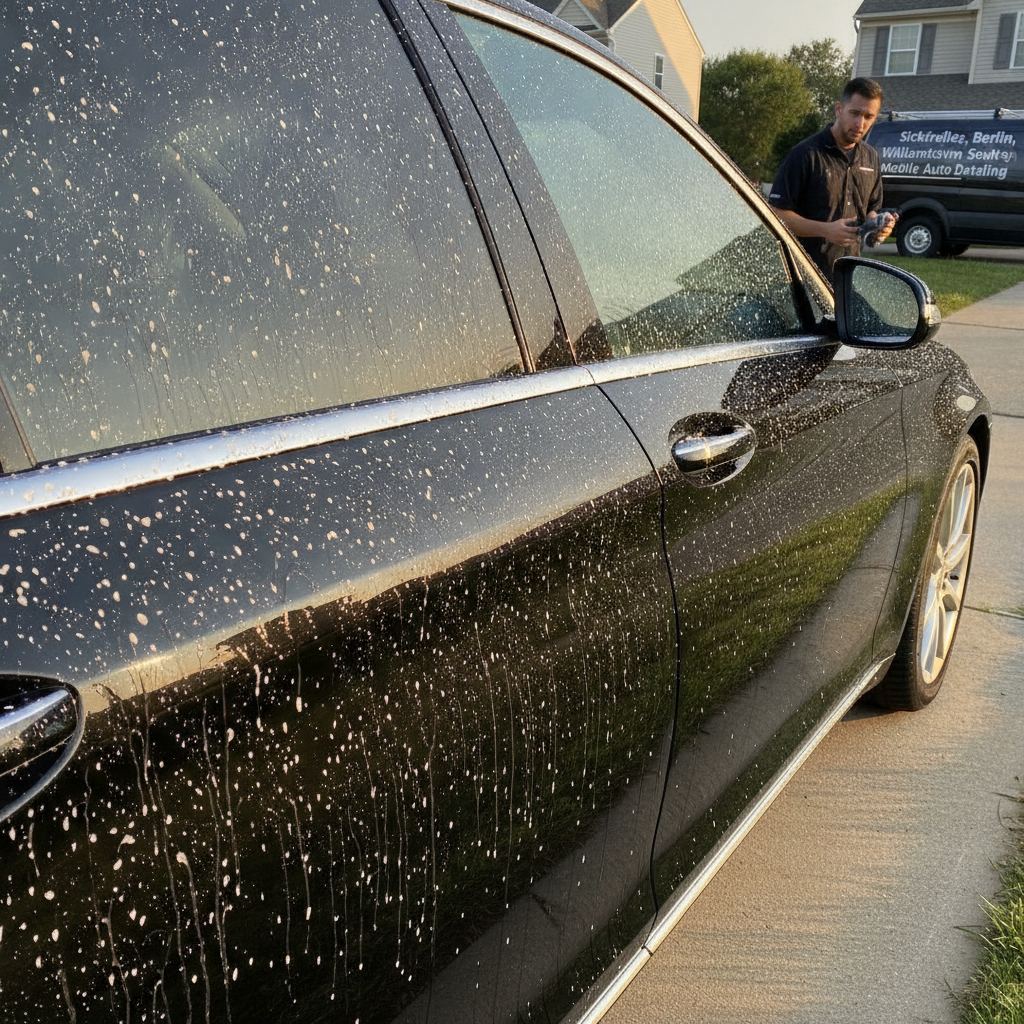
How Does Rain and Hard Water Leave Spots on Your Car’s Paint in Voorhees and What Can South Jersey Drivers Do About It?
If you park your car outside in Voorhees and notice dull, hazy spots on the paint after a rainstorm or a trip through the car wash, you are looking at the early signs of hard water and acid rain damage. These spots might seem like a cosmetic nuisance, but left untreated, they can permanently etch into your vehicle’s clear coat — and once that happens, simple washing will not fix the problem. For drivers across South Jersey, understanding what causes water spots and how to address them early can save you real money down the road.
What Actually Causes Water Spots on Car Paint?
Water spots form when water evaporates and leaves behind whatever was dissolved in it. That includes minerals like calcium, magnesium, and silica — all commonly found in tap water throughout Camden County — as well as trace pollutants, industrial fallout, and acidic compounds that are carried in rainfall. South Jersey sits in a region that receives a mix of regular rainfall and occasional acid rain from air currents moving through the Mid-Atlantic corridor. Each time contaminated water dries on your paint without being rinsed off, it deposits a thin layer of minerals on the surface.
Over time, those deposits bond with the clear coat. In the early stage, they look like faint white circles or hazy film. In more advanced cases, they leave behind visible etching — shallow pits in the paint surface that scatter light and make your vehicle look dull no matter how many times you wash it. Dark-colored vehicles show this damage especially fast, but no paint color is immune.
Why South Jersey Weather Makes This Worse Than You Might Expect
The combination of heat, humidity, and variable rainfall in the Voorhees and greater Gloucester Township area creates conditions where water spots form quickly and worsen fast. During summer, water can evaporate off a hot hood within minutes of landing on it — leaving behind concentrated mineral deposits before you even have a chance to dry the surface. In spring, heavy rain mixed with pollen and road grime creates a contaminated slurry that sits on horizontal surfaces like hoods, roofs, and trunk lids.
Drivers who park under trees face additional challenges. Sap residue, organic material, and captured rainwater dripping from leaves all contribute to paint contamination. And if you are commuting daily to Cherry Hill or the Philadelphia suburbs, your vehicle spends significant time exposed to road spray and ambient particulates — all of which mix with water and accelerate spotting.
What Competitor Sites Are Not Telling You About Water Spot Prevention
Most national detailing brands and training-focused sites cover water spot removal as a technical process — what products to use, what pH levels to target, and so on. What they rarely address is the full picture for everyday vehicle owners who are not professional detailers. The reality is that most drivers in Blackwood or Sicklerville are not going to stock a pH-balanced iron remover and a clay bar in their garage. They need to know what to watch for, when it is beyond a DIY fix, and what professional service actually addresses the underlying problem.
The gap most competitors miss is this: water spots are not just a cleaning problem — they are a paint protection problem. Removing existing spots is one step. Preventing them from coming back is another. And combining both steps with a professional exterior detail and a durable protective coating is the most practical long-term solution for busy South Jersey drivers.
When Is It Too Late to Just Wash the Spots Away?
Stage one water spots are fresh mineral deposits sitting on top of the surface. A proper hand wash with a pH-neutral soap and immediate drying can often remove these before they bond. However, most drivers do not catch them this early. By the time spots are visible to the naked eye in normal light, they have usually begun bonding with the clear coat.
Stage two spots have partially etched the surface. A standard wash will not remove them. At this point, a detailer may use a dedicated water spot remover, a light paint decontamination process, or a combination of both to lift the mineral deposits without abrading the surface unnecessarily.
Stage three spots have etched into the clear coat itself. These require professional mobile detailing that may include light paint correction — a machine polishing process that safely removes a thin layer of clear coat to restore a level, uniform surface. Once etching has occurred, correction is the only way to restore a clean finish before any protective coating can be applied properly.
How Ceramic Coating Helps Prevent Future Water Spot Damage
One of the most practical long-term solutions for drivers dealing with recurring water spots is a professionally applied ceramic coating. A quality ceramic coating creates a hydrophobic surface — meaning water beads up and rolls off instead of sitting on the paint and evaporating into spots. This does not make your vehicle completely immune to mineral deposits in extreme conditions, but it significantly slows the process and makes routine maintenance far more effective.
Because ceramic coatings bond to the clear coat at a chemical level, they also provide a sacrificial layer that takes the initial impact of acidic contaminants before they can reach the paint beneath. For drivers who commute regularly, park outdoors, or live in neighborhoods with mature tree cover, that added buffer makes a measurable difference. You can learn more about how this protection works on the ceramic coating service page.
What a Professional Exterior Detail Includes for Water Spot Treatment
A thorough exterior detail focused on water spot treatment typically includes the following steps:
- Pre-wash and rinse to remove loose surface debris without dragging contaminants across the paint
- Hand wash using a pH-neutral, paint-safe soap and clean microfiber mitts
- Chemical decontamination using iron fallout remover and, where needed, a dedicated water spot treatment product
- Clay bar or decontamination mitt to physically pull bonded contaminants from the surface
- Paint inspection under proper lighting to assess whether etching has occurred and whether correction is needed
- Drying and finishing with a paint-safe drying towel and a spray sealant or protective layer appropriate to the vehicle’s current condition
If etching is present, your detailer may recommend a paint correction step before any sealant or coating is applied. Applying a coating over compromised paint locks in the damage rather than protecting against it.
Practical Tips for Reducing Water Spot Buildup Between Details
You do not have to be obsessive about your vehicle to reduce water spot damage significantly. A few simple habits make a real difference:
- Dry your vehicle with a clean microfiber towel after washing rather than letting it air dry
- Avoid washing your car in direct sunlight or when the surface is hot to the touch
- Use a spray detailer or quick detailer product after rain events to remove light mineral deposits before they bond
- If you park outside regularly in Voorhees or Gloucester Township, consider a ceramic coating to make maintenance easier between professional visits
- Do not use tap water from an outdoor hose as a final rinse — filtered or purified water leaves far fewer mineral deposits behind
Frequently Asked Questions
Can I remove water spots myself with household products?
Mild water spots can sometimes be treated with a diluted white vinegar solution, but this approach carries risk — vinegar is acidic and can cause its own damage if used incorrectly or left on the surface too long. For anything beyond a light surface haze, a professional detailer with the right tools and products will get better results without the risk of making things worse.
How long does it take for water spots to permanently etch car paint?
That depends on the mineral concentration of the water, the ambient temperature, and how often your car is exposed. In hot summer conditions, concentrated mineral deposits from tap water or acid rain can begin bonding with clear coat within hours. In cooler conditions, you may have more time — but the safest approach is to address visible spotting as soon as you notice it.
Does waxing my car help prevent water spots?
Traditional wax provides a limited barrier against water spotting, but it degrades quickly — often within four to six weeks depending on weather exposure. A professionally applied ceramic coating lasts significantly longer and provides a more effective hydrophobic surface. Wax is better than nothing, but it is not a long-term solution for vehicles parked outdoors in South Jersey.
Will water spots come back after a professional detail?
Without a durable protective layer in place, yes — mineral-rich water will continue to deposit on bare or wax-protected paint. A ceramic coating significantly reduces how quickly spots form and how easily they bond, making your vehicle much easier to maintain between professional services.
Can Flash Mobile Detailing come to my location in Voorhees or nearby?
Yes. Flash Mobile Detailing operates as a fully mobile service, which means the team comes to your driveway, your workplace parking lot, or wherever your vehicle is located — serving Voorhees, Sicklerville, Cherry Hill, Blackwood, Gloucester Township, and surrounding South Jersey communities. No need to drop off your vehicle or rearrange your schedule around a shop appointment.
Ready to Address Water Spot Damage on Your Vehicle?
If you have noticed spotting, haze, or dull patches on your paint that washing does not seem to fix, it is worth having a professional take a look before the damage progresses further. Flash Mobile Detailing serves Voorhees, Sicklerville, and the surrounding South Jersey area with professional exterior detailing, paint decontamination, paint correction, and paint protection ceramic coating — all performed at your location for maximum convenience. Reach out through the contact page to schedule a consultation and get a clear picture of what your vehicle actually needs.