
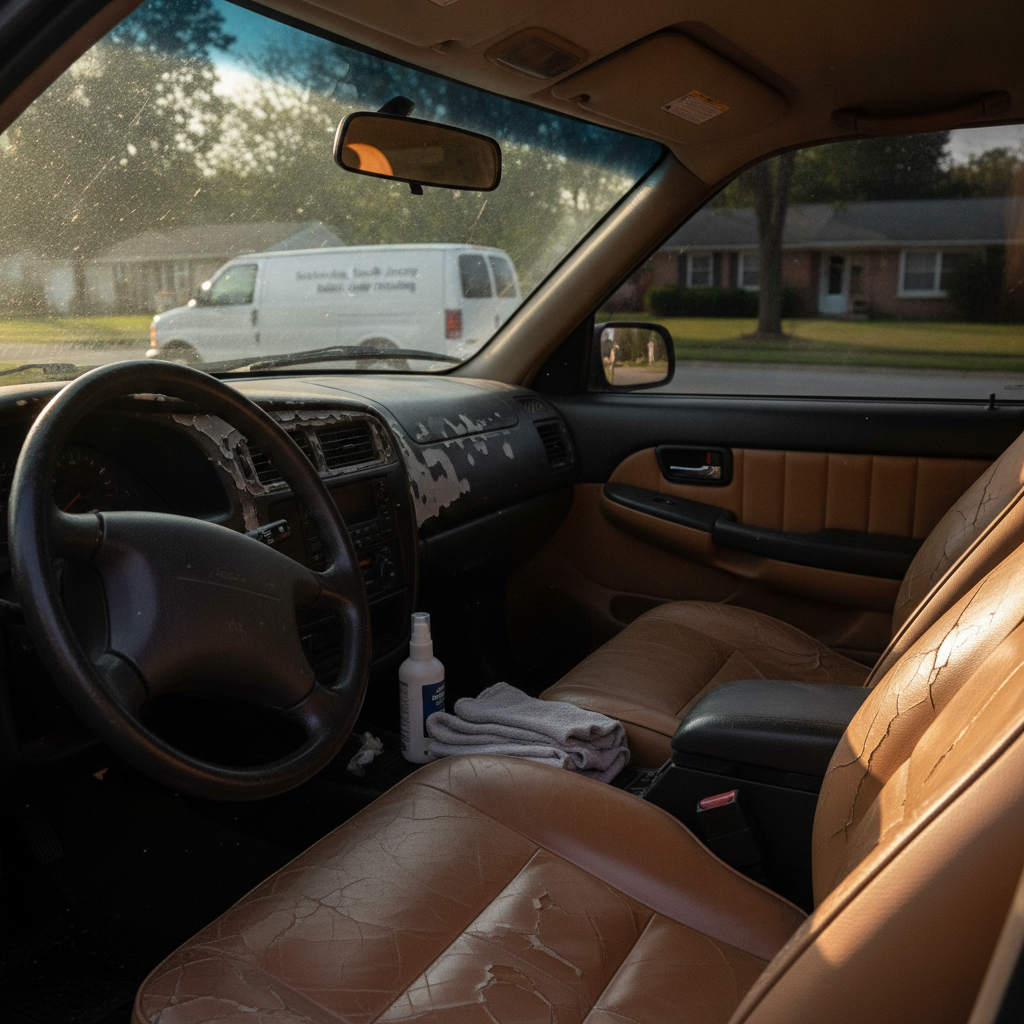
How Does UV Exposure Fade and Crack Your Car’s Interior in Blackwood and What Can South Jersey Drivers Do to Stop It?
If you park your vehicle outside regularly in Blackwood or anywhere across South Jersey, UV rays from the sun are quietly working against your car’s interior every single day — even when it doesn’t feel that hot outside. Fading dashboards, cracked leather seats, brittle plastic trim, and discolored headliners are all signs of long-term UV exposure. The frustrating part is that most of this damage happens gradually, so it often goes unnoticed until it becomes expensive to address. Understanding what UV light actually does to interior materials — and how to protect against it — can help you preserve the comfort, appearance, and resale value of your vehicle for years to come.
What UV Rays Actually Do to Your Car’s Interior Materials
Ultraviolet radiation from the sun works on a molecular level, breaking down the chemical bonds that hold materials together. Inside your vehicle, the surfaces most at risk include your dashboard, steering wheel, door panels, leather or vinyl seating, and any fabric or carpet that receives direct sunlight. Over time, this breakdown causes colors to bleach out, surfaces to lose flexibility, and materials to crack, warp, or flake.
Here’s how UV damage typically shows up across different interior surfaces:
- Dashboard and trim panels: Dark plastics fade to a chalky gray or develop a sticky, tacky texture. Hard plastics can warp or crack along seams under intense heat combined with UV exposure.
- Leather seats: Natural and synthetic leather loses its protective oils when exposed to UV rays repeatedly. Without conditioning, it dries out, stiffens, and eventually cracks — often along the seat bolsters where flex and sun exposure are both highest.
- Vinyl and fabric upholstery: Vinyl surfaces become brittle and peel. Fabric fades unevenly, particularly along the top edges of seats and headrests closest to the window line.
- Headliners: The fabric on your roof interior can yellow or sag when adhesive breaks down due to repeated heat and UV cycles.
South Jersey summers push temperatures inside parked vehicles well above 130 degrees Fahrenheit on clear days. Even during spring and fall — when ambient temperatures feel mild — UV index levels can still be high enough to cause cumulative damage over many months.
Why This Problem Is Worse for South Jersey Commuters Than They Realize
Drivers in Camden County who commute regularly along routes through Gloucester Township, Cherry Hill, or Washington Township often spend extended time in stop-and-go traffic. During daylight hours, that means sustained direct sunlight hitting the same interior surfaces from the same angle, day after day. Unlike highway driving where sun angle shifts more frequently, urban commuting patterns can concentrate UV exposure on specific areas — often the driver’s side dashboard and door panel.
Vehicles parked outdoors overnight or in uncovered lots all day compound the issue further. If your car sits in an open lot while you’re at work, it’s accumulating UV exposure for eight or more hours before you even get inside. Over a full year, that adds up to thousands of hours of direct radiation on materials that weren’t designed to last indefinitely without protection.
The One Protection Layer Most Drivers Skip: Quality Window Tint
One of the most effective and underused tools for protecting your car’s interior from UV damage is professional auto window tinting. Unlike factory glass, which typically blocks only a portion of UV rays, quality aftermarket window film is designed specifically to block up to 99% of harmful UV radiation from entering the cabin — regardless of how dark or light the tint appears.
This is a point that many national tint chains and competitor sites underemphasize: the darkness of a tint film and its UV-blocking capability are not the same thing. A light, nearly clear ceramic film can block far more UV radiation than a dark dyed film. For drivers in New Jersey who want to stay within the state’s legal tint limits — which require the front side windows to allow at least 70% of light transmission — a high-quality ceramic or carbon film is often the right answer. You get full legal compliance, meaningful UV protection, and improved interior comfort without compromising visibility.
Beyond UV blocking, window film also reduces heat buildup inside the cabin. This matters because heat accelerates the same chemical breakdown that UV rays cause. When both factors are reduced together, your interior materials simply last longer.
What Professional Interior Detailing Does to Address Existing UV Damage
If UV damage has already started showing up on your interior surfaces, professional detailing can slow the progression and restore some of what’s been lost. A thorough interior detail goes well beyond vacuuming and wiping surfaces — it involves cleaning, conditioning, and protecting each material type appropriately.
For leather and vinyl, a professional detailer uses pH-balanced cleaners that remove built-up grime without stripping away what little natural moisture remains in the material. After cleaning, a quality conditioner is worked into the surface to restore flexibility and create a thin barrier against future UV penetration. This won’t reverse deep cracks, but it can stop surface dryness from progressing further and improve appearance noticeably.
Plastic trim and dashboard surfaces can be treated with UV-inhibiting dressings that restore a natural finish and provide a protective layer between the material and the sun. These products aren’t the greasy, high-shine sprays you find in big-box stores — a professional application uses the right product type and amount for each surface so nothing looks artificial or attracts more dust.
For vehicle owners in Sicklerville and the surrounding area, mobile detailing means this kind of thorough interior work comes to your driveway or parking spot — no need to drop the car off or rearrange your schedule around a shop appointment.
How UV Damage Affects Your Vehicle’s Resale Value
Buyers notice interior condition immediately. A cracked dashboard, faded fabric, or dry, split leather seats communicate neglect — even if the mechanical side of the vehicle is in excellent shape. In a competitive used car market, interior condition can meaningfully affect the price a buyer is willing to pay or whether they move forward with a purchase at all.
Preventing UV damage proactively through window tinting and regular interior detailing is significantly less expensive than attempting to restore a heavily degraded interior before a sale. Leather reupholstery, dashboard replacements, and headliner repairs are costly. Keeping those surfaces in good condition from the start is a far better return on your investment.
Frequently Asked Questions
Does window tint actually block UV rays or just reduce glare?
Quality window tint films — especially ceramic and carbon options — are specifically engineered to block UV radiation, not just visible light. A professional-grade film can block up to 99% of UV rays regardless of its visible light transmission level. Glare reduction is a benefit, but UV protection is one of the primary functional purposes of modern tint film.
Can UV damage to leather be reversed with detailing?
Professional detailing can condition and restore flexibility to mildly UV-degraded leather, improving both feel and appearance. Deep cracks or permanent discoloration may require more advanced repair. Catching the problem early — before cracking sets in — gives detailing the best chance to make a meaningful difference.
Is it worth getting window tint if my car is already a few years old?
Absolutely. If your interior still looks good, window tint helps keep it that way by cutting down the UV exposure that would otherwise accumulate over the remaining years you own the vehicle. If minor fading has already started, tint slows further deterioration while an interior detail addresses what’s already there.
How often should I have my car’s interior detailed to protect against UV damage in South Jersey?
For most drivers who park outdoors regularly, a thorough interior detail every three to four months helps keep conditioning products refreshed and catches early signs of UV wear before they progress. Vehicles garaged most of the time may need less frequent attention.
What’s the legal window tint limit in New Jersey for front windows?
New Jersey law requires front side windows to allow at least 70% of visible light to pass through. Rear side windows and the rear windshield have more flexibility. A professional installer familiar with New Jersey regulations can help you select a film that meets legal requirements while still providing meaningful UV and heat protection.
Protect Your Interior Before the Damage Becomes Visible
The most effective approach to UV protection is a proactive one. By the time your dashboard is cracking or your leather is splitting, the damage has been building for years. If you’re in Blackwood, Sicklerville, or anywhere in South Jersey and you want to protect your vehicle’s interior from UV degradation, Flash Mobile Detailing can help with both professional interior detailing and quality window tinting services — brought directly to your location.
Reach out to the team at Flash Mobile Detailing to discuss what your vehicle needs and schedule service at your convenience. There’s no pressure and no obligation — just straightforward advice about what makes sense for your car and your situation.