
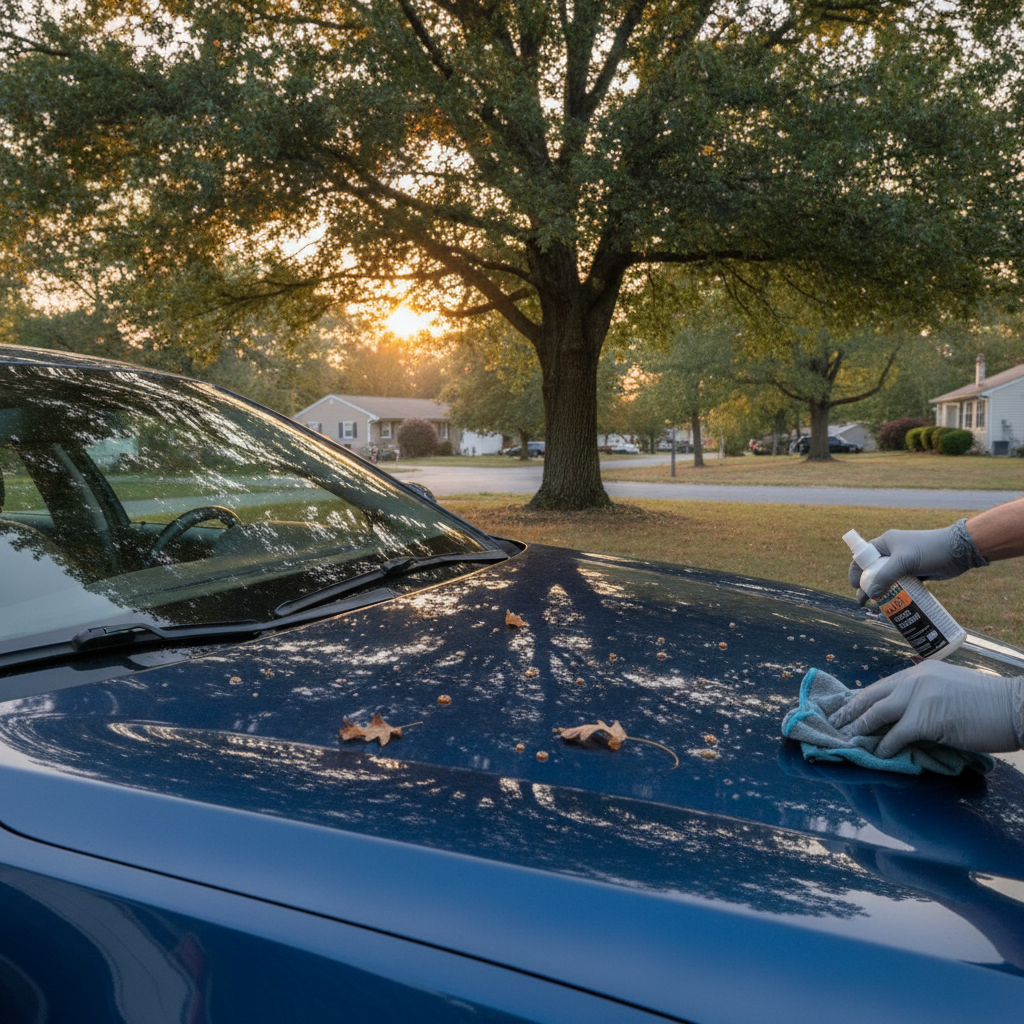
How Does Tree Sap Damage Your Car’s Paint in Williamstown and What Can South Jersey Drivers Do to Remove It Safely?
If you park under or near trees in Williamstown, Washington Township, or anywhere across South Jersey, there’s a good chance tree sap has landed on your vehicle at some point. It may seem harmless at first — just a sticky spot you mean to wipe off later. But tree sap is actually one of the more damaging substances that can land on your car’s exterior. Left untreated, it can etch through your clear coat, permanently alter your paint’s surface texture, and create damage that requires professional correction to address. The good news is that with the right approach and timely action, you can protect your vehicle without making the problem worse.
Why Tree Sap Is More Damaging Than Most Drivers Realize
Tree sap is a living, organic compound. When it first lands on your vehicle, it’s relatively soft and somewhat easy to remove. The real problem begins when it’s exposed to heat — particularly from the South Jersey sun during spring and summer — and starts to harden and cure directly against your paint surface. As sap dries, it contracts, and that contraction can create micro-etching in your clear coat, the protective top layer that gives modern vehicle paint its gloss and depth.
Beyond the physical bonding process, sap is also mildly acidic. Over time — and especially when combined with rain, heat, or UV exposure — that acidity breaks down the clear coat from underneath the deposit. What started as a sticky spot can eventually leave behind a cloudy, textured mark in the paint that no amount of washing will fix on its own.
This is a particular concern for drivers in wooded neighborhoods throughout Gloucester County and the surrounding area, where oak, pine, and sweetgum trees are common. Pine sap in particular is highly adhesive and can set very quickly on warm paint surfaces.
What NOT to Do When You Notice Tree Sap on Your Vehicle
One of the most common mistakes drivers make is trying to scrub sap off with whatever they have on hand — a paper towel, a dry cloth, or even fingernails. This approach almost always makes things worse. Dry scrubbing drags the hardened sap across your paint, creating scratches and swirl marks in the process. You end up with two problems instead of one.
Other approaches that can cause unintended damage include:
- Using household rubbing alcohol at too high a concentration directly on the paint
- Applying acetone, nail polish remover, or harsh solvents that strip both the sap and the surrounding clear coat
- Using an abrasive sponge or scrubbing pad that scuffs the surface
- Attempting to pressure wash hardened sap off, which rarely works and can force contaminants deeper into paint imperfections
If you notice sap shortly after it lands and the weather hasn’t been too hot, a quality isopropyl alcohol solution (around 70%) on a microfiber cloth — used gently and with light pressure — can sometimes lift it before it fully bonds. But if the sap has been sitting for more than a day or two, or if you’re seeing any discoloration or texture change in the paint underneath, that’s a sign the damage has already started and you’ll want a professional to assess it.
How Professional Exterior Detailing Addresses Tree Sap Damage
A professional exterior detailing service takes a methodical approach that goes well beyond what a standard car wash can accomplish. When you bring your vehicle — or have a mobile detailer come to your driveway in Williamstown or Berlin — here’s what a thorough process typically looks like for sap-affected paint:
- Inspection: The detailer assesses the depth of the sap damage and determines whether it’s a surface-level contamination or if it has etched into the clear coat.
- Safe chemical removal: Specialized automotive sap removers or panel wipe solutions are applied to loosen the bond without stripping the surrounding finish.
- Clay bar treatment: After the sap is lifted, a clay bar is used to pull any remaining residue and surface contaminants out of the paint’s pores, leaving a smooth, clean surface.
- Paint correction (if needed): If the sap has left etching or hazing behind, a light to moderate polish is used to restore the clarity and uniformity of the clear coat.
- Protection application: Once the surface is clean and corrected, a protective layer — whether a quality sealant or a more durable ceramic coating — is applied to guard against future contamination.
This process is something that most DIY approaches simply cannot replicate, not because the tools aren’t available, but because the judgment required to avoid making surface damage worse takes real experience. Using the wrong product at the wrong stage can remove protective layers you didn’t mean to touch, or drive abrasives into paint that didn’t need to be corrected at all.
How Ceramic Coating Helps Prevent Tree Sap from Bonding in the First Place
One of the most effective long-term strategies for drivers in South Jersey who regularly park near trees is applying a ceramic coating to the vehicle’s exterior. Ceramic coating creates a semi-permanent hydrophobic barrier over your clear coat that makes it significantly harder for contaminants like tree sap, bird droppings, and pollen to bond directly to the paint surface.
Because sap needs to physically adhere to and then cure against a surface in order to cause deep damage, a properly applied ceramic coating buys you time. Sap that lands on a coated surface is far easier to wipe away cleanly — often with just a damp microfiber cloth — before it has a chance to etch into the paint below. For vehicle owners in Williamstown, Washington Township, and similar areas where tree coverage is dense and seasonal sap drops are consistent, this level of protection makes a meaningful difference in how much maintenance your vehicle actually requires throughout the year.
It’s worth noting that ceramic coating doesn’t make your vehicle completely immune to sap damage, especially if deposits are left sitting for extended periods. But it substantially reduces the risk and makes routine maintenance much easier to manage.
A Gap Most Competitors Miss: The Seasonal Timing of Sap Exposure in South Jersey
Most detailing and coating resources discuss tree sap in general terms, but very few address the specific seasonal rhythm that South Jersey drivers experience. Sap drop activity tends to peak in late spring when trees are actively growing, and again in late summer and early fall as trees begin preparing for dormancy. For drivers across Gloucester County and the communities around Sicklerville, that means there are two distinct windows per year when sap exposure is at its highest.
Scheduling a thorough exterior detail and decontamination in late spring — after the heavy pollen season — and again in early fall before winter sets in puts your vehicle in the best possible position heading into each challenging season. Spring cleaning removes the accumulated sap and pollen from the warmer months, while a fall detail eliminates contaminants before road salt and winter moisture have a chance to interact with any paint damage that’s already present.
This kind of proactive, scheduled approach is something mobile detailing makes straightforward for busy drivers who don’t have time to drop a vehicle off at a shop and wait around.
Frequently Asked Questions
How long does it take for tree sap to damage car paint?
In warm conditions with direct sunlight, sap can begin bonding to and etching your clear coat within 24 to 48 hours. In cooler temperatures, you may have a little more time, but it’s always best to address it as soon as you notice it.
Can tree sap damage be removed without paint correction?
If the sap is caught early and hasn’t fully cured, a professional chemical removal and clay bar process can often resolve it without needing any polishing. If the sap has already etched the clear coat, some level of paint correction will likely be necessary to restore the surface.
Does ceramic coating prevent tree sap from sticking to my car?
Ceramic coating significantly reduces how strongly sap can bond to the paint surface, making it much easier to remove before it causes damage. It doesn’t make your car completely sap-proof, but it provides a meaningful layer of defense and simplifies routine maintenance.
Is mobile detailing available for tree sap removal in Williamstown and surrounding areas?
Yes. Flash Mobile Detailing serves Williamstown, Sicklerville, Berlin, Washington Township, and the broader South Jersey area. A mobile detailer can come directly to your driveway or regular parking spot to address sap removal and apply protective treatments without you needing to leave home.
What’s the difference between a quick sap wipe-down and a full exterior detail?
A quick wipe addresses surface-level sap that hasn’t yet bonded deeply. A full exterior detail includes decontamination, clay bar treatment, inspection for paint damage, and the option to apply a protective coating — giving your vehicle comprehensive care rather than just spot treatment.
Protect Your Paint Before the Damage Sets In
Tree sap is one of those threats that’s easy to underestimate until the damage is already done. Whether you park under oak trees in Williamstown, near pine groves in Gloucester County, or in any wooded neighborhood across South Jersey, routine professional detailing is one of the most practical steps you can take to keep your vehicle’s paint in good condition and maintain its long-term value.
If you’ve noticed sap on your vehicle — or if it’s been a while since your last thorough exterior service — Flash Mobile Detailing is ready to help. We come to you, whether you’re at home, at work, or anywhere across the Sicklerville area. Reach out today to schedule a consultation and find out which service is the right fit for your vehicle’s current condition.