
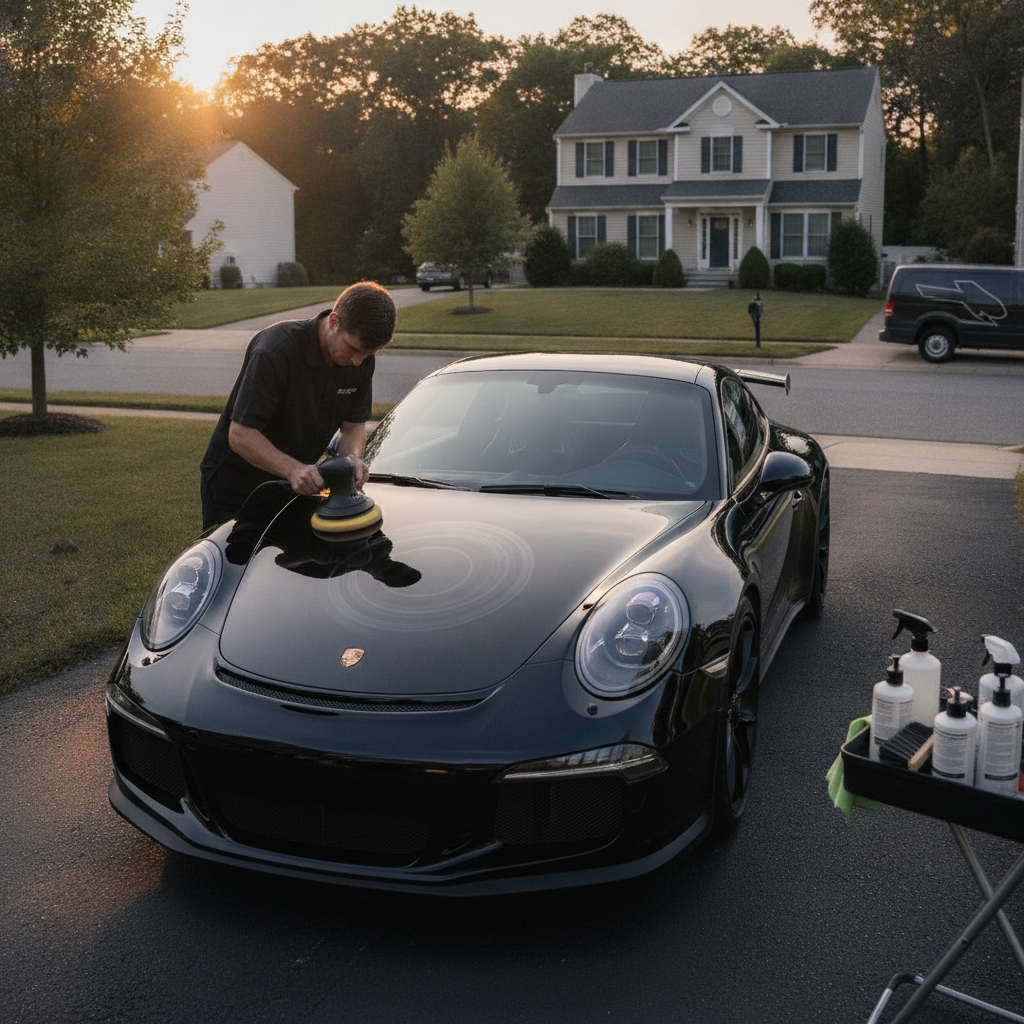
What Is Paint Correction and Is It Worth Getting Done on Your Vehicle in Glassboro Before Applying Any Protection Service?
If you’re thinking about getting a ceramic coating or any kind of paint protection applied to your vehicle, paint correction is the step you absolutely cannot skip — and it’s also the step that most car owners in Glassboro and throughout South Jersey don’t fully understand until they’ve paid for a protection service that doesn’t look right. Paint correction is the professional process of removing surface defects from your vehicle’s clear coat — things like fine scratches, swirl marks, oxidation, and dull haziness — using specialized machine polishers and abrasive compounds. The goal is to restore your paint to a smooth, uniform finish before any protective layer is applied on top of it.
Why Paint Correction Matters More Than Most Detailing Guides Admit
Here’s the part that most online resources gloss over: ceramic coatings, waxes, and sealants don’t fill in scratches or fix dull paint. They sit on top of whatever surface condition already exists and lock it in place. If you apply a ceramic coating over oxidized or scratched paint, you’re essentially preserving the damage — making it harder and more expensive to address later.
This is especially relevant for drivers in Glassboro and surrounding communities like Washington Township and Deptford, where daily commuting on rougher roads, exposure to road debris, and South Jersey winters all add up over time. Vehicles that get regular highway miles accumulate micro-scratches from improper washing, light scratches from branches and shopping carts, and oxidation from prolonged UV exposure — all of which dull the paint gradually without one single obvious cause.
Paint correction addresses all of that. It’s not a quick polish or a detail spray. It’s a multi-step machine polishing process that physically removes a thin layer of the clear coat to bring the remaining surface back to a smooth, reflective condition. Done properly, the results are dramatic — paint that looked dull and swirled can come back looking glossy and almost new.
What Paint Correction Actually Involves — Step by Step
Understanding the process helps you set realistic expectations and ask better questions when you’re comparing service providers. Here’s what a thorough paint correction typically looks like:
- Paint decontamination first: Before any polishing begins, the vehicle needs to be thoroughly washed, clayed, and decontaminated. Any bonded contamination left on the paint will interfere with the correction process and can cause additional scratching.
- Paint thickness measurement: A professional technician will check the paint thickness using a gauge to understand how much clear coat is available to work with. This step protects your vehicle from being polished too aggressively.
- Test spot polishing: A small section is polished first to determine the right combination of pad, compound, and machine speed for your specific paint type and condition.
- Machine polishing in stages: Depending on the severity of the defects, correction may involve one, two, or even three polishing stages — moving from heavier cutting compounds to finer finishing polishes.
- Panel-by-panel inspection: Each section is checked under a high-intensity detailing light or paint inspection light to confirm defects have been removed before moving on.
- Final wipedown and prep: Once correction is complete, the paint is wiped down with an IPA solution to remove any residue, leaving it ready for a sealant, wax, or ceramic coating to be applied.
The timeline varies based on the vehicle’s size and paint condition. A single-stage correction on a well-maintained vehicle might take four to six hours. A full two-stage correction on a vehicle with heavier defects can take a full day or more. That time investment is part of why pricing for paint correction is meaningful — it’s not something you want to cut corners on.
What Most Competitor Resources Miss: The Connection Between Correction and Long-Term Protection Value
One gap that’s common across many national detailing and coating brand websites is a failure to explain why paint correction directly affects the long-term value of whatever protection you apply afterward. The relationship is straightforward once you understand it.
Ceramic coatings are semi-permanent. A quality application bonds to the clear coat and can last for years. That permanence is part of its value — but it also means whatever condition your paint is in when the coating is applied is the condition it will stay in for a long time. A coating applied to corrected, smooth paint will look stunning and bead water beautifully for years. The same coating applied to paint with unresolved swirls and light scratches will protect the paint from future damage, but those existing defects will remain visible — sometimes even more visible under certain lighting because the coating adds gloss that draws attention to them.
For vehicle owners in Glassboro, Williamstown, or anywhere in Gloucester County who are investing in a proper protection package, the correction step is what makes that investment deliver visually. It’s not an upsell — it’s the foundation.
How to Know If Your Vehicle Needs Paint Correction
Not every vehicle needs a full multi-stage correction. A newer car with minimal scratching may only need a light polish to refine the surface. An older vehicle or one that’s been through several South Jersey winters with road salt exposure, automatic car washes, and years of sun may need significant work. Some indicators that correction is worth discussing with a professional:
- Swirl marks are visible in direct sunlight or under overhead lights
- The paint looks dull or flat even after washing
- Light scratches are visible across the hood, roof, or trunk lid
- The finish looks uneven in color or reflectivity
- The vehicle is older than three to four years and has never had professional paint work
If you’re unsure, a professional inspection is the right first step. A qualified detailer can assess your paint condition and give you an honest recommendation about what level of correction — if any — makes sense for your vehicle and your goals. Flash Mobile Detailing offers mobile service throughout the Glassboro area and surrounding communities, which means this kind of assessment can happen right in your driveway.
Why DIY Paint Correction Rarely Delivers Professional Results
It’s worth addressing the DIY route directly, because there is no shortage of polishers and compounds available online. Machine polishing is a skill that takes time to develop. Using the wrong pad and compound combination, working at the wrong speed, or applying uneven pressure can cause more damage — including buffer trails, burns through the clear coat, or haze that requires correction to fix. Professional paint correction technicians work with calibrated equipment and understand how different paint types respond to different approaches. The investment in having it done properly the first time protects both your paint and whatever protection service you’re planning to have applied afterward.
Frequently Asked Questions About Paint Correction in Glassboro and South Jersey
Does paint correction remove deep scratches?
Paint correction works within the clear coat layer, so it can remove light to moderate surface scratches and swirl marks. Scratches that penetrate through the clear coat and into the base coat or primer are beyond what polishing can address and typically require touch-up paint or panel respray work.
How long does paint correction last?
Paint correction itself is permanent in the sense that the defects removed don’t come back on their own. However, without a protective layer like ceramic coating or a quality sealant applied afterward, new swirls and scratches can develop again through normal use. That’s why correction and protection are almost always discussed together.
Can paint correction be done on any color vehicle?
Yes, though darker colors like black, dark blue, and dark gray tend to show swirl marks more visibly and often require more careful work. Lighter colors may not show defects as clearly, but that doesn’t mean they aren’t there — paint inspection lights reveal the full picture regardless of color.
Is paint correction worth it on a vehicle I plan to sell soon?
It can be a worthwhile investment before selling, particularly for vehicles where paint condition is noticeably below average. A corrected and protected finish photographs better, shows better in person, and gives buyers more confidence — all of which can support a stronger asking price.
Do I need paint correction before ceramic coating?
In most cases, yes. A light polish at minimum is recommended to prepare the surface before a paint protection ceramic coating is applied. For vehicles with visible swirls or scratches, a full correction before coating is strongly recommended so those defects aren’t locked in place under a semi-permanent layer.
Ready to Get Your Vehicle’s Paint Assessed in Glassboro or the Surrounding Area?
If you’re in Glassboro, Washington Township, Deptford, or anywhere in the South Jersey region and you’re considering a protection package or you’ve noticed your paint looking less than its best, paint correction is worth understanding before you commit to any service. Flash Mobile Detailing comes to your location — no need to drop off your vehicle or rearrange your schedule. Reach out today to schedule a consultation and get an honest assessment of what your paint needs. Visit the contact page to get started.