
What Is the Difference Between a Wash, a Detail, and a Full Correction and Which Does Your Car in Voorhees Actually Need?
If you own a car in Voorhees and you’re trying to figure out whether to book a wash, a professional detail, or a full paint correction, you’re not alone — and you’re asking exactly the right question. These three service levels are not interchangeable. Each one addresses a different condition of your vehicle, and choosing the wrong one either leaves your car looking worse than it could or has you spending more than necessary. Here’s a plain-language breakdown of all three, what they actually involve, and how to figure out which one your car genuinely needs right now.
A Basic Car Wash: Surface Cleaning Only
A standard car wash — whether you run through an automatic tunnel or hand-wash it yourself — only removes loose surface dirt. It’s a maintenance step, not a restoration tool. For a daily driver that’s been regularly maintained, a routine wash keeps the surface clean between deeper services. But a wash does nothing for embedded contamination, oxidation, swirl marks, water spots, or interior grime buildup.
In South Jersey specifically, a wash alone won’t cut it during pollen season, after a winter full of road salt exposure, or if your car has been sitting under trees. You’ll remove the visible layer of grime, but the damage underneath stays put. For cars that haven’t been professionally serviced in some time, a wash can actually create a false impression — the car looks okay from a distance, but the paint is still in poor condition up close.
A wash is a starting point. It’s not a solution to paint damage, interior odors, or long-term protection.
A Professional Auto Detail: Deep Cleaning Inside and Out
A professional detail goes significantly further than a wash. When you book a mobile detailing service, you’re getting a multi-step process that addresses both the interior and exterior of the vehicle at a much deeper level.
On the exterior, a proper detail typically includes a thorough hand wash, decontamination (such as iron remover and clay bar treatment to pull bonded contaminants from the surface), drying, and a sealant or wax application to add a layer of protection. The wheels, wheel wells, tires, glass, and trim are all cleaned and treated individually.
On the interior, a detail covers vacuuming of seats, carpets, and floor mats, cleaning of hard surfaces and vents, conditioning of leather or vinyl, stain treatment, and odor elimination. It’s a reset for your vehicle — not just on the surface but throughout the cabin.
For most car owners in Voorhees who maintain their vehicles reasonably well, a professional full detail once or twice a year keeps the car in solid shape. It’s the right choice when your car is generally in decent condition but overdue for a thorough clean. It’s also an excellent step before any protection service like ceramic coating.
Paint Correction: Addressing Actual Paint Damage
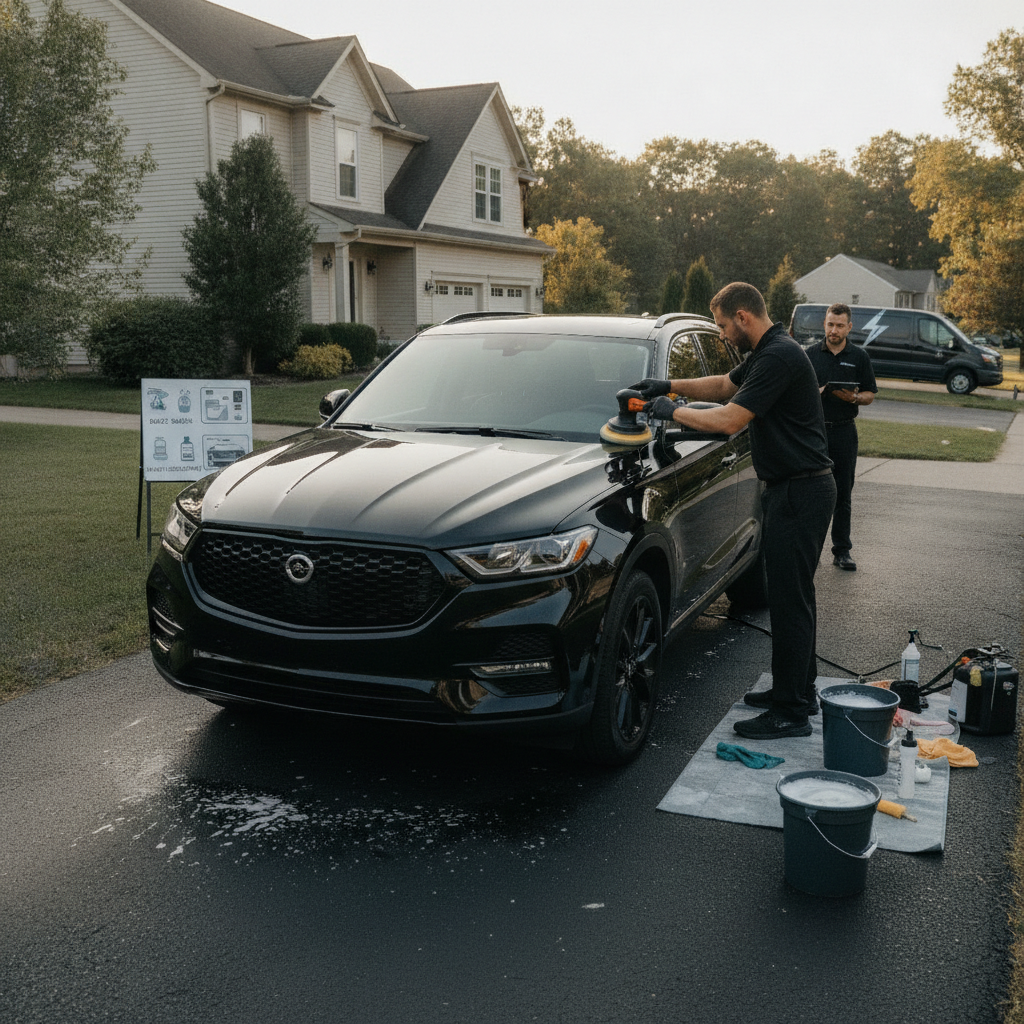
Paint correction is a different category entirely. This is a multi-step process where a professional uses machine polishers and specific compounds to physically remove defects from the surface of your clear coat. We’re talking about swirl marks from improper washing, light scratches, water etching, oxidation, and dull or hazy paint that no amount of washing or waxing will fix.
This is the service that competitors often explain poorly — or barely explain at all. Most national content either dismisses paint correction as a luxury or lumps it in with detailing as if they’re the same thing. They’re not. A detail cleans the surface. Paint correction restores it.
The process typically involves multiple stages: an inspection under lighting to assess defect depth, compounding to remove heavier defects, polishing to refine the surface, and a final wipe-down before any protective coating is applied. It requires trained hands, proper equipment, and time — usually several hours for a full single-stage correction on an average-sized vehicle.
Paint correction is the right call if your vehicle has noticeable swirling visible in direct sunlight, if the paint looks dull or chalky despite regular washing, or if you’re planning to apply ceramic coating. Applying a protective coating over uncorrected paint simply locks in the defects underneath. Correction first, protection second — that’s the right sequence.
How South Jersey Driving Conditions Factor In
Vehicles driven regularly in Camden County and the surrounding areas take on more wear than most owners realize. Highway driving on Route 30 or 73 puts consistent road debris against your paint. Winter road salt in Blackwood and Sicklerville penetrates unprotected clear coat and causes oxidation from the bottom up. UV exposure during South Jersey summers accelerates paint fading — especially on darker-colored vehicles.
All of this means that what your car actually needs depends heavily on how it’s been used, where it’s been driven, and how long it’s gone between proper services. A three-year-old car in Cherry Hill that’s never been professionally detailed may genuinely need paint correction before it needs a standard detail. An older vehicle that’s been regularly maintained may just need a thorough interior and exterior cleaning to look sharp again.
The smartest move is to have your vehicle assessed before booking anything. An experienced detailer can look at your paint under proper lighting and tell you exactly what category your car falls into.
Why Generic Advice and DIY Guides Often Miss the Mark
A lot of the content you’ll find online — especially from large national product brands — is written to sell products, not to guide vehicle owners toward the right service decision. You’ll read about polishing compounds, microfiber technique, and paint correction machines without any honest discussion of when professional intervention is necessary versus when a simple detail is enough.
DIY paint correction, in particular, carries real risk. Using a machine polisher at the wrong speed or with the wrong pad on thin clear coat can cause permanent damage. If you’re not certain about your paint’s condition or correction technique, professional service protects your investment rather than jeopardizing it.
Local, hands-on experience matters here. A mobile detailer familiar with South Jersey vehicles — the road conditions, seasonal weather patterns, and common wear profiles — brings context that generic guides simply can’t provide.
Which Service Does Your Vehicle Actually Need?
Here’s a simple way to think about it:
- Regular wash: Your car is clean, maintained, and just needs surface dirt removed between services.
- Professional detail: Your car is overdue for a thorough interior and exterior cleaning, but the paint surface is still in decent condition with no significant defects.
- Paint correction: Your paint has visible swirls, scratches, oxidation, or dullness that cleaning alone won’t resolve — or you’re preparing the surface before applying a ceramic coating.
In many cases, paint correction and a full detail go together — correction is performed on a clean, decontaminated surface, and the detail handles the rest of the vehicle. A reputable mobile detailer will walk you through what they see and recommend only what’s actually needed.
Frequently Asked Questions
Can paint correction make my car look brand new again?
Paint correction can significantly improve the appearance of your paint by removing surface-level defects like swirl marks and light scratches. However, deeper scratches that penetrate through the clear coat and into the base coat may require additional repair. A professional assessment will give you an honest picture of what’s achievable on your specific vehicle.
How do I know if my car in Voorhees needs correction or just a detail?
Look at your paint in direct sunlight or under a bright light. If you see circular swirl patterns, hazy or dull areas, or fine scratches that didn’t wash away, paint correction is likely needed. If the surface looks clean and reflective after washing but just needs a deep clean inside and out, a professional detail is probably the right choice.
Does paint correction damage the clear coat?
When performed correctly by a trained professional, paint correction removes only a very thin layer of clear coat — typically a fraction of the total available thickness. Done improperly with the wrong equipment or technique, it can cause damage. This is one of the key reasons professional service is recommended over DIY correction.
Should I get paint correction before ceramic coating?
Yes. Applying ceramic coating over paint that has swirl marks or scratches will seal those defects under the coating. Paint correction before coating ensures the surface is smooth, clean, and in the best condition before protection is applied.
How long does a full paint correction take?
This depends on the size of the vehicle and the severity of the defects. A single-stage correction on an average-sized car typically takes several hours. Multi-stage corrections on heavily defected paint can take a full day or longer. Your detailer will give you a realistic time estimate after inspecting the vehicle.
Ready to Find Out What Your Car Actually Needs?
If you’re a vehicle owner in Voorhees, Sicklerville, Cherry Hill, or anywhere across South Jersey and you’re not sure whether your car needs a wash, a detail, or paint correction, the best next step is a straightforward consultation. Flash Mobile Detailing brings professional service directly to your driveway or parking lot — no drop-off required, no guesswork on your end.
We’ll assess your vehicle’s condition honestly and recommend only what it genuinely needs. Reach out today to schedule your appointment or ask us any questions — we’re happy to help you make the right call for your car and your budget.