
What Is Paint Decontamination and Why Should Car Owners in Williamstown and South Jersey Do It Before Any Protection Service?
Paint decontamination is the process of removing bonded surface contaminants — things like iron particles, brake dust, industrial fallout, and road tar — that ordinary washing cannot lift. If you live in Williamstown or anywhere across South Jersey and you’re thinking about having ceramic coating, wax, or any protective treatment applied to your car, decontamination should happen first. Skipping it is one of the most common reasons paint protection jobs underperform or fail sooner than they should.
Why a Regular Car Wash Is Not Enough
Most car owners assume that a thorough wash means their paint is clean. The reality is a bit more complicated. When you drive on South Jersey roads — especially during winter when road salt is heavy and traffic kicks up debris from Route 42 and the AC Expressway — microscopic particles embed themselves directly into your paint’s clear coat. These aren’t sitting on top of the surface. They’re bonded to it.
You can wash your car a dozen times and those particles will still be there. A standard car wash removes loose dirt and grime, but it doesn’t have the chemistry or the physical action needed to break the bond between your paint and these embedded contaminants. That’s where a dedicated decontamination step comes in.
What Does Paint Decontamination Actually Involve?
Professional paint decontamination typically involves two stages that work together: a chemical decontamination phase and a physical decontamination phase.
Chemical Decontamination: Iron Fallout and Tar Removal
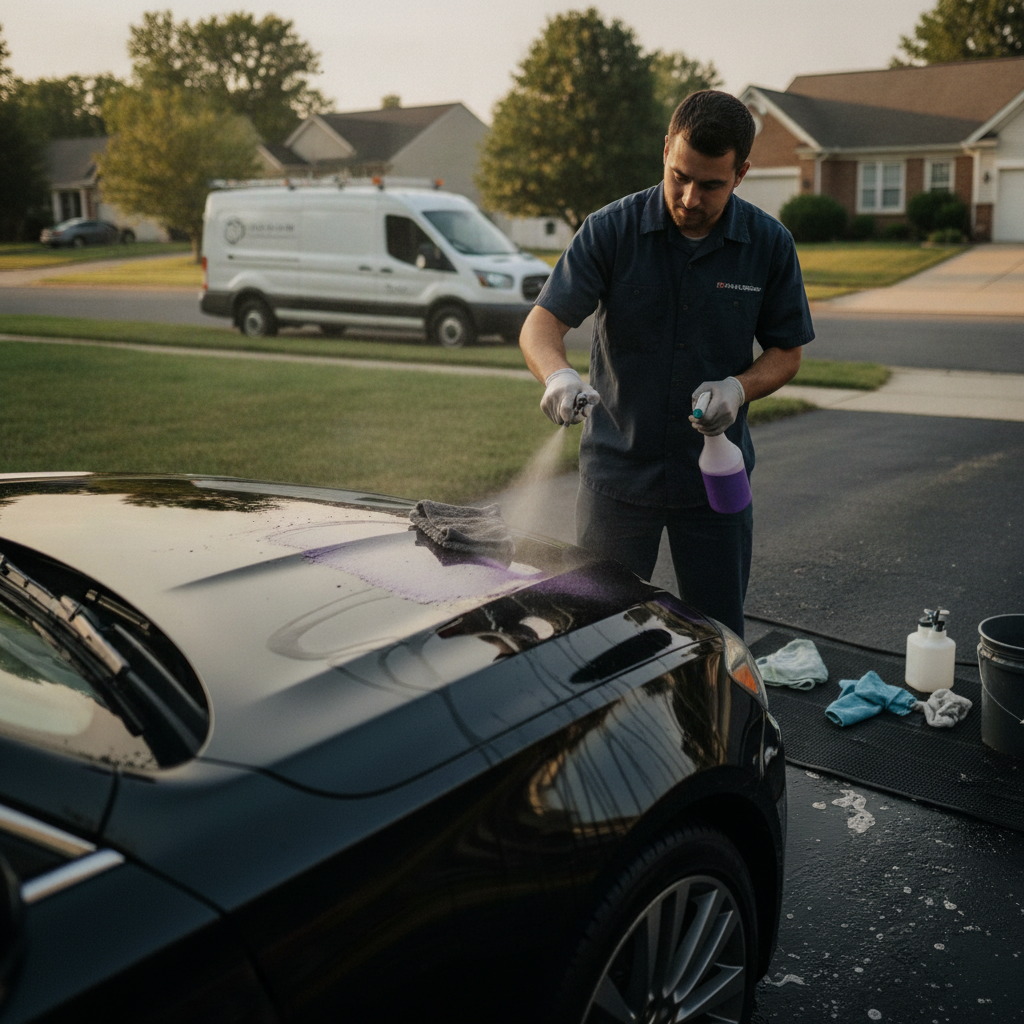
An iron fallout remover is sprayed across the paint surface. As it reacts with embedded metallic particles — often from brake dust or industrial fallout — you’ll notice a color change on the panel, usually turning purple or red. That reaction shows the product is actively dissolving the iron particles from your paint. A separate tar and adhesive remover is then used to break down road tar, tree sap residue, and similar organic or petroleum-based contaminants.
This step is especially important for vehicles in Williamstown, Washington Township, and Blackwood that are driven regularly on busy commuting routes where brake dust and road grime accumulate quickly on painted surfaces and wheels.
Physical Decontamination: The Clay Bar Stage
After chemical treatment, a detailing clay bar or clay mitt is used to physically glide across the paint surface with lubrication. It catches and removes anything still bonded to the clear coat that the chemical step loosened. When this step is done correctly, the paint surface feels noticeably smoother — almost like glass — compared to before. That smooth surface is exactly what you want before any coating, sealant, or wax is applied.
If you want to learn more about how this specific step works on its own, it’s worth reading up on professional mobile detailing services that include decontamination as part of a complete exterior package.
Why This Step Matters Before Ceramic Coating or Paint Protection
This is the content gap that most large detailing brands and competitor websites gloss over. They talk plenty about ceramic coating benefits and how long coatings last, but they rarely walk you through what happens when a coating is applied over contaminated paint.
When ceramic coating bonds to your paint, it seals whatever is underneath it. If your paint still has iron particles, tar spots, or other embedded contaminants on the surface, the coating locks those in place. Over time, those trapped contaminants can cause micro-adhesion failures, early degradation of the coating layer, and visible surface irregularities. The coating may look fine at first, but it won’t perform as expected or last as long as it should.
This is why reputable detailers always treat decontamination as a non-negotiable step before any ceramic coating application. It’s not an upsell — it’s foundational prep work.
South Jersey Driving Conditions Make Decontamination More Important
Drivers in Gloucester County and Camden County face a specific set of environmental conditions that accelerate paint contamination compared to some other regions. South Jersey winters mean heavy road salt applications on major roads, and that salt carries metallic residue that bonds to paint panels quickly. UV exposure during warmer months bakes contaminants further into the clear coat, making them harder to remove if the vehicle goes too long between proper decontamination services.
Beyond seasonal factors, local driving patterns matter too. If you’re commuting regularly through Sicklerville, Blackwood, or Washington Township — or spending time on high-traffic routes — your vehicle accumulates brake dust and industrial fallout faster than vehicles driven less frequently. For daily drivers in South Jersey, decontamination at least once or twice a year is a reasonable starting point depending on how much you drive and what your paint protection situation looks like.
What to Expect From a Professional Paint Decontamination Service
When you book a professional exterior detail that includes decontamination, here’s roughly what the process looks like:
- Pre-wash and rinse: Loose dirt and debris are removed first so the decontamination products can work without interference.
- Chemical fallout and tar treatment: Products are applied panel by panel, allowed to dwell, and then rinsed thoroughly.
- Clay bar or clay mitt treatment: Done with proper lubrication to glide safely across the paint without introducing new scratches.
- Final rinse and panel inspection: The technician checks the surface for smoothness and any remaining problem areas.
- Follow-up step: Depending on what you’ve booked, this may be followed by paint correction, a sealant application, or a full ceramic coating.
The timeline for decontamination alone, as part of a full exterior detail, typically adds an hour or more to the appointment depending on the size of the vehicle and how contaminated the surface is. It’s not a step to rush.
Frequently Asked Questions About Paint Decontamination in South Jersey
How do I know if my car needs paint decontamination?
Run a clean plastic bag or your fingers lightly across a clean, dry painted panel. If the surface feels rough or bumpy rather than smooth, you likely have bonded contamination. Most vehicles that haven’t had a professional decontamination service in over a year will fail this test.
Can I skip decontamination if my car looks clean?
No. Many of the contaminants that affect paint are microscopic and invisible to the naked eye. A visually clean car can still have significant bonded contamination on the clear coat surface.
Does paint decontamination damage the paint?
When done correctly by a trained professional, no. The chemical products used are formulated to react with specific contaminants without harming clear coat. The clay bar step requires proper lubrication to be safe, which is another reason to trust this process to a professional rather than attempting it without experience.
How often should vehicles in Williamstown or Sicklerville be decontaminated?
For most South Jersey daily drivers, once or twice a year is a reasonable cadence — typically in spring after winter salt exposure and again in fall before the next salt season begins. Vehicles with ceramic coating may need less frequent chemical decontamination but should still be inspected regularly.
Does decontamination need to happen before every ceramic coating application?
Yes, always. Whether you’re coating a brand-new vehicle or recoating an older one, the paint surface must be fully decontaminated before the coating is applied. There are no shortcuts here if you want the coating to bond properly and last.
Ready to Get Your Vehicle Properly Prepped?
If you’re considering ceramic coating, paint protection, or even a high-quality wax or sealant for your vehicle in Williamstown, Sicklerville, or anywhere in South Jersey, paint decontamination should be the first conversation you have with your detailer. Flash Mobile Detailing serves Williamstown, Gloucester County, Camden County, and the surrounding communities with professional exterior detailing services that include proper decontamination prep work — done at your location, on your schedule.
Reach out through the contact page to ask questions about your specific vehicle or request a consultation. There’s no obligation — just straightforward answers from a local team that takes paint prep seriously.