
How Does Pollen Season Affect Your Car’s Paint in Williamstown and What Should You Do About It?
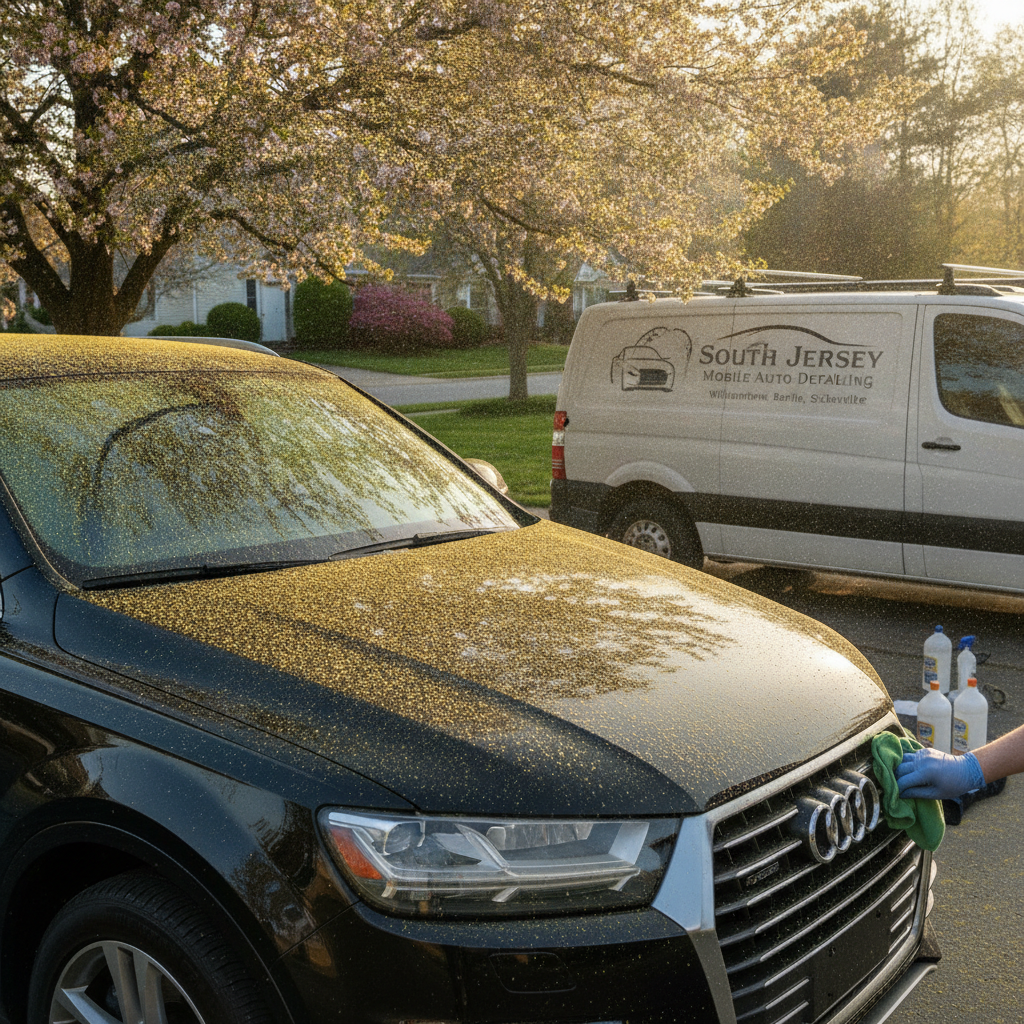
If you park your car outside in Williamstown or anywhere across South Jersey during the spring, you already know what yellow-green pollen season looks like. Your vehicle goes from clean to covered practically overnight. What most drivers don’t realize, though, is that pollen isn’t just a cosmetic nuisance — it can actually damage your car’s paint and clear coat if it’s left sitting too long. The good news is that with the right protective steps and professional detailing, you can get ahead of the damage before it becomes a problem.
Why Pollen Is More Than Just a Yellow Annoyance
Pollen grains are microscopic, but under magnification they have jagged, barbed edges. When they land on your car’s surface and mix with morning dew, rain, or humidity — all of which are common in South Jersey during spring — they form a mildly acidic compound. That compound can bond with your clear coat and, over time, cause etching. Etching is when the surface of your paint becomes dull, pitted, or visibly damaged in ways that a standard car wash won’t fix.
The problem is compounded here in Gloucester County and Camden County, where tree density is high and pollen counts can remain elevated for weeks at a time. Add in the warm, humid air that rolls through South Jersey in April and May, and you have conditions that actively encourage pollen to stick to and react with your paint. Drivers in Berlin, Glassboro, and Deptford experience the same seasonal exposure. This is not a problem that goes away on its own.
The Part That Most People Get Wrong: Wiping It Off Dry
One of the most common mistakes vehicle owners make is trying to wipe pollen off their car with a dry cloth or even a dry hand. Because of those barbed edges, dragging pollen across your paint without lubrication creates fine scratches in the clear coat. Do this repeatedly throughout a season, and you start accumulating what detailers call swirl marks — subtle circular scratches that become visible in direct sunlight and significantly reduce your paint’s depth and gloss.
The right approach is always to rinse the surface first with water to lift the pollen, then wash carefully with a proper automotive shampoo. But even that only addresses what’s already there. It doesn’t give your paint any protection against the next wave of pollen, which is coming whether you’re ready for it or not.
How Professional Exterior Detailing Addresses Pollen Damage
A thorough mobile detailing service does much more than rinse away surface pollen. A professional detail includes a proper hand wash, paint decontamination to remove bonded particles, clay bar treatment to pull embedded contaminants out of the clear coat, and a protective finish that helps repel future buildup. When pollen season hits, this kind of thorough cleaning resets your paint’s surface and gives it a fighting chance against the weeks ahead.
For drivers in Williamstown, Sicklerville, and surrounding neighborhoods who commute daily and don’t always have time for regular washing, a professional detail done at the start of spring — and again toward the end of pollen season — can make a real difference in how your paint holds up over time.
What Ceramic Coating Does That Wax and Polish Cannot
Traditional wax offers some protection, but it breaks down quickly — often within a few weeks, especially in warmer weather. During an active pollen season, that means you’re losing your protective barrier right when you need it most. Ceramic coating takes a fundamentally different approach.
A professionally applied ceramic coating bonds directly to your car’s clear coat and creates a hard, hydrophobic layer that pollen, bird droppings, tree sap, and other contaminants have a much harder time sticking to. Because the surface becomes more slippery at a microscopic level, pollen tends to rinse away more easily rather than bonding and etching. For drivers who want long-term protection rather than something they have to reapply every month, ceramic coating is a practical investment — particularly for vehicles that sit outside regularly in South Jersey’s tree-heavy suburban areas.
It’s worth noting that ceramic coating works best when applied to paint that has already been properly corrected and decontaminated. If your clear coat already has etching or swirl marks from previous pollen seasons, those will need to be addressed before the coating goes on. A quality detailer will assess your paint’s condition and tell you honestly what needs to happen first.
A Gap in What the Big National Brands Actually Tell You
If you’ve spent time on the websites of national detailing brands or large tint chains, you’ll notice that seasonal, region-specific advice is almost entirely absent. They cover general product specs and broad coating categories — but they rarely talk about how pollen behaves differently in humid, tree-dense areas like South Jersey, or what a homeowner in Williamstown or Glassboro should actually do each spring to protect their vehicle.
That’s a real gap. Local conditions matter. The combination of high tree density, spring humidity, UV exposure as summer approaches, and the general wear from daily commuting means South Jersey vehicles face a specific set of challenges. Generic national guidance doesn’t account for any of that. A locally based detailing service that works in these communities every day understands the seasonal patterns and can give you advice that’s actually relevant to where you live.
Seasonal Timing: When Should You Act?
The most effective window for paint protection in South Jersey is just before or at the very start of pollen season — typically late March through early April. Getting a full exterior detail and applying a protective coating before the pollen peaks means your paint has a barrier in place when it matters most. That said, it’s never too late in the season to have contamination removed and protection applied. If your car has already been sitting under a cloud of pollen for several weeks, a professional decontamination detail can undo much of the damage before it becomes permanent etching.
After pollen season winds down in late May or June, a follow-up detail is also worth considering — particularly to address any residual contamination and assess whether your protective coating is still performing as it should.
Frequently Asked Questions
Does pollen actually damage car paint, or is it just cosmetic?
Pollen can cause real damage to your clear coat. When it mixes with moisture and sits on the surface for an extended period, it creates mild acidity that etches into the paint. What looks like a cosmetic issue can become a permanent dull spot if it’s not addressed properly.
Can I just run my car through an automatic car wash to remove pollen?
An automatic car wash will rinse off surface pollen, but the brushes used in many touchless or brush-style washes can drag pollen particles across your paint and create fine scratches. A hand wash with proper lubrication is a safer option, and a professional detail will remove bonded pollen that a standard wash misses entirely.
How long does ceramic coating protection last against seasonal contaminants like pollen?
A professionally applied ceramic coating typically lasts several years with proper maintenance. It won’t make your car completely immune to pollen, but the hydrophobic surface makes contamination easier to rinse away and significantly reduces the chance of etching during heavy pollen seasons.
Does Flash Mobile Detailing come to my location in Williamstown or nearby areas?
Yes. Flash Mobile Detailing is a mobile service based in Sicklerville that travels to customers throughout South Jersey, including Williamstown, Berlin, Deptford, Glassboro, and surrounding areas in Gloucester County and Camden County. You don’t need to drive anywhere — the detail comes to your driveway or wherever is most convenient for you.
Should I get paint correction done before ceramic coating if my car has pollen etching?
If your clear coat already shows signs of etching or swirl marks from previous seasons, paint correction is strongly recommended before ceramic coating is applied. Coating over damaged paint locks the damage in rather than protecting against it. A detailer can assess your paint’s condition and recommend the right approach.
Protect Your Paint Before the Next Season Hits
Pollen season in South Jersey is predictable — it comes every year, and it brings the same risks for your car’s exterior. The vehicles that hold up best over time are the ones whose owners take protection seriously before the damage accumulates. Whether you’re looking for a thorough spring detail, long-term paint protection, or honest advice about the condition of your clear coat, Flash Mobile Detailing is here to help.
Reach out today to schedule a consultation or request a quote. You can contact Flash Mobile Detailing here — we’ll come to you, assess your vehicle, and recommend a service plan that fits your needs and your schedule. Your paint works hard every season in South Jersey. Give it the care it deserves.