

Ceramic Coating in South Jersey can make a vehicle easier to clean, improve gloss, and add a durable sacrificial layer between your paint and the contaminants that build up through daily driving. But it is not a force field. I recommend treating it as a long-term paint-preservation decision that depends on prep quality, driving conditions, and the maintenance you are willing to perform afterward.
For South Jersey drivers, that decision often comes down to seasonal weather swings, winter road treatments, shore-area salt air, pollen, bird droppings, tree sap, and the grime that collects on lower doors, rocker panels, and wheel barrels. A properly installed coating can help manage those exposures, but it cannot repair neglected paint or prevent impact damage from stones.
Key Takeaways
• Ceramic coating improves gloss, hydrophobicity, and washability, but it does not prevent rock chips or all scratches.
• Paint correction is often the most important part of the job because a coating can lock in visible swirls, oxidation, and other paint defects.
• South Jersey winter driving creates extra concern around lower panels and wheels, where salt, grime, and brake dust accumulate most heavily.
• Coating longevity is conditional, not a fixed number of years. Wash habits, outdoor storage, mileage, contamination, and product choice all affect performance.
• PPF and ceramic coating serve different jobs: PPF is the better choice for impact-prone areas, while ceramic coating supports gloss retention and easier maintenance.
Table of Contents
- What ceramic coating does in South Jersey
- Ceramic coating, wax, sealant, and PPF compared
- Why paint preparation determines the result
- Choosing surfaces, installer conditions, and package scope
- Maintaining a ceramic-coated vehicle
- Frequently asked questions
- Choosing the right next step
- Sources and references
What Ceramic Coating Does for South Jersey Vehicles
A protective layer, not an invincibility layer
Ceramic coating is a liquid protective coating applied to a prepared vehicle surface. Once cured, it forms a durable layer that enhances surface slickness, gloss, and water behavior. Water may bead or sheet more readily, which can make routine washing less labor-intensive and reduce how aggressively grime adheres to the paint.
The useful distinction is this: ceramic coating helps limit contact damage from environmental contamination when that contamination is removed promptly. It does not make contaminants harmless forever. Bird droppings, bug residue, hard-water minerals, and road salt should still be washed away rather than left on the vehicle.
Direct Details’ ceramic coating overview describes the local appeal of coating protection around UV exposure and road-salt-related contamination. That matters in South Jersey, where a car can move from cold, treated winter roads to humid summer heat within a single year.
Why lower panels deserve more attention
I would evaluate a South Jersey coating package from the bottom up, not just from the hood down. Lower doors, rocker panels, rear quarter panels, wheel faces, and wheel barrels often take the harshest exposure from wet roads, sand, salt residue, and brake dust.
Consider a commuter who drives on treated roads after a winter storm. The coating may make the residue easier to wash away, but the residue is still present until the car is cleaned. A coating helps simplify the cleanup; it does not eliminate the need for cleanup.
| Vehicle area | Common South Jersey exposure | What ceramic coating can help with | What it cannot do |
|---|---|---|---|
| Hood and roof | UV, pollen, bird droppings, tree sap | Easier washing and improved gloss retention | Stop all etching if contaminants sit too long |
| Lower doors and rocker panels | Road grime, salt residue, sand | Reduce stubborn buildup and improve cleaning | Prevent stone chips or abrasion from debris |
| Wheels and wheel barrels | Brake dust, road film, winter grime | Make routine wheel cleaning easier | Prevent curb damage or wheel impact damage |
| Windshield and side glass | Rain, mineral spotting, road film | Improve water behavior and cleaning | Replace wipers or repair chips and cracks |
When ceramic coating is worth considering
Ceramic coating can be a sensible investment when you plan to keep a vehicle, care about maintaining a clean appearance, and can commit to safe washing. It is especially practical for newer vehicles, corrected vehicles, enthusiast cars, luxury vehicles, trucks, SUVs, and daily drivers that spend substantial time outdoors.
It may be less compelling when the vehicle has major paint failure, widespread clear-coat damage, or a short ownership horizon with no interest in maintaining the finish. In those cases, the budget may be better directed toward paint repair, basic detailing, or targeted protection on high-wear surfaces.
Ceramic Coating, Wax, Sealant, and PPF Compared
Choose based on the problem you need to solve
The phrase “paint protection” covers several very different products. The right choice depends on whether you are trying to make washing easier, enhance gloss, reduce UV-related wear, or protect against physical impacts.
| Option | Best use | Main strength | Main limitation | Typical maintenance expectation |
|---|---|---|---|---|
| Wax | Short-term appearance enhancement | Warm gloss and simple application | Shorter durability | Frequent reapplication |
| Paint sealant | Budget-conscious seasonal protection | Better durability than many waxes | Less durable than professional coatings | Reapply periodically |
| Ceramic coating | Gloss, hydrophobicity, easier cleaning, contamination resistance | Durable bonded protective layer | Does not stop rock chips | Gentle washing and periodic decontamination |
| Paint protection film | High-impact areas | Physical barrier against chips and road debris | Higher cost and visible seams may be possible | Careful washing and inspection |
Gloss retention is not chip protection
This is one of the most important buying decisions. A ceramic coating can help preserve a polished finish and make contaminants easier to remove. Paint protection film, or PPF, is a thicker urethane film designed for physical impact resistance.
If highway driving, construction routes, gravel roads, or frequent shore travel expose the front bumper and hood to debris, I would consider PPF for those vulnerable areas first. Ceramic coating can then be used over the rest of the vehicle, and in some cases over compatible film, for easier maintenance and a more uniform finish.
A coating is best viewed as a maintenance and appearance protection layer. PPF is the stronger option when stone-chip resistance is the central concern.
A practical protection strategy for daily drivers
For many South Jersey daily drivers, a combined approach is more logical than coating every surface without considering exposure. The following table shows how that decision can work in practice.
| Driving situation | Practical starting option | Why it fits | When to upgrade |
|---|---|---|---|
| Mostly suburban commuting | Ceramic coating on corrected paint | Easier washing and improved gloss | Add wheel coating for heavy brake dust |
| Frequent highway miles | Front-end PPF plus ceramic coating | PPF helps with impact zones; coating supports easier care | Expand PPF coverage if chips are a recurring issue |
| Shore-area parking or coastal travel | Ceramic coating with careful wash routine | Helps manage salt film and road grime | Add glass and wheel coating if cleanup is a recurring concern |
| Leased vehicle | Targeted detailing or shorter-term protection | May align better with ownership timeline | Choose coating only if appearance maintenance matters throughout the lease |
Why Paint Preparation Determines the Result
A coating follows the paint beneath it
Ceramic coating does not hide defects. It can intensify reflections, which means swirls, haze, oxidation, water spots, and scratches may become easier to see after installation. That is why paint correction is commonly recommended before coating: it improves the appearance of the substrate and gives the coating a cleaner, better-prepared surface to bond to.
A dark-colored SUV is a useful example. If the paint has wash-induced swirls, a coating may make the vehicle look glossier overall, but sunlight can still reveal the circular defects beneath that glossy layer. Correcting the paint first changes the starting point.
What a careful application process usually includes
A reputable installer should be able to explain the process clearly, including what happens before the coating bottle is opened. Dynamic TINT & Paint Protection’s published ceramic-coating process illustrates the type of staged preparation and application sequence buyers should expect a New Jersey installer to discuss.
- Initial inspection: The vehicle is evaluated for paint condition, contamination, existing defects, trim condition, and areas needing special attention.
- Thorough wash and decontamination: Surface dirt, bonded contaminants, road film, and embedded particles are removed so they are not trapped beneath the coating.
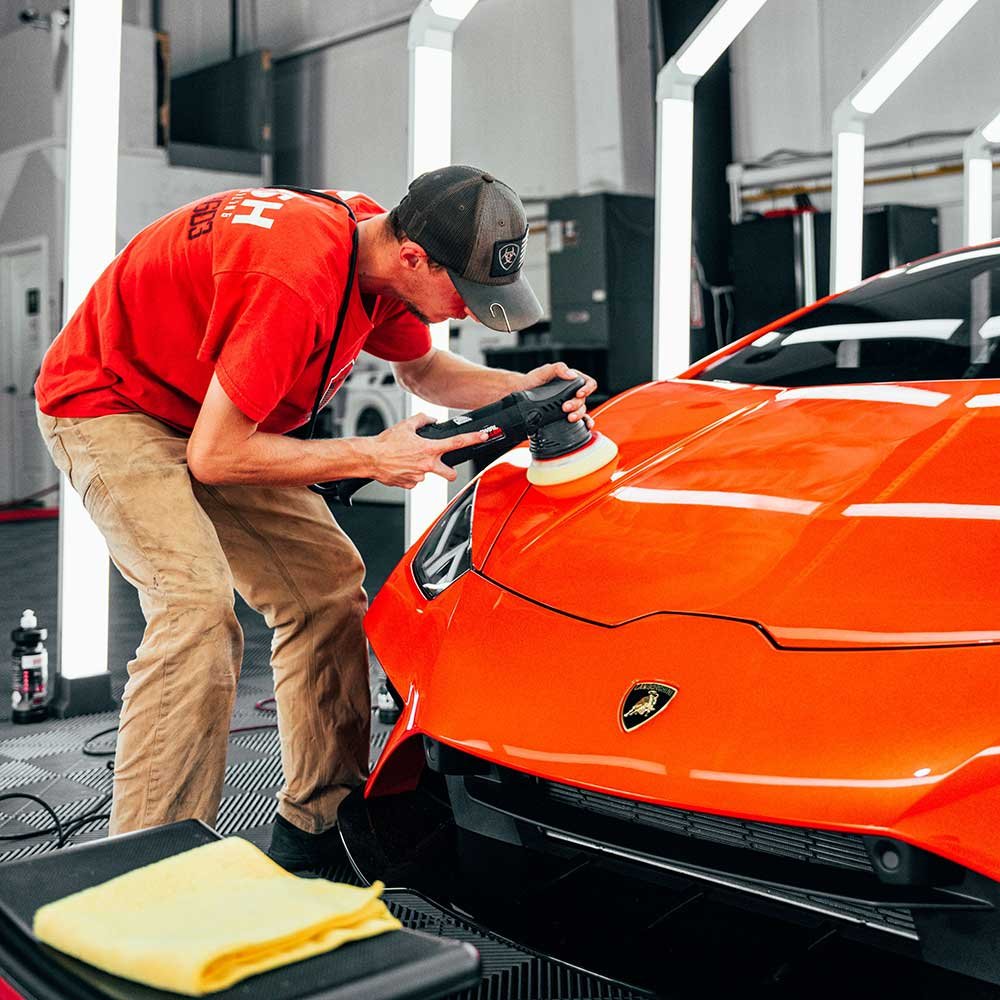
- Paint correction when needed: Machine polishing reduces visible swirls, oxidation, and light defects. The correction level should match the paint condition and the owner’s goals.
- Panel preparation: Residual oils and polishing compounds are removed so the coating can bond to a clean substrate.
- Section-by-section application: The coating is applied in manageable areas, leveled properly, and checked for high spots before moving on.
- Curing and handoff: The coating needs time to cure. Some installers use controlled indoor conditions or infrared curing methods to support the process, but aftercare instructions still matter.
What poor prep can look like
A coating job can disappoint even when the product itself is premium. Warning signs may include visible high spots, uneven gloss, streaky areas, contaminants trapped under the coating, missed edges, or a finish that looks no better than an untreated vehicle after the first wash.
Ask for the scope in writing. “Ceramic coating” alone is not enough detail to compare two packages.
| Question to ask | Why the answer matters |
|---|---|
| What wash and decontamination steps are included? | Bonding depends on a clean substrate |
| Is paint correction included, and to what level? | Determines how many visible defects remain |
| Which panels and surfaces are coated? | Package scope can vary substantially |
| How will the vehicle cure after application? | Curing conditions affect the installation process |
| What aftercare products and wash methods are recommended? | Maintenance influences performance and longevity |
| What conditions apply to the warranty? | Warranty length alone does not define value |
Choosing Package Scope, Installation Conditions, and Add-Ons
Compare package architecture, not just the price
Ceramic coating prices in South Jersey can range from the low hundreds to well above a thousand dollars, depending on vehicle size, paint condition, correction needs, product choice, and included surfaces. That range is too broad to treat as a standard market rate.
The better comparison is whether two quotes cover the same work. A lower quote may involve lighter preparation, fewer coated surfaces, or no paint correction. A higher quote may include multi-stage correction, wheel-barrel treatment, door jambs, glass, trim, and longer curing time.
Shine Pro’s South Jersey package information shows how local package details can vary by turnaround time and included surfaces such as wheels, glass, trim, and headlights.
Which add-ons are worth considering
Not every add-on is essential. The best value usually comes from choosing surfaces that match how you use the vehicle.
| Add-on surface | Worth considering when | Primary benefit | Lower priority when |
|---|---|---|---|
| Wheels and wheel barrels | You drive frequently, have heavy brake dust, or dislike deep wheel cleaning | Easier removal of brake dust and road film | Wheels are rarely exposed or routinely cleaned carefully |
| Glass | Rain visibility and easier glass cleaning matter to you | Improved water behavior | Wipers or glass condition are the real problem |
| Exterior trim | Plastic trim is exposed to sun and fading | Helps preserve a more uniform exterior appearance | Trim is already severely faded or damaged |
| Headlights | You want easier cleaning and additional surface protection | Supports clarity maintenance | Lenses need restoration first |
| Door jambs | You want a more complete-detail finish | Easier cleanup in painted edges | Budget is focused on visible exterior panels |
Mobile versus studio installation
Mobile detailing is valuable for convenience, especially for routine maintenance. For ceramic coating, though, installation conditions deserve careful attention. Paint correction and coating application benefit from controlled lighting, clean surroundings, stable temperature, and a protected curing environment.
A mobile setup may be appropriate when the provider can create or access a clean, controlled work area. A dedicated studio often offers more predictable conditions for multi-step correction and curing. The right question is not simply “mobile or shop?” It is “How will dust control, lighting, weather, and curing be managed for my vehicle?”
For customers who prefer a studio environment for specialized protection work, Flash Mobile Detailing offers a Sicklerville drop-off studio in addition to mobile detailing options. The company is an Accredited Installer of GTECHNIQ ceramic coatings and products, which may be relevant when comparing installer training and product systems.
Seasonal timing in South Jersey
There is no single best season for ceramic coating. The best timing is when the vehicle can be properly prepared and kept dry during the initial curing period.
Spring can be convenient after winter grime is removed. Summer can work well when indoor installation conditions are controlled. Fall gives some drivers a chance to prepare before winter road treatments begin. Winter is also possible in a suitable indoor environment, but outdoor weather makes controlled curing and post-install care more important.
Maintaining a Ceramic-Coated Vehicle

Gentle washing protects the coating’s behavior
A ceramic-coated car still needs to be washed. The difference is that properly maintained coated surfaces are generally easier to clean because dirt and water do not cling as stubbornly.
I recommend a gentle routine rather than chasing the strongest chemical cleaner on the shelf. Harsh alkaline products, abrasive towels, dirty wash mitts, and automatic brushes can reduce gloss, mar the paint, or leave residues that make hydrophobic behavior seem weaker.
- Rinse thoroughly first to remove loose grit from lower panels, wheels, and wheel wells.
- Use a pH-balanced automotive shampoo and clean wash media rather than household detergents.
- Wash from upper panels downward so the dirtiest areas are addressed with separate attention.
- Use clean microfiber drying towels or a controlled air-drying method to reduce towel-induced marring.
- Remove bird droppings, bug residue, and tree sap promptly rather than letting them bake onto the surface.
- Use coating-safe decontamination when needed if mineral deposits or bonded contamination reduce water behavior.
What makes coatings seem to fail early
Sometimes a coating is still present but performing poorly because it is covered with traffic film, mineral deposits, or residue from harsh cleaning products. Water behavior alone is not a perfect test of whether a coating remains on the surface.
For example, a vehicle washed repeatedly with a strong detergent may lose its sharp water beading. That does not automatically prove the coating has disappeared. It may mean the surface needs a careful decontamination wash or maintenance service.
| Maintenance issue | What can happen | Practical response |
|---|---|---|
| Tunnel wash brushes | Fine swirls and reduced clarity | Use touchless or careful hand-wash methods when possible |
| Harsh cleaners | Residue, reduced hydrophobic behavior, surface stress | Use coating-safe automotive products |
| Hard-water spotting | Mineral deposits that dull water behavior | Dry promptly and use appropriate spot-removal methods |
| Delayed contaminant removal | Etching risk from droppings, sap, or bugs | Clean affected areas promptly |
| Dirty wash tools | Abrasion and micro-marring | Wash or replace mitts and towels regularly |
Aftercare is part of the ownership cost
Ceramic coating is not a “coat it and forget it” service. The finish will usually look better for longer when maintenance is planned into ownership. That can mean washing at home with proper products, using a careful detailer, or scheduling periodic professional maintenance.
If you know the vehicle will receive frequent brush washes, sit under trees for long periods, or rarely be cleaned during winter, it is worth discussing those habits before selecting a multi-year package. The honest answer may be a different protection level, additional PPF on impact areas, or a maintenance plan that fits the real-world schedule.
Frequently Asked Questions About Ceramic Coating in South Jersey
What does ceramic coating actually do for a car in South Jersey?
Ceramic coating adds a durable protective layer that improves gloss, water behavior, and ease of cleaning. It can help manage UV exposure, road film, pollen, salt residue, and other common contaminants when the vehicle is washed regularly. It does not prevent every scratch, chip, or chemical stain.
Is ceramic coating worth it for daily driving in South Jersey?
It can be worth it for daily drivers when you want easier cleaning and care about preserving the paint’s appearance. It is especially useful for vehicles stored outdoors or exposed to frequent road grime. It may be less worthwhile if the car is rarely washed, has severe paint damage, or will be sold very soon.
How long does ceramic coating last in this climate?
There is no universal answer. Product type, prep quality, outdoor storage, mileage, wash methods, contamination exposure, and maintenance all affect longevity. Be cautious of any promise that presents a fixed lifespan without discussing those conditions.
Do I still need paint correction before ceramic coating?
Often, yes. Paint correction removes or reduces swirls, haze, oxidation, and light scratches before coating. If the paint is already in excellent condition, only minor polishing may be needed. If defects are extensive, correction can become a major part of the project and the price.
Can ceramic coating protect against salt, sand, and road grime?
It can make these contaminants easier to remove and can reduce how strongly grime adheres to the surface. It does not make salt, sand, or abrasive road debris harmless. Prompt washing remains important, especially after winter driving or coastal exposure.
Does ceramic coating prevent scratches and rock chips?
No. It may provide some resistance to very light wash-related marring, but it is not designed to stop physical impacts. For rock-chip protection, PPF is the stronger option for high-impact areas such as the front bumper, hood, mirrors, and rocker panels.
What parts of the car should be coated besides the paint?
Common add-ons include wheels, wheel barrels, glass, headlights, trim, and door jambs. Choose them based on your needs. Wheel coating can be useful for heavy brake dust, while glass coating may appeal to drivers who prioritize rain visibility and easier cleaning.
How much does ceramic coating cost in South Jersey?
Costs vary widely because packages differ. Vehicle size, paint condition, correction level, product line, warranty terms, coated surfaces, and curing requirements all influence pricing. Compare written scopes rather than comparing a single headline price.
What makes one ceramic coating installer better than another?
Look beyond warranty length. Ask about paint inspection, decontamination, correction steps, coating application, curing conditions, aftercare, product accreditation, and exactly which surfaces are included. A clear, written process is more useful than vague claims about protection.
Should I choose a mobile installer or a shop for ceramic coating?
Choose the provider that can offer the right work environment for the project. Controlled lighting, dust management, temperature, and curing conditions matter most for paint correction and coating installation. A studio may offer more predictable conditions for extensive work, while mobile service can be appropriate when a clean, controlled location is available.
Choosing the Right Next Step
Start with the vehicle’s condition and exposure
The best ceramic coating decision is usually straightforward once you identify the actual problem. If your main concern is grime, gloss retention, and easier washing, a professionally prepared ceramic coating may be the right fit. If road debris is damaging the front end, prioritize PPF on those impact zones. If the paint is dull or swirled, budget for correction before protection.
Ask for a scope that matches the vehicle
Before scheduling, request an inspection and a written explanation of the recommended prep, correction level, coated surfaces, cure process, aftercare requirements, and warranty conditions. That gives you a fair way to compare packages that may look similar at first glance but involve very different amounts of work.
For South Jersey owners who want professional coating installation, paint correction, PPF, or a vehicle-protection plan tailored to daily driving conditions, Flash Mobile Detailing can help evaluate the paint condition and recommend a practical scope of work. The right outcome is not simply a shinier vehicle on day one. It is a protection plan you can realistically maintain through every season.
Sources and References
Local package and service references
• Shine Pro — Ceramic Coating in South Jersey: https://www.shinepronj.com/ceramic-coating
• Shore Style Auto Spa — Best PPF, Ceramic Coating, and Detailing: https://www.shorestyleautospa.com/
Local coating process and benefits references
• Direct Details — Ceramic Coating: https://www.directdetails.net/ceramic-coating
• Dynamic TINT & Paint Protection — Ceramic Coatings New Jersey: https://www.dynamictint.com/ceramic
South Jersey remains a major regional focus for premium coating and paint-protection providers, as reflected in Shore Style Auto Spa’s South Jersey service positioning. This is useful context when comparing local providers, but the final choice should still come down to preparation standards, work environment, product system, and aftercare support.