
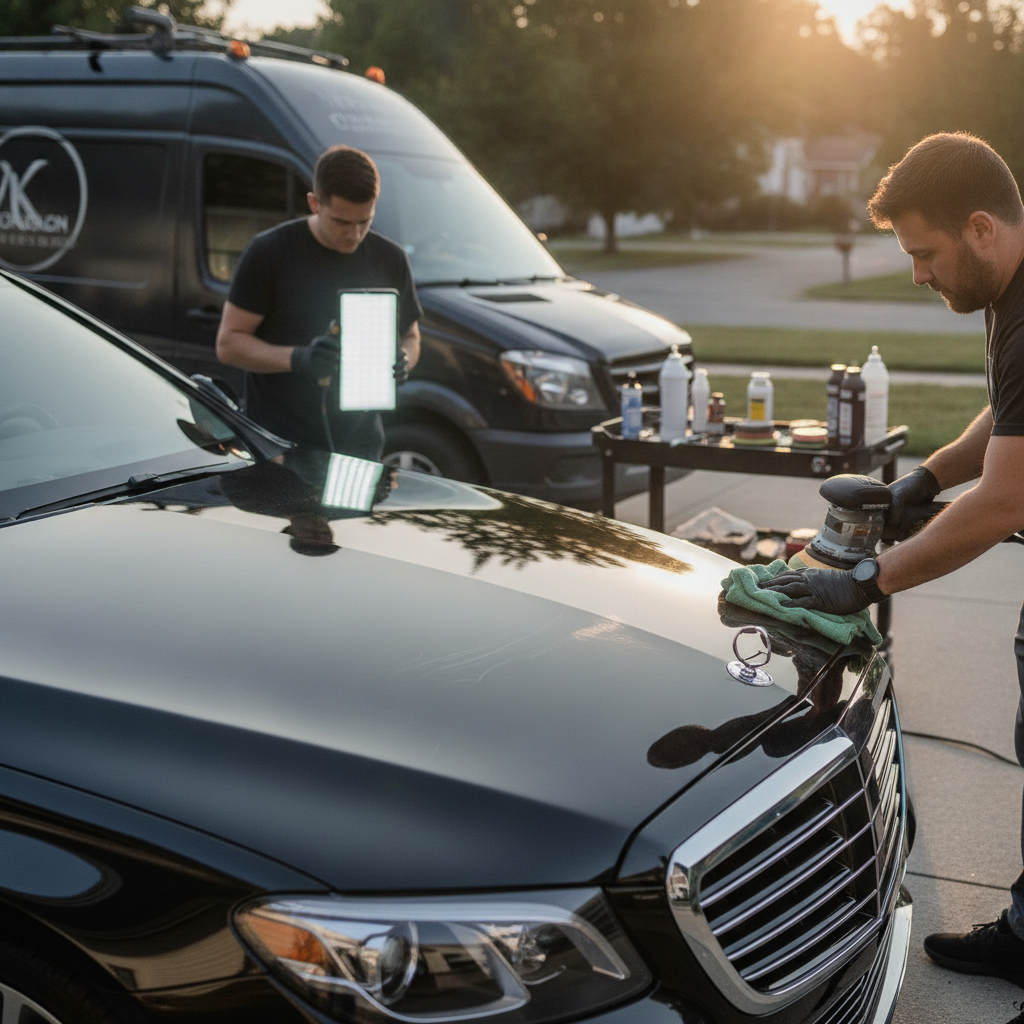
Is paint correction worth it before ceramic coating in Blackwood and South Jersey? Yes — and skipping this step is one of the most common and costly mistakes car owners make when investing in ceramic coating. If your paint already has swirl marks, light scratches, or oxidation, applying a ceramic coating on top will lock those defects in permanently. Paint correction is the process that removes those imperfections first, so your ceramic coating actually bonds to clean, smooth paint and delivers the glossy, long-lasting finish you’re paying for.
What Paint Correction Actually Means (And What It Doesn’t)
Paint correction gets mentioned a lot in the detailing world, but many websites gloss over what it actually involves. It is not a simple buff and shine. Paint correction uses a machine polisher with specially formulated compounds and pads to carefully level the clear coat — the transparent layer on top of your color that gives paint its depth and shine. By removing a controlled, microscopic amount of that clear coat, a trained detailer eliminates swirl marks, water spot etching, minor scratches, and oxidation that dull your vehicle’s appearance.
It is worth understanding the difference between a single-stage and multi-stage paint correction. A single-stage correction focuses on removing lighter defects and refining the surface. A multi-stage correction — sometimes called a full paint correction — involves a more aggressive cutting compound followed by a finer polish to eliminate deeper scratches and restore maximum clarity. Which one your car needs depends on the current condition of your paint, the color, and how much work has already been done to it.
Why South Jersey Driving Conditions Make Paint Correction More Relevant
If your car spends any time on roads in Blackwood, Gloucester Township, or along the congested stretch of Route 42, your paint is taking a beating that most people underestimate. Road debris, gravel, and grit constantly contact your vehicle’s finish at highway speeds. Add in the road salt that gets spread across Camden County and Gloucester County roads every winter, and you have a recipe for accelerated clear coat degradation.
Summer in South Jersey brings its own challenges. UV exposure fades paint over time, and tree sap, bird droppings, and pollen are relentless from spring through early fall. These contaminants chemically etch into the clear coat if they sit too long. By the time many car owners in Washington Township or Berlin notice the damage, the surface already shows water spots, dull patches, or fine scratches that won’t come out with a wash.
This is exactly why paint correction done before ceramic coating is not just a nice-to-have in this region — it is a practical necessity for anyone who wants real, lasting results.
What Happens If You Skip Paint Correction Before Ceramic Coating
Here is the part that most national ceramic coating brands and big-box detailing guides leave out: ceramic coatings are highly transparent and amplify the appearance of your paint, for better or worse. When you apply a ceramic coating to paint that already has swirl marks or water spot etching, you are essentially locking those defects in place under a hardened, semi-permanent layer.
Once the coating cures, those imperfections cannot be polished out without removing the ceramic layer itself. That means if you skip paint correction to save money upfront, you may end up paying more to have the coating stripped and redone correctly later — or living with a protected but visually flawed finish for years.
Some detailers — especially low-cost providers who prioritize volume over quality — will skip or minimize paint correction to turn jobs around faster. When comparing quotes in Voorhees or anywhere in South Jersey, it is worth asking specifically whether paint correction is included and what stage of correction is being performed.
The Full Pre-Coating Process: What a Thorough Detailer Does
A properly prepared vehicle goes through several stages before a single drop of ceramic coating is applied. Understanding this process helps you ask the right questions and recognize quality work when you see it.
- Wash and decontamination: The paint is thoroughly washed and then treated with an iron remover and clay bar to pull embedded contaminants from the clear coat surface. Road grime, brake dust, and industrial fallout have to come out before any polishing begins.
- Paint inspection: Under bright lighting, a detailer evaluates the condition of the clear coat, identifies problem areas, and determines what stage of correction the paint needs.
- Machine polishing: Depending on your paint’s condition, one or more stages of compound and polish work are performed to remove defects and refine the surface to a clear, high-gloss finish.
- Panel wipe-down: The paint is wiped down with an isopropyl alcohol solution to strip any remaining polish oils, leaving a perfectly clean surface for the coating to bond to.
- Ceramic coating application: Only after all of the above steps are completed is the ceramic coating applied panel by panel in a controlled environment.
This process takes time — often a full day or more for a complete correction and coating job. If someone is quoting you a two-hour turnaround for the full service, that is a significant red flag.
How to Know Whether Your Car Needs Paint Correction
Not every vehicle needs a full multi-stage correction. A newer car with minimal swirl marks might only need a light one-stage polish to perfect the surface before coating. An older vehicle that has been through years of automated car washes, South Jersey winters, and summer sun exposure will likely need more significant correction work.
A few signs your car may benefit from paint correction before coating:
- You notice circular swirl marks in direct sunlight, especially on dark-colored paint
- The paint looks dull or hazy rather than deep and reflective
- There are visible water spots that don’t wash away
- You can feel rough texture on the paint surface after washing
- Light scratches are visible in certain lighting angles
If you are unsure, a reputable local detailer can inspect your paint and give you an honest assessment before recommending a course of action. You can explore the full range of paint protection and ceramic coating services available through Flash Mobile Detailing to get a better sense of what each stage involves.
What to Look for in a Local Paint Correction and Coating Specialist
Choosing someone to perform paint correction and ceramic coating on your vehicle is a bigger decision than most people realize. Here are a few things to evaluate before booking:
- Transparency about the process: A good detailer explains what they will do, why, and in what order — without vague answers.
- Before-and-after documentation: Ask whether they photograph the vehicle before and after the work so you can see the difference clearly.
- Correction stage clarity: Ask specifically what level of correction is included — light polish only, single-stage, or multi-stage — and what that means for your specific paint condition.
- Coating product knowledge: A detailer who can explain the difference between coating grades and what maintenance is required afterward is more likely to deliver a quality result.
- Mobile availability: For busy car owners in Blackwood, Sicklerville, or anywhere in the area, mobile service means the work comes to you — no drop-offs, no waiting rooms, no scheduling headaches.
Frequently Asked Questions
Can I get ceramic coating without paint correction in South Jersey?
Technically yes, but it is not recommended if your paint has visible defects. The coating will lock in whatever imperfections exist on the surface. For newer vehicles in good condition, a light prep polish may be sufficient rather than a full correction.
How long does a paint correction and ceramic coating take?
A single-stage correction with a ceramic coating typically takes a full day. A multi-stage correction on a vehicle with significant paint defects can take two or more days. Rushing the process is a sign the work is being done improperly.
How much clear coat is removed during paint correction?
Only a very small, controlled amount is removed — often just a few microns. A professional detailer uses a paint thickness gauge to monitor this and ensure the clear coat remains within a safe range.
Does paint correction work on all paint colors?
Yes, but dark colors like black, navy, and dark grey tend to show swirl marks more visibly and often benefit most from correction. Light-colored vehicles may have the same defects but they are harder to see under normal lighting.
Will ceramic coating prevent future scratches and swirl marks?
Ceramic coating adds a layer of hardness and chemical resistance that reduces the risk of light scratches and makes the surface easier to clean. However, it does not make your paint scratch-proof. Proper washing technique and regular maintenance still matter after coating.
Ready to Protect Your Paint the Right Way?
If you are in Blackwood, Sicklerville, or anywhere in South Jersey and you want ceramic coating done properly — starting with honest paint correction — Flash Mobile Detailing is ready to help. We come to you, we take our time, and we do not cut corners on the prep work that makes the difference between a good result and a great one.
Contact Flash Mobile Detailing today to schedule a consultation or ask us about the right paint correction and coating package for your vehicle’s current condition. We’ll give you a straightforward assessment and walk you through every step of the process before we get started.