
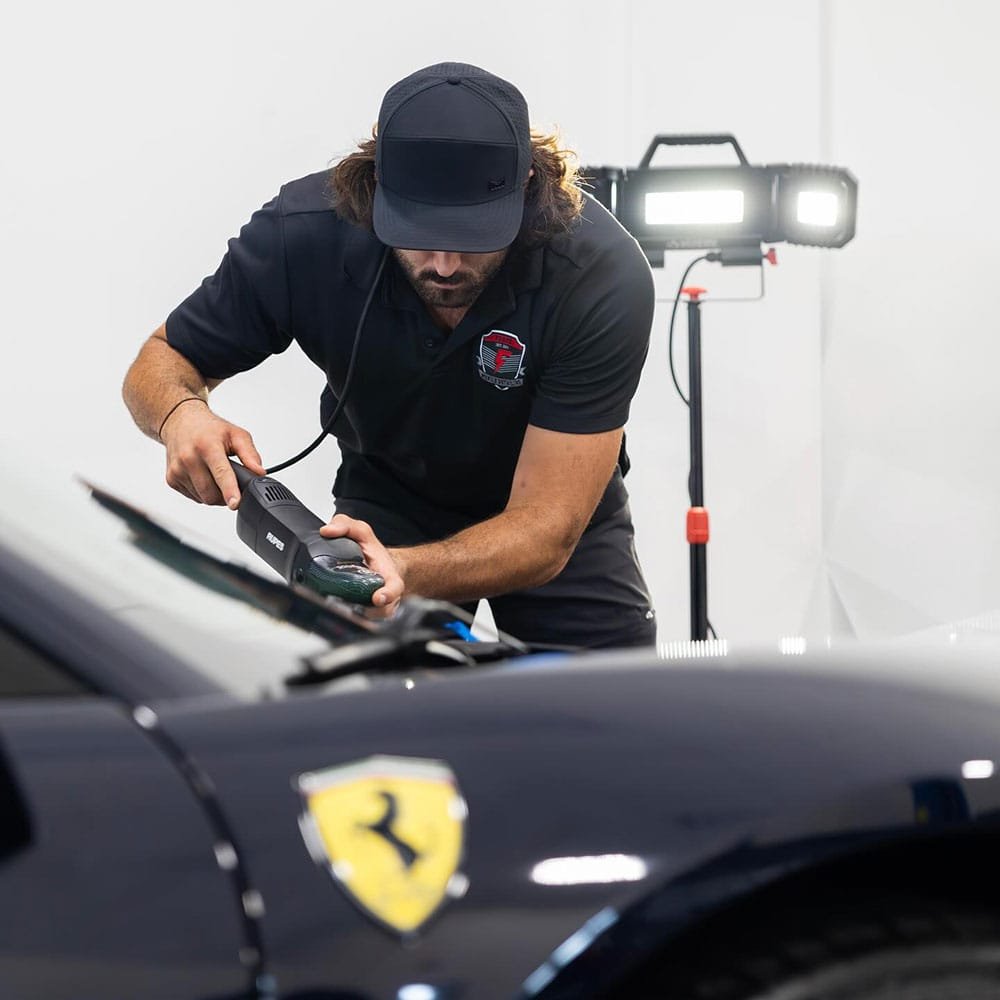
Every South Jersey driver has experienced it at least once. You’re cruising down the Atlantic City Expressway when a truck in the lane ahead kicks up a piece of road debris that cracks into your front bumper like a gunshot. Or you park at the shore for a weekend and come back to find your hood covered in salt-air deposits and a fresh chip on the leading edge of your hood from the highway drive down. These aren’t freak occurrences in South Jersey — they’re regular realities of driving in this region. Paint Protection Film South Jersey is the direct answer to these specific challenges, and Flash Mobile Detailing installs professional PPF that defends your vehicle’s paint against the exact conditions South Jersey roads and weather create. This article explains what PPF is, why it matters in this region specifically, and what you should look for when evaluating your options.
What Is Paint Protection Film and Why Does It Exist?
Paint Protection Film has an origin story that resonates with any car owner who’s ever winced at a rock chip. The technology was originally developed during the Vietnam War era to protect helicopter rotor blades and other aircraft components from high-speed debris damage. The military needed a material that was clear, flexible, lightweight, and tough enough to absorb impacts without cracking or delaminating. The film that engineers developed performed those functions — and when the automotive aftermarket discovered the technology, the application to vehicle paint was immediately obvious.
Modern PPF products have advanced dramatically beyond those early military films. Today’s automotive-grade PPF is a multi-layer thermoplastic urethane product with a self-healing topcoat, UV resistance, optical clarity that rivals bare glass, and chemical resistance against bird droppings, bug acids, and environmental fallout. When applied by a trained installer using precision-cut templates, it is virtually invisible on the vehicle’s paint — protection without sacrifice to appearance.
South Jersey Roads — Why Your Paint Takes a Beating
The road network in South Jersey creates a combination of driving conditions that is genuinely hard on vehicle paint. Route 42, the Black Horse Pike, the Atlantic City Expressway, and the Garden State Parkway between Exits 38 and 63 carry a mix of commercial truck traffic, construction vehicles, and high-speed commuter traffic that generates constant road debris. Gravel shoulders alongside highway lanes provide material that truck tires launch into traffic. Construction zones — and South Jersey always seems to have at least a few active ones — scatter aggregate across travel lanes on a regular basis.
Local roads present their own challenges. Older road surfaces in municipalities throughout Camden, Gloucester, and Atlantic counties have deteriorating asphalt that sheds material more readily than newer surfaces. Unpaved shoulders along county roads contribute gravel to driving surfaces that vehicles carry onto paved sections. And the sheer density of vehicle traffic on routes connecting South Jersey to Philadelphia and the Jersey Shore means more tire-launched debris in the air than less-trafficked regions experience.
Winter road treatment is one of the most damaging regular events for South Jersey vehicle paint. Road salt and calcium chloride brine applied from November through March coats lower body panels, rocker panels, and wheel wells with corrosive material that etches into paint and accelerates rust if not properly removed. PPF on lower body panels creates a physical barrier between the paint and this chemical assault.
South Jersey Weather — How Climate Accelerates Paint Damage
Beyond the roads themselves, South Jersey’s climate creates a year-round schedule of environmental paint threats that accumulate significantly over time without adequate protection.
Summer in South Jersey brings intense UV radiation and sustained high temperatures that accelerate clear coat oxidation on vehicles that park outdoors. The UV index during June through August in South Jersey regularly reaches levels associated with significant paint fading and oxidation damage on unprotected vehicles. Bug splatter from summer highway driving — particularly the love bugs, mayflies, and various beetle species active in this region — contains acids that etch into unprotected clear coat within hours at summer temperatures. A vehicle that drives Route 42 on a summer evening and isn’t washed promptly can develop visible etching from bug splatter before the week is out.
Shore proximity is a factor that South Jersey drivers near the coast deal with year-round. Salt air carries microscopic salt particles that deposit on every exposed surface, creating a fine corrosive film that accelerates oxidation and surface degradation over time. The effect is most pronounced for vehicles that park within a mile or two of the ocean or bay but extends further than most drivers realize on days with strong onshore winds.
Spring brings pollen season — and South Jersey’s mix of pine, oak, and birch trees creates a heavy annual pollen event that coats outdoor-parked vehicles in a yellow-green film that, when combined with morning dew, becomes mildly acidic. Left sitting on paint for multiple days, pollen deposits can etch into clear coat and leave staining that requires polish to remove.
How Paint Protection Film Defends Against South Jersey’s Worst
PPF’s ability to address South Jersey’s specific threats is what makes it particularly well-suited to vehicles in this region rather than just being a generic premium upgrade. Rock chips from highway debris — the threat most South Jersey drivers are most acutely aware of — are absorbed by the PPF’s energy-dissipating urethane layer before they reach the paint. The film takes the hit and, thanks to its self-healing topcoat, minor surface scuffs and light scratches from those impacts heal themselves when exposed to heat.
Road salt and chemical fallout from winter driving affect the PPF surface rather than the paint beneath it. The film’s chemical resistance means that corrosive materials don’t penetrate to the clear coat — they sit on the film’s surface and wash away cleanly. UV resistance built into quality PPF prevents the solar radiation that beats down on South Jersey vehicles from June through August from oxidizing and fading the paint underneath. Bug splatter and bird droppings that would etch into bare clear coat within hours are neutralized by the PPF’s topcoat chemistry, allowing them to be rinsed away cleanly without leaving etching marks.
How to Find Paint Protection Film Near Me in South Jersey
Evaluating Paint Protection Film near me options in South Jersey requires attention to a few key factors that separate quality installations from ones that will create problems down the road. Installer experience matters enormously with PPF — it is technically more demanding to install than window tint or ceramic coating, and the quality of the result depends heavily on the precision of the film cutting, the skill of the application technique, and the thoroughness of the edge sealing. Ask any installer you’re considering what film brand they use, whether they cut the film using digital templates specific to your vehicle’s make and model, and what their edge wrapping process looks like. Ask to see examples of PPF installations they’ve completed on vehicles similar to yours in terms of paint color and panel complexity.
Flash Mobile Detailing’s PPF Services in South Jersey
Flash Mobile Detailing’s PPF service begins with a paint decontamination and surface preparation stage that ensures the paint surface is completely clean and free of contamination before film is applied. Any existing swirl marks or paint defects that would be visible under the film are addressed through paint correction before installation. Film is precision-cut using digital templates calibrated to your vehicle’s specific make, model, and year, ensuring clean edges and full panel coverage without the gaps or misalignment that manual cutting can produce. Application is performed carefully to ensure complete adhesion and proper edge sealing across every panel. Customers receive detailed aftercare instructions covering washing, maintenance, and what to expect during the cure period.
Frequently Asked Questions About PPF in South Jersey
Is PPF worth it on an older vehicle?
The answer depends on the vehicle’s paint condition and the owner’s attachment to it. If the paint has been maintained well and the vehicle has personal or financial value worth preserving, PPF is a meaningful investment regardless of age. If the paint is already significantly oxidized or damaged, paint correction before PPF application is necessary — which adds to the cost but also restores the paint to a condition worth protecting.
Can PPF be removed without damaging paint?
Professional PPF removal by a trained installer does not damage sound paint when performed correctly. The film is heated to loosen the adhesive and carefully peeled away, with any remaining adhesive residue cleaned from the surface using an adhesive remover that is safe for clear coat. Paint that was compromised before the film was applied — cracked, peeling, or extensively damaged clear coat — can be further affected during removal, which is another reason proper surface assessment before installation matters.
How do I maintain PPF after installation?
PPF requires minimal special maintenance beyond regular washing with pH-neutral products and avoiding automatic car washes with brush contact that can lift film edges over time. A ceramic coating applied over PPF after installation makes the film surface easier to clean and enhances its gloss. Flash Mobile Detailing provides complete post-installation care guidance with every PPF service.
Key Takeaways
- South Jersey’s specific roads and climate create exactly the conditions PPF was engineered to address — highway debris, road salt, shore salt air, intense UV, and summer bug splatter are all threats PPF defends against simultaneously.
- Installer experience is the most important variable in PPF quality — precision film cutting, proper edge sealing, and correct surface preparation are technical skills that determine whether a PPF installation lasts five-plus years or begins failing within months.
- PPF and ceramic coating work best together — PPF provides physical impact protection that ceramic coating can’t, while ceramic coating on top of PPF provides easier maintenance and enhanced appearance that extends the film’s effective lifespan.
FAQs
Q: How much of my vehicle should I protect with PPF? A: The right coverage depends on your budget, how you use the vehicle, and what you’re most concerned about protecting. Full-front coverage — hood, fenders, bumper, mirrors, and A-pillars — addresses the highest-impact areas for most South Jersey highway drivers. Rocker panels and rear bumper are smart additions for vehicles that deal with heavy parking lot use or rear-end debris. Full-body coverage is the most comprehensive option and makes the most sense on new luxury or sports vehicles. Flash Mobile Detailing can help you determine the coverage level that makes the most sense for your specific vehicle and driving patterns.
Q: Does PPF affect the color or appearance of my paint? A: High-gloss PPF is optically clear and, when installed correctly, enhances rather than alters the depth and gloss of the paint beneath it. The film is essentially invisible in normal viewing conditions. Matte PPF is also available for vehicles with matte factory paint or for owners who want to convert a gloss finish to a satin appearance. Flash Mobile Detailing can show you examples of both finishes on completed vehicles before you make a selection.
Q: How long does PPF installation take? A: Installation time depends on the coverage area. A partial front-end package typically takes four to six hours. Full-vehicle coverage can take one to two days. Flash Mobile Detailing will give you a specific time estimate based on your vehicle and the coverage scope you select.
Flash Mobile Detailing 563 Berlin – Cross Keys Rd Unit A, Sicklerville, NJ 08081, United States